Britain cuts borrowing to six-year low as war pressures fuel spending, tax receipts
Borrowing fell to £132bn, but fuel-duty receipts dropped to a two-year low as the Middle East war began to squeeze Britain’s tax base.
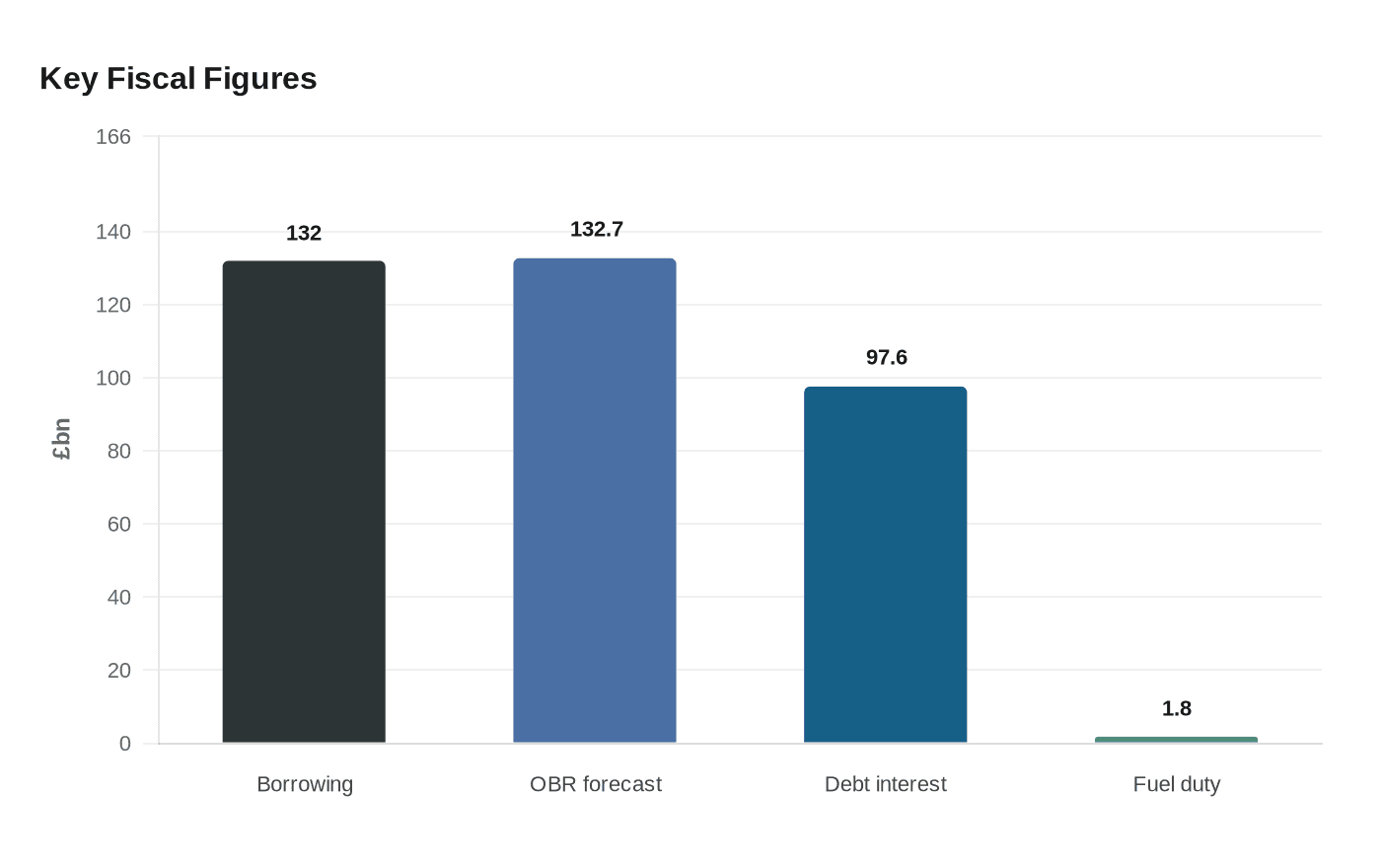
Britain’s headline borrowing figure improved to a six-year low, but the more troubling signal came from the edges of the tax base. Public sector net borrowing for the financial year ending March 2026 was estimated at £132.0 billion, or 4.3% of GDP, down £19.8 billion from a year earlier, yet fuel-duty receipts slumped and debt interest stayed stubbornly high as war pressures started to seep into the public finances.
The Office for National Statistics said the borrowing figure was £0.7 billion below the Office for Budget Responsibility’s £132.7 billion forecast, giving Rachel Reeves a modest fiscal gain on paper. Even so, the public sector net debt burden remained heavy at 93.8% of GDP at the end of March 2026, up 0.6 percentage points from a year earlier and still close to levels last seen in the early 1960s.
That improvement in the deficit did little to disguise the cost of servicing Britain’s liabilities. The ONS said debt-interest spending in 2025-26 reached £97.6 billion, the second-highest cash total since 2022/23. For a chancellor promising to balance day-to-day spending with tax revenues by the end of the decade, that leaves far less room for error if borrowing costs stay elevated and growth weakens.
The more immediate warning came from fuel duty. Revenue from the levy fell to £1.8 billion in March 2026, the lowest monthly figure since July 2023. That is a small number compared with the full-year borrowing total, but it matters because fuel duty is one of the clearest high-frequency reads on transport demand and household driving patterns. Lower receipts suggest pressure on consumption and, if sustained, a broader drag on activity as higher petrol and diesel prices work through the economy.
The OBR said its March forecast had been completed before the start of the conflict in Iran, so it did not reflect any hit from the war. The Resolution Foundation has warned that a severe but plausible deterioration in the Middle East conflict could add about £16 billion to public borrowing and wipe out almost three-quarters of Reeves’ fiscal headroom. Nabil Taleb, an economist at PwC UK, has also warned that a more stagflationary backdrop is forming, with weaker growth threatening the Chancellor’s room to manoeuvre.
The International Monetary Fund reinforced that risk in its April 2026 outlook, projecting global growth of 3.1% in 2026 and 3.2% in 2027 while warning that war in the Middle East threatens growth and disinflation. The latest borrowing figures show Britain has made progress on the deficit, but the fuel-duty weakness suggests the conflict abroad may already be eroding the tax base at home.
This article was produced by Prism’s automated news system from verified source data, official records, and press releases, then run through automated quality and moderation checks before publishing. The system is built and supervised by the people who set the standards it runs under. Read our full AI policy.
Did this article answer your question?