British ex-lawyer revives Soviet watch factory into Russian luxury brand
A British former lawyer turned a fading Peterhof workshop into a luxury watch brand, and Putin's visible support helped make it more desirable.
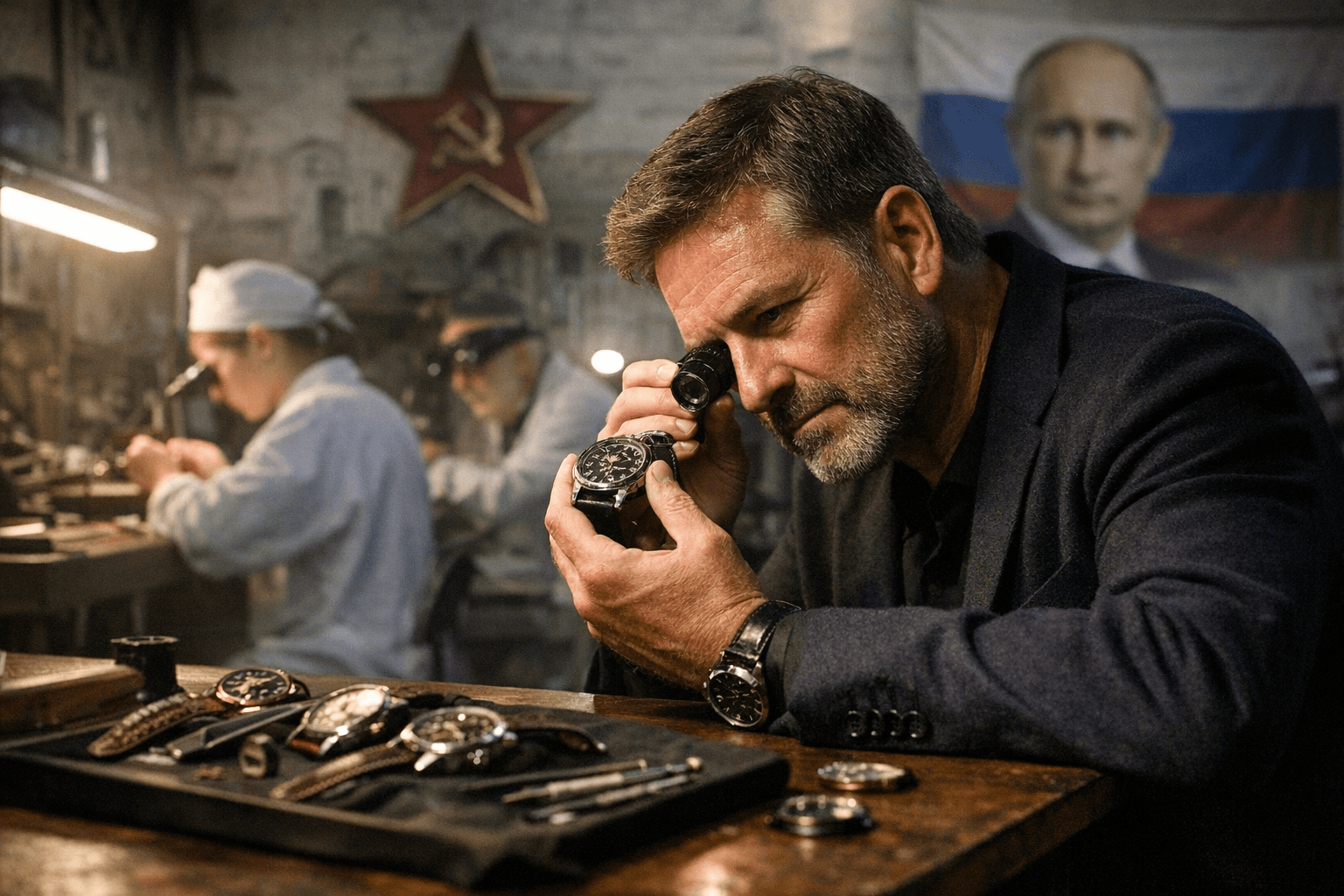
Inside Raketa Watch Factory, the transformation begins with a paradox: a once-fading industrial workshop with watchmakers in winter coats has been rebuilt into a luxury brand that sells Russian identity as much as timepieces. David Henderson-Stewart, a British former lawyer who studied at Oxford and the Sorbonne before moving to Russia for legal work, saw the opportunity where others saw decline.
Raketa’s official history traces the company back to 1721, when Peter the Great founded the Imperial Peterhof Factory in Peterhof, near Saint Petersburg. Under the emperors, the factory says it became one of Europe’s leading luxury-goods makers. Later, after a difficult post-Soviet period, Raketa launched a modernisation program in 2011 and began rebuilding its business around high-end mechanical watches with strong "Made in Russia" credentials.
The company’s pitch is as much industrial as it is symbolic. Raketa says it is now one of the very few watch factories in the world that makes every part of its own mechanical movement, including the hairspring. Its movement beats 18,000 times per hour, and 242 parts are assembled by hand by watchmakers. The factory says this in-house model, backed by refurbished machinery and manual craftsmanship, helps explain why it has been able to keep producing even as sanctions reshaped trade and cut many foreign luxury labels off from the Russian market after 2022.
That shift also changed the market. Raketa now employs more than 200 people, and its online store lists watches from 47,800 roubles to 300,000 roubles, a clear move upmarket from mass production to niche luxury. Henderson-Stewart’s own story mirrors the brand’s hybrid identity: he stayed in Russia long enough to raise three children there, all of whom have Russian citizenship, and he now runs a company that sells modern wristwatches made in Russia while leaning on imperial and Soviet-era heritage.
The most powerful lift, though, may be political. Reuters reported that Vladimir Putin was spotted wearing an Imperial Peterhof Factory watch in 2022, and local media read it as a signal of support for domestic production after Russia’s full-scale invasion of Ukraine. Putin has continued to wear the watch regularly, and Henderson-Stewart said that visibility increased demand for similar designs. In a sanctions-era economy, where elite consumption increasingly overlaps with nationalism, Raketa has turned heritage into strategy and state symbolism into sales.
This article was produced by Prism’s automated news system from verified source data, official records, and press releases, then run through automated quality and moderation checks before publishing. The system is built and supervised by the people who set the standards it runs under. Read our full AI policy.
Did this article answer your question?

