Broadcom misses revenue estimates, shares tumble on cautious AI outlook
Broadcom's AI revenue jumped 143% to $10.8 billion, but shares sank more than 13% after management held back on a bigger forecast.
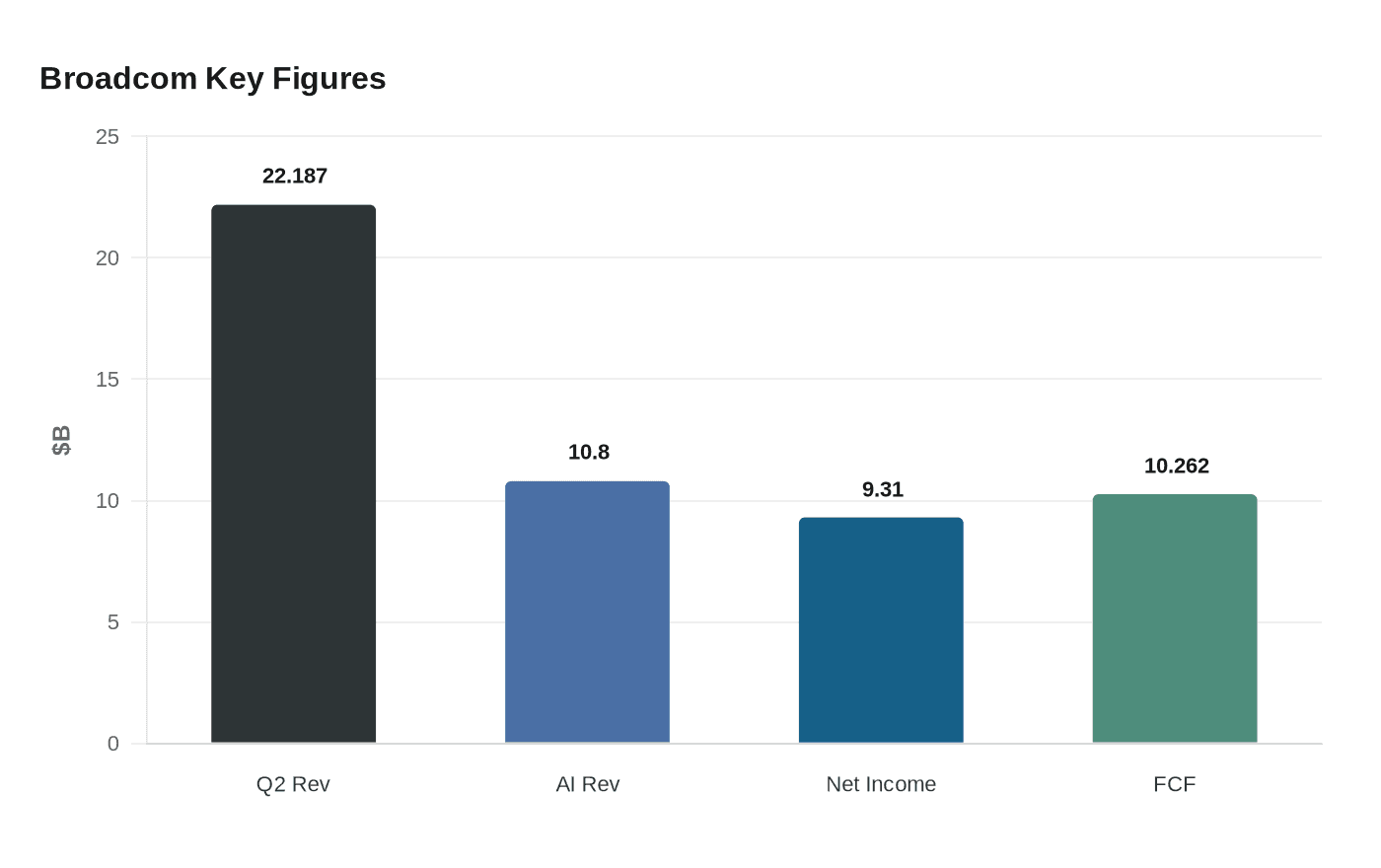
Broadcom's AI engine kept growing, but Wall Street punished the chipmaker for failing to raise the bar. Fiscal second-quarter revenue reached $22.187 billion, up 48% from a year earlier, yet it missed analysts’ $22.27 billion estimate and sent the shares down more than 13% in extended trading after the company left its 2027 sales outlook unchanged.
The real driver was AI semiconductors. Broadcom said AI semiconductor revenue hit $10.8 billion in the quarter, up 143% year over year, powered by custom AI accelerators and AI networking. That meant AI alone accounted for nearly half of Broadcom’s total revenue. For the current quarter, the company guided AI semiconductor revenue to $16 billion, more than 200% growth from a year earlier, while projecting consolidated revenue of about $29.4 billion, up 84%.

The quarter also showed that Broadcom’s business is highly profitable, not just fast-growing. GAAP net income came in at $9.31 billion, non-GAAP diluted earnings per share were $2.44, and free cash flow was $10.262 billion, equal to 46% of revenue. Broadcom also declared a quarterly dividend of $0.65 per share. Even so, investors focused on what did not change: Hock Tan did not lift the company’s full-year $100 billion AI chip-sales target.
That restraint mattered because Broadcom has become one of the clearest public-market proxies for the AI infrastructure buildout beyond Nvidia. Tan said the company now has six core custom chip customers, including Anthropic, Google, Meta and OpenAI. Broadcom also said it was comfortable it had secured supply for 2026 and 2027, easing some concerns about manufacturing constraints while underscoring how far ahead customers are planning their spending.
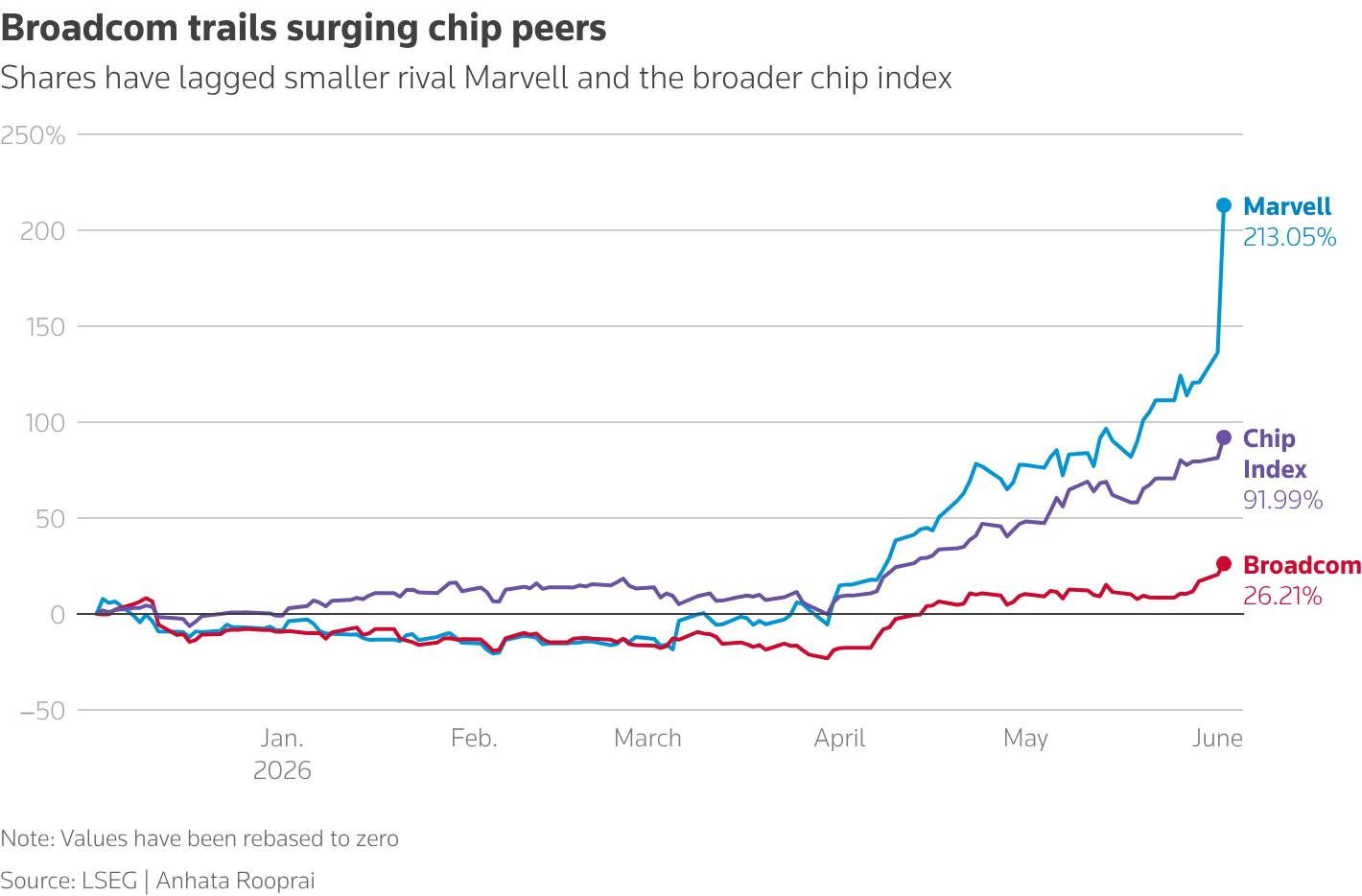
The broader backdrop is still massive. Big tech companies are expected to spend more than $700 billion on AI infrastructure in 2026, up from around $400 billion in 2025. Yet the market is also turning more selective, separating companies that can convert that demand into steadily rising guidance from those that simply benefit from the theme. Rivals such as Marvell Technology are pushing harder into custom silicon, and its own long-term targets suggest the competition for hyperscale AI spending is only intensifying.
Broadcom’s quarter made the central trade-off plain: the AI boom is broadening beyond Nvidia, but it is also becoming more volatile. Demand is still real, cash generation is still exceptional, and the customer list is expanding. For now, though, investors want more than strong growth. They want proof that Broadcom can keep raising the ceiling.
This article was produced by Prism’s automated news system from verified source data, official records, and press releases, then run through automated quality and moderation checks before publishing. The system is built and supervised by the people who set the standards it runs under. Read our full AI policy.
Know something we missed? Have a correction or additional information?
Submit a Tip