U.S. services activity rises in May despite higher costs and supply fears
Services kept growing in May, but the prices gauge hit its highest since August 2022 as fuel and shipping costs climbed. That mix complicates the Fed’s next move.
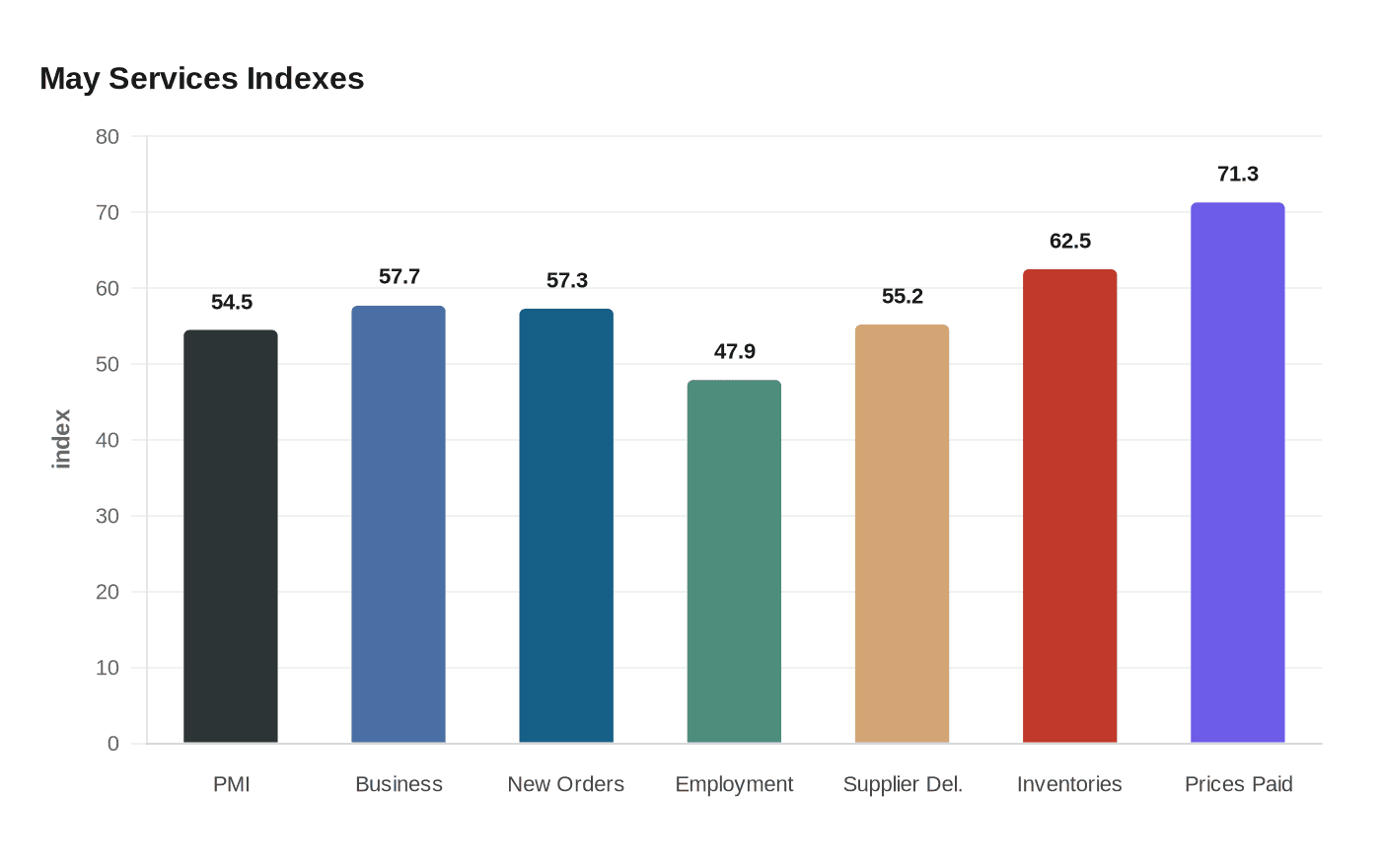
Higher fuel, shipping and commodity costs are starting to work through the services economy, where restaurant tabs, insurance premiums, travel fares and healthcare bills often feel the pressure first. In May, that strain did not stop activity from expanding: the Institute for Supply Management said its services PMI rose to 54.5 from 53.6 in April, a reading that marked the 23rd straight month of growth and came in above the 53.8 economists had expected.
Demand was broad enough to keep the sector moving. ISM said its business activity index climbed to 57.7 from 55.9, while new orders jumped to 57.3 from 53.5 and stood above their 12-month average of 54.7. The survey showed 17 industries growing in May, with only real estate, rental and leasing contracting. That strength suggests services firms were still finding customers even as they faced a tougher cost backdrop and more uncertainty around supply.
The pressures were visible in the rest of the report. The employment index contracted for a third straight month at 47.9, a sign that hiring remained weak even as activity improved. Supplier deliveries registered 55.2, indicating slower deliveries for the 18th month in a row. Inventories surged to 62.5, which ISM said matched May 2010 as the highest reading since it began collecting services PMI data in 1997, while the inventory sentiment index held at 55.2 for a 37th consecutive month of expansion. At the same time, the prices-paid measure rose to 71.3 from 70.7, its highest level since August 2022 and the 18th month in a row above 60. Diesel, gasoline, oil and related commodities were the items most frequently cited as becoming more expensive.
That combination of firm demand and stubborn inflation leaves policymakers in a difficult spot. The Federal Reserve’s Beige Book, released the same day, said prices increased at a moderate to strong pace overall in May and that energy-related costs tied to the Middle East conflict were the main driver, with spillovers into shipping, packaging, groceries and fertilizer. Economic activity rose at a slight to moderate pace in 10 of 12 districts, reinforcing the picture of an economy that is still expanding even as price pressures broaden. BMO Capital Markets senior economist Priscilla Thiagamoorthy said the data would likely keep Federal Reserve officials in wait-and-see mode, with growth resilient enough to avoid alarm but inflation hot enough to delay confidence in any policy turn.
This article was produced by Prism’s automated news system from verified source data, official records, and press releases, then run through automated quality and moderation checks before publishing. The system is built and supervised by the people who set the standards it runs under. Read our full AI policy.
Know something we missed? Have a correction or additional information?
Submit a Tip