Build Beginner-Friendly Vinyasa Classes with Evidence-Informed Breath, Alignment, Injury Prevention
This guide boils down evidence‑informed teacher training and safety guidance into practical steps: prioritize breath cues, measurable alignment landmarks, and clear injury‑prevention systems for beginner vinyasa.
If beginners leave class breathless, confused about alignment, or nursing a tweak, you missed the three highest‑impact fixes: breath instruction, alignment landmarks, and injury‑prevention systems. This guide synthesizes evidence‑informed teacher training practices and safety guidance for new teachers, studio managers, and experienced practitioners building beginner‑friendly vinyasa classes.
1. Start class with a brief, actionable breath practice
Open every beginner vinyasa with 2–4 minutes of a single, teachable breath technique so students enter movement regulated and oriented. Pick one reproducible cue, counted inhalations and exhalations, a simple three‑part breath, or a soft throat constriction, teach it once, then reference it: name the breath, give one physical cue, and use it as the baseline for transitions. Consistency matters: evidence‑informed teacher training emphasizes repeating the same breath cue each class so novices build interoceptive awareness rather than juggling fresh techniques every week.
2. Use landmark‑based alignment cues, not vague visuals
Anchor alignment language to palpable landmarks, pelvis, ribs, kneecap, shoulder blades, so beginners can find positions through touch and feeling, not imagination. Say “tuck the tailbone slightly toward the pubic bone” or “draw the top of the kneecap toward the hip” rather than using metaphors like “lengthen the spine” without specifics. Training programs that prioritize evidence‑informed alignment teach measurable micro‑adjustments (pelvic tilt degrees, knee tracking cues) because those reduce guesswork and lower the chance of repetitive loading mistakes.
3. Screen for red flags and document basic health info before class
Beginner‑friendly vinyasa starts with a short screening: ask for any recent injuries, surgeries, persistent joint pain, dizziness, or pregnancy on sign‑up forms or arrival check‑ins. Make a simple template, three yes/no questions plus space for details, and store consent/notes centrally; studio managers benefit from one standardized form so sub teachers can read important flags before class. Safety guidance from training curricula stresses that a half‑minute screen prevents common pitfalls and clarifies when to offer specific modifications.
4. Sequence with predictable, low‑load progressions
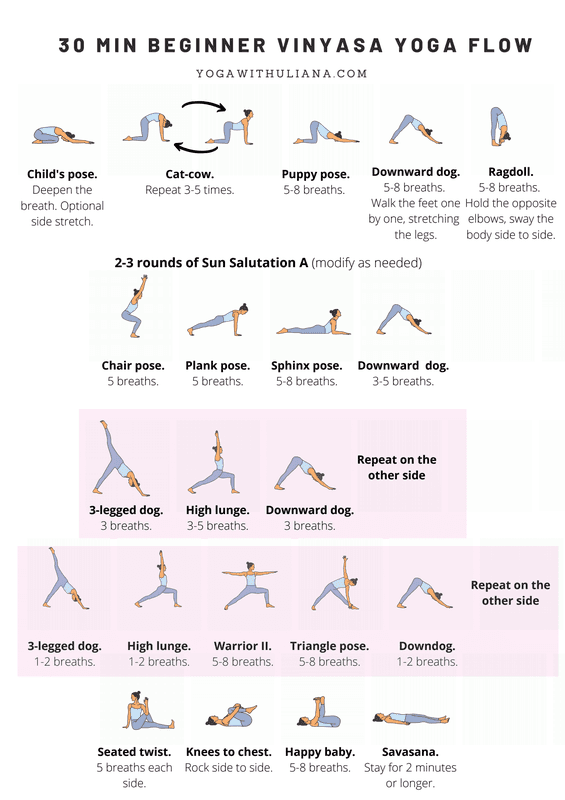
Design your sequence so each standing or balance posture prepares for the next with progressively similar load and range of motion rather than surprise jumps. For example: gentle hip openers → supported lunge → crescent lunge → three‑step cultivations toward full warrior variations; don’t jump from seated twists to headstand prep in the same block. Evidence‑informed sequencing reduces soft‑tissue overload for novices and gives you natural check points to reinforce breath and alignment cues.
5. Build a clear modification and props protocol
Every full expression of a pose must have one quick, classroom‑ready modification and one prop option, no guesswork. Teach a universal modification framework: reduce range (half lift), shorten lever (knee bent), add support (block under hand), or skip and do a steady breath/bridge alternative. Stock a simple prop kit, two blocks per student, one strap per two students, extra blankets, and train teachers to offer the exact prop and verbal cue within 20 seconds when someone struggles.
6. Prioritize non‑ambiguous language and cue sequencing
Craft cues in three parts: name the action, give the body landmark, then offer the breath connection (e.g., “Lift the sternum, draw shoulder blades down, inhale to lengthen”). Use present‑tense verbs and avoid layered imagery for beginners; one sculpted cue per breath is enough. Evidence‑informed teacher training emphasizes that uncluttered, sequential cues let novices integrate alignment while moving, improving retention and reducing the cognitive load that often leads to sloppy form.
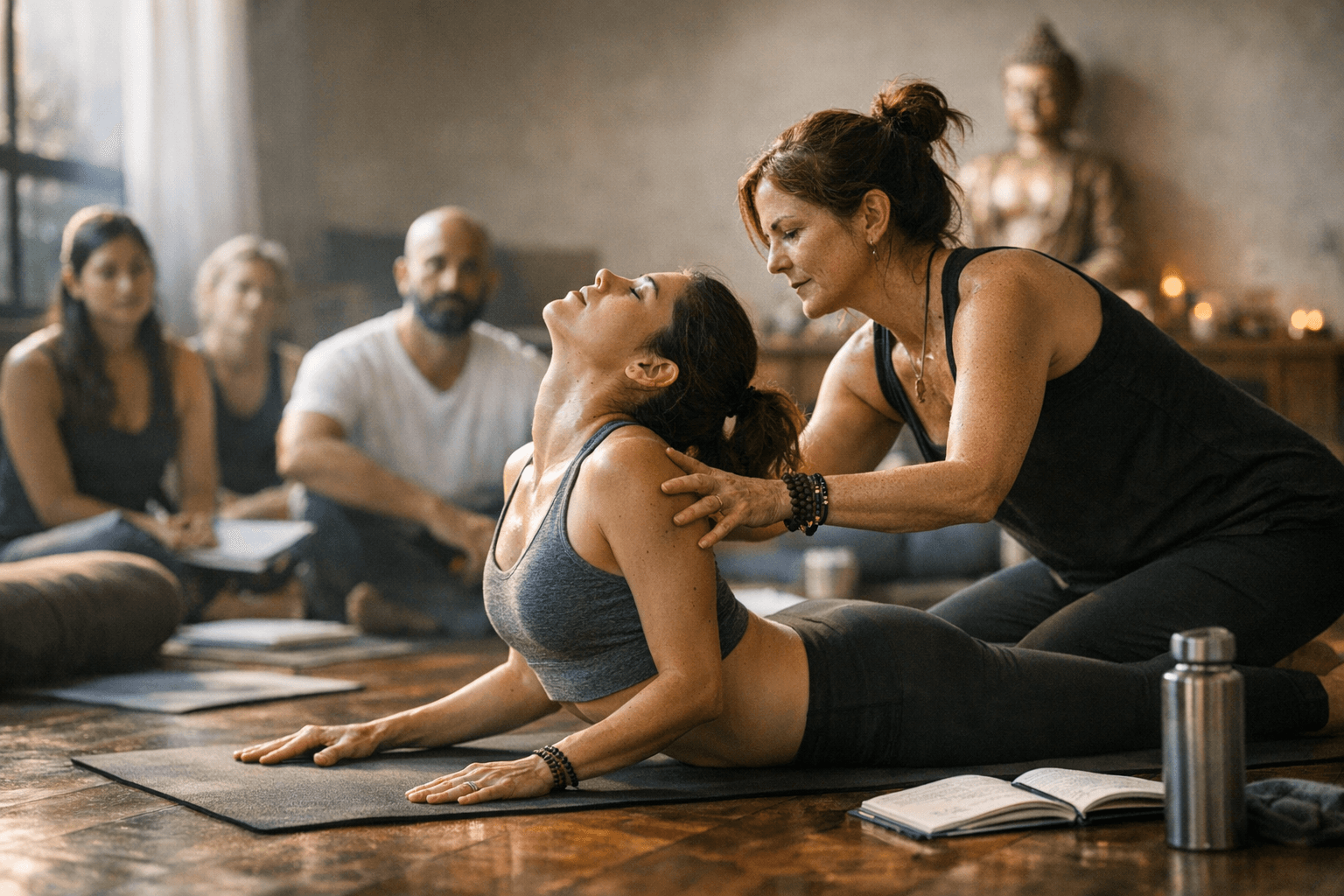
7. Use hands‑on contact only with explicit consent and an opt‑out
If you offer adjustments, collect clear consent (verbal or a consent checkbox) and teach teachers a one‑step opt‑out script: “I can offer a touch to help your shoulder, yes or no?” Respect and document refusals so substitutes know. Safety guidance governs touch because beginners may have prior trauma, recent surgeries, or fear of hands‑on contact; handling this systematically protects students and teachers and preserves trust across your studio.
8. Teach safe transitions as part of alignment work
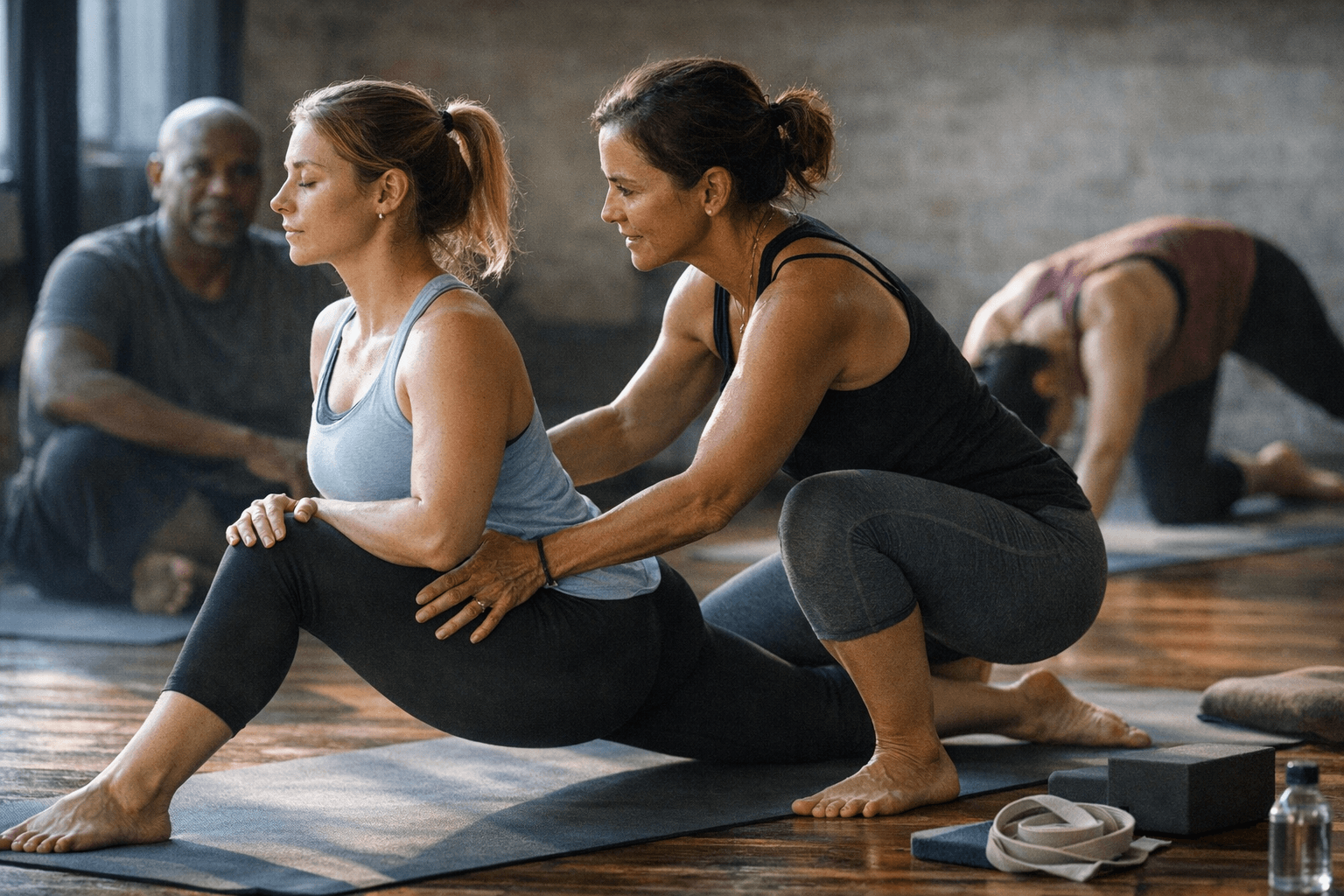
Transitions are where most beginners lose form and pick up injuries, so teach transitional mechanics explicitly (how to step back to plank, how to lower from chaturanga with elbow alignment). Break transitions into 2–3 teachable micro‑actions (e.g., inhale to plank alignment, exhale to slide knees, then lower with elbows tucked) and practice them slowly before speeding up. Training modules that focus on transition drills show clear reductions in shoulder and lower‑back complaints among new students.
9. Schedule class pace, ratios, and capacity with injury prevention in mind
Limit beginner vinyasa to a slower tempo and a teacher‑to‑student ratio that allows individualized attention, aim for no more than 1:12 in a mainstream studio and smaller for very mixed‑ability groups. Keep peak flow sections to short windows (3–5 minutes) and build in two recovery breaths between peaks. Studio managers using evidence‑informed safety rules find that modest capacity limits and controlled pace decrease overlooks and increase retention by improving students’ perceived safety.
10. Train teachers in observation, cue timing, and corrective ladders
Provide regular micro‑training: 15–30 minute sessions on spotting common faults (collapsed ribcage, knee valgus) and a corrective ladder, cue, show, prop, modify, so teachers know the next step in real time. Encourage peer‑observation cycles and require all teachers to practice each corrective ladder in supervised labs; training guidance shows these drills reduce inconsistent corrections and lower injury risk. Make these micro‑trainings a mandatory part of onboarding for substitutes.
11. Close with a consolidation breath and an explicit takeaway
End class by bringing students back to the opening breath for 1–2 minutes and give a single practical takeaway they can apply at home, one alignment point or one transition drill. Repetition of the closing breath ties the experience together and reinforces motor learning for beginners. Consistent evidence‑informed closure improves retention and gives students a clear signal the practice landed safely.
- Pre‑class email: send a 2‑sentence list of props and a one‑line screening reminder so students arrive prepared.
- Cue bank: keep a three‑line cheat sheet for each pose (landmark, common fault, quick fix) on your mat.
- Incident log: a simple digital form for any in‑class tweak helps spot patterns and inform staff training.
Practical tips I use and recommend
Final point: if you treat breath, alignment, and injury prevention as intertwined systems, not separate checklist items, you’ll build beginner vinyasa classes where students learn sustainably and teachers teach confidently. This synthesis of evidence‑informed teacher training and safety guidance is practical: pick one item above to implement this month and iterate from there.
Know something we missed? Have a correction or additional information?
Submit a Tip