Cadillac and Audi target F1 titles with divergent race programs
Cadillac and Audi launch rival Formula 1 projects today with world championship ambitions, but each accepts a long development road and different national strategies.
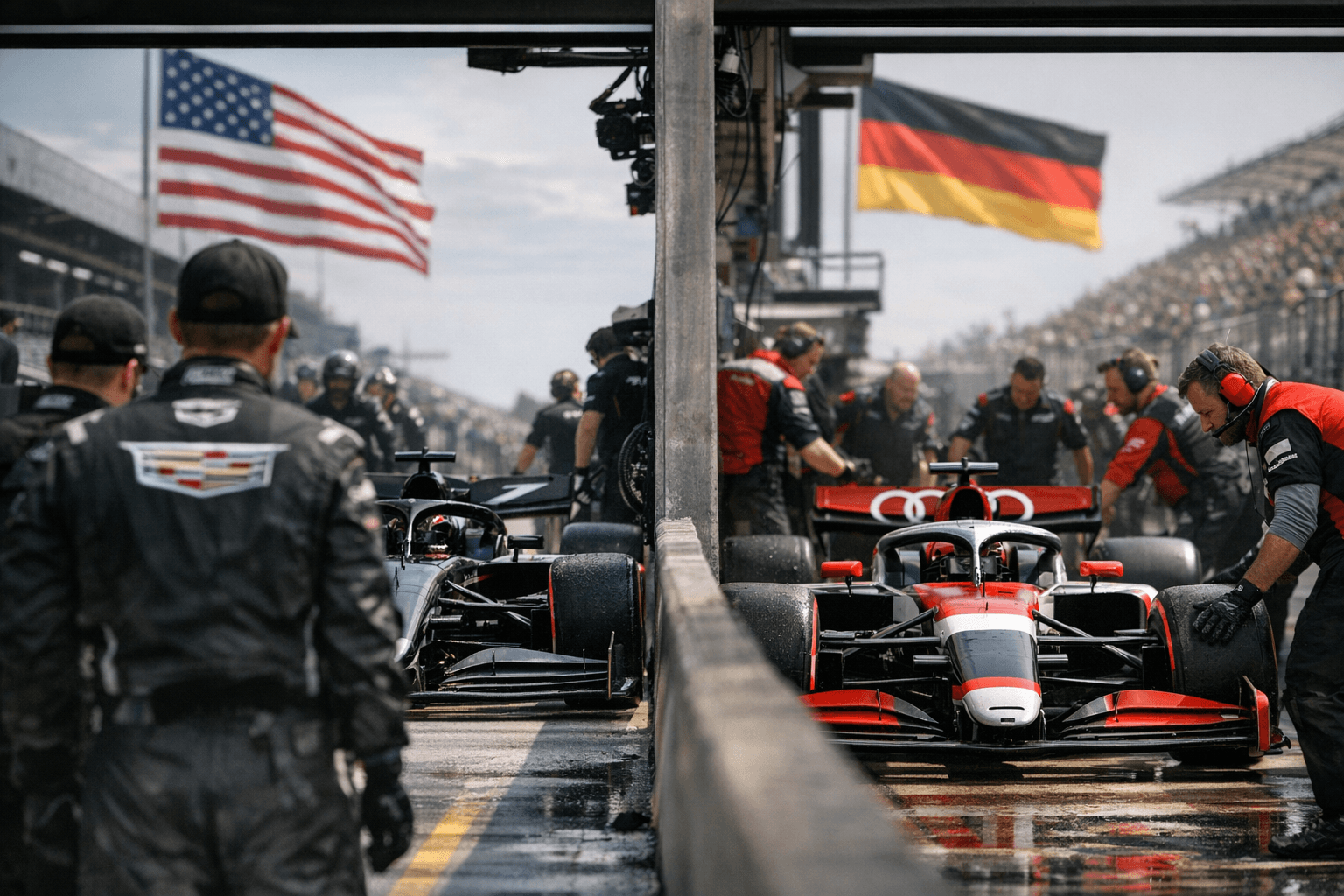
Cadillac and Audi have unveiled competing Formula 1 programs today, each declaring the same ultimate objective: to become world champions. Both manufacturers acknowledge, however, that translating boardroom ambition into race results will take years and require different mixes of engineering, culture and commercial strategy.
The contrast is immediate. Audi, part of the Volkswagen Group, is positioning its entry as a technology-led campaign grounded in European engineering traditions and existing motorsport know-how. Audi’s narrative emphasizes technical integration, long-term research and continuity with established supplier and talent networks across Germany and nearby countries. That approach aims to build a deep factory culture capable of incremental performance gains over multiple seasons.
Cadillac, owned by General Motors, is framing its F1 push as an extension of a broader brand strategy in North America and beyond. Cadillac’s project places an explicit premium on marketing reach, customer engagement and national visibility for an American marque competing in the sport’s elite class. Its program is likely to lean into commercial partnerships and cross-promotion between road cars and racing technology to accelerate brand lift in markets where Formula 1 is growing fastest.
Both strategies reflect more than corporate preference; they map onto deeper cultural and geopolitical currents. Audi’s method echoes the German industrial model of sustained engineering investment and technical mastery. Cadillac’s orientation channels U.S. strengths in branding, sponsorship and commercial activation, and it aims to convert the rising global appetite for Formula 1 into direct consumer impact for an iconic American badge.
The two entries also underscore how Formula 1 has become a global technology and marketing platform. For manufacturers the sport is less about short-term trophies than about product halo, talent acquisition and transfer of high-performance engineering to road vehicles. National identity and industrial policy shape expectations for results: German media and stakeholders will likely measure Audi on engineering milestones, while U.S. audiences will judge Cadillac by visibility and the sport’s contribution to GM’s broader electrification narrative.
Regulatory and practical constraints will temper both programs. The FIA’s homologation, cost cap framework and technical rules create a narrow corridor in which manufacturers must innovate. That limits runaway spending but raises the strategic value of organizational stability, efficient R&D and the ability to extract gains from limited testing and development windows.
For teams, suppliers and engineers, the arrivals mean more competition for scarce talent and a redistribution of expertise across Europe and North America. Job creation in high-skill engineering, aerodynamic and power unit roles will follow, as will intensified collaboration among global supply chains that move parts and software across borders.
Fans will watch early signs closely: reliability in the opening races, how quickly each outfit translates prototype data into race pace, and driver lineups that can exploit incremental gains. Both Cadillac and Audi have set the same target: the championship. Their differing paths make the contest as much about national industrial identity and corporate strategy as about on-track duels. The coming seasons will show whether methodical engineering or aggressive commercial mobilization reaches the pinnacle first.
This article was produced by Prism’s automated news system from verified source data, official records, and press releases, then run through automated quality and moderation checks before publishing. The system is built and supervised by the people who set the standards it runs under. Read our full AI policy.
Did this article answer your question?


