California crews race to cool chemical tank, avert explosion in Orange County
Crews raced to cool a 7,000-gallon toxic tank in Garden Grove as 40,000 people evacuated and officials warned of a possible vapor explosion.

Firefighters in Garden Grove spent the weekend trying to keep a 7,000-gallon tank of methyl methacrylate from overheating at the GKN Aerospace facility, where officials said the chemical could have gone into thermal runaway and triggered a vapor explosion. Orange County Fire Authority incident commander Craig Covey said the tank had climbed into the 90 to 100 degree Fahrenheit range, and he called the situation potentially “one of the worst chemical incidents in California history.”
The danger did not stop at one tank. Officials said two nearby containers, one holding 15,000 gallons and another holding 4,500 gallons, also contained methyl methacrylate, the toxic chemical used to make resins and plastics. That raised the stakes for emergency crews, who worked through the weekend to cool the system and prevent a chain reaction at the aerospace facility in one of Orange County’s most densely populated industrial corridors.
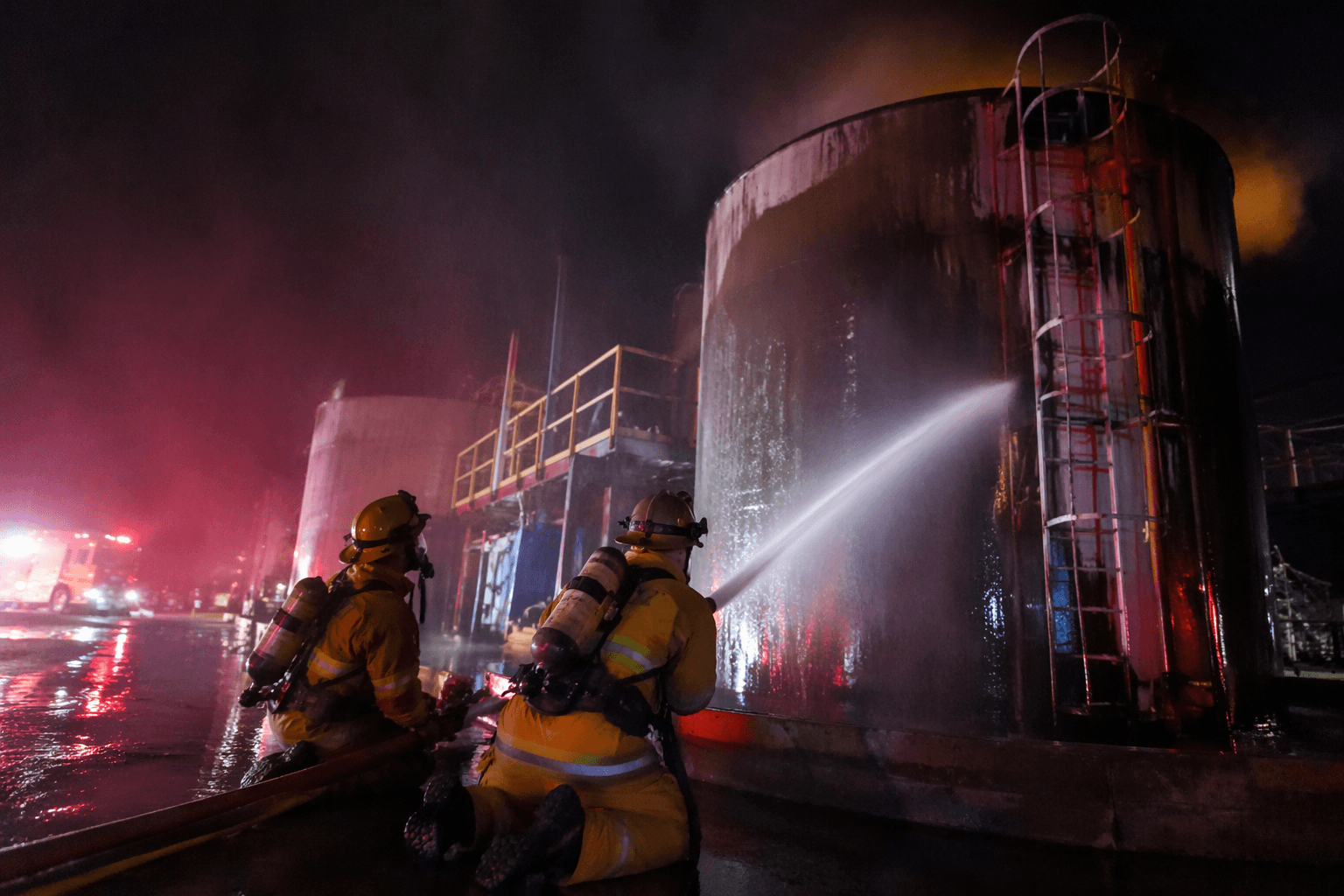
Gov. Gavin Newsom declared a state of emergency in Orange County on Saturday, May 24, 2026, and directed state agencies to support affected residents as the evacuation widened. NBC News reported that about 40,000 people were forced from their homes. The scale of that evacuation underscored the emergency-management lesson of the case: when a chemical site sits near neighborhoods, officials may have little time to choose between sheltering in place and moving tens of thousands of people out of harm’s way.
By Sunday, interim Orange County Fire Chief TJ McGovern said crews had carried out a late-night visual inspection and found a possible crack in the tank that may have been relieving pressure. He said the information was still being vetted, but if confirmed, it could change the response strategy. Officials also said air monitoring had not detected a toxic release from the possible fissure, a critical distinction in a fast-moving event where public warnings had to balance urgency with verified conditions.
GKN Aerospace said Sunday that it was monitoring the condition of the affected material and “working round the clock to mitigate the risk of a leak.” The incident has exposed how quickly a single compromised chemical tank can become a regional emergency, and how evacuation orders, air monitoring, and rapid public warnings now function as the front line of protection for communities living near major industrial sites.
This article was produced by Prism’s automated news system from verified source data, official records, and press releases, then run through automated quality and moderation checks before publishing. The system is built and supervised by the people who set the standards it runs under. Read our full AI policy.
Did this article answer your question?

