California governor candidates clash over housing, insurance and sharp attacks in debate
Xavier Becerra tried to make housing and insurance the race’s governing issue, but the debate ended in a scramble that left California’s fractured field unchanged.

Xavier Becerra tried to turn California’s insurance crisis into a test of executive force, proposing a state of emergency and a temporary freeze on home insurance rates as the eight-candidate governor’s debate moved through housing and coverage policy. The move put him at the center of the night’s first half and sharpened the contrast with rivals who are still fighting to define what kind of governor California wants for a state of about 39 million people and a budget of roughly $300 billion.
The setting mattered. The debate at Pomona College in Claremont was the second televised showdown in the 2026 governor’s race, arriving just days before ballots were set to start going out for California’s June 2 top-two primary. Under that system, the two highest vote-getters advance to November regardless of party, which has turned the early campaign into a contest not just for votes but for coalition math in a race that remains wide open.
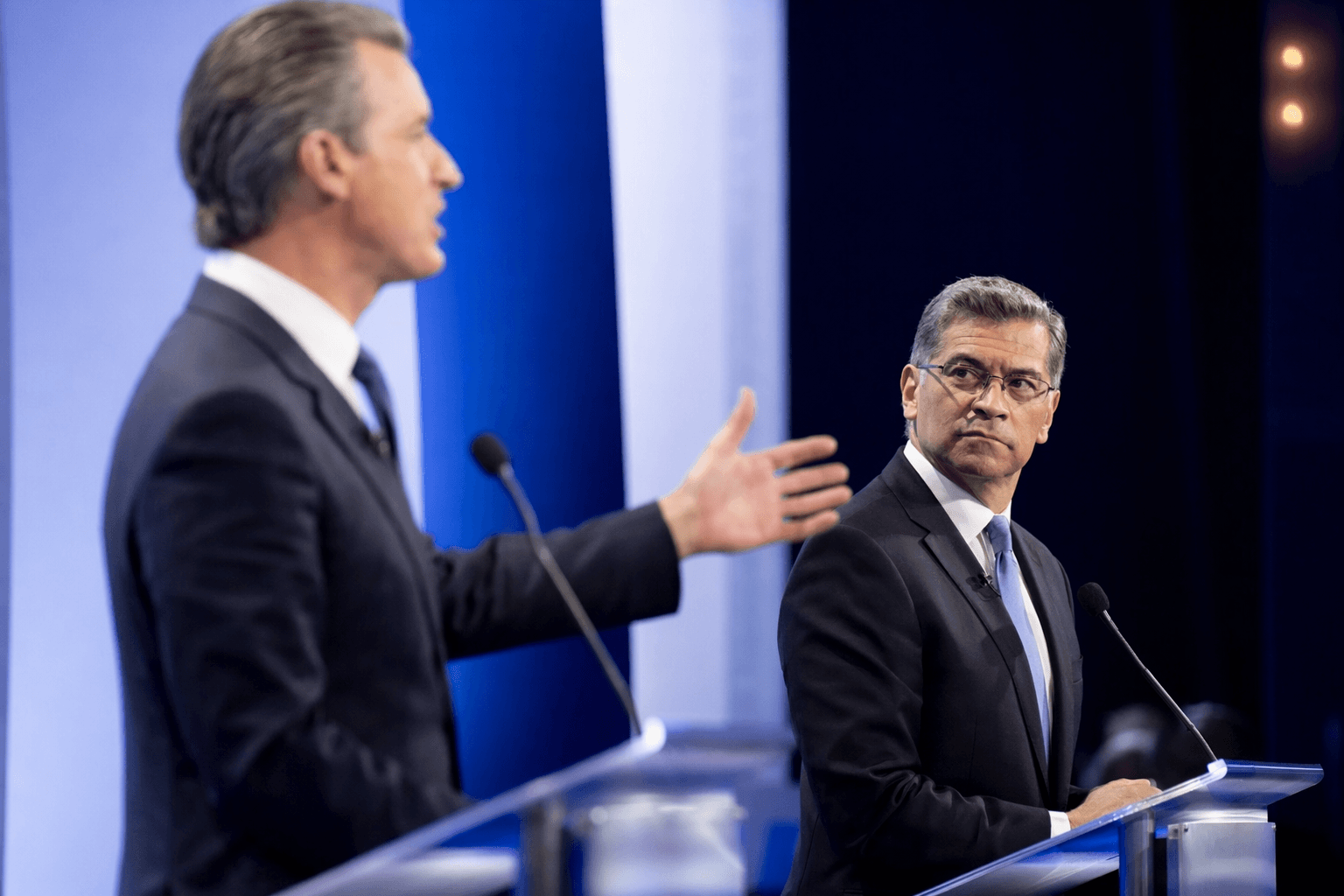
Becerra’s insurance proposal met immediate skepticism from the moderators, who questioned whether a rate freeze would be legal or constitutional. That exchange underscored how central the issue has become for Californians facing sharp premium increases and a shrinking market, especially as insurers have pulled back from wildfire-prone areas. The state has already pushed recent regulatory changes to stabilize the market, but the crisis still dominated the debate as one of the few issues with direct financial consequences for homeowners across Los Angeles, San Francisco, San Jose and fire-vulnerable inland regions such as Riverside County.
The broader power map of the race was already visible onstage. Katie Porter, Tom Steyer and Becerra have emerged as the main Democratic focal points, while earlier debate coverage showed Steve Hilton and Chad Bianco often avoiding each other and casting the contest as a choice against Democrats. That dynamic held in Claremont. Democrats again looked split among multiple lanes, while the two Republicans stayed disciplined in their anti-Democratic pitch.
The closing stretches turned far more personal. Candidates went after one another over wealth, corporate ties, homelessness, Trump and campaign strategy, creating the kind of combative finish that made the debate feel chaotic and hard to follow. Porter had already sharpened the field at the earlier televised debate by attacking Steyer over his wealth and past fossil-fuel and private-prison investments, and Steyer’s self-funding, at least $132 million so far, continued to loom over the Democratic contest.
The final exchanges did little to resolve the central question. If Becerra used housing and insurance to claim the mantle of the prepared executive, the sniping at the end suggested the race’s underlying coalition structure was still intact: a fractured Democratic field, two Republicans near the top in polling, and no candidate yet able to close the contest.
This article was produced by Prism’s automated news system from verified source data, official records, and press releases, then run through automated quality and moderation checks before publishing. The system is built and supervised by the people who set the standards it runs under. Read our full AI policy.
Did this article answer your question?

