California voter ID initiative qualifies for November ballot, sparks backlash
A GOP-backed voter ID measure cleared California’s signature hurdle, setting up a November fight over ballot security, citizenship checks and access to voting.
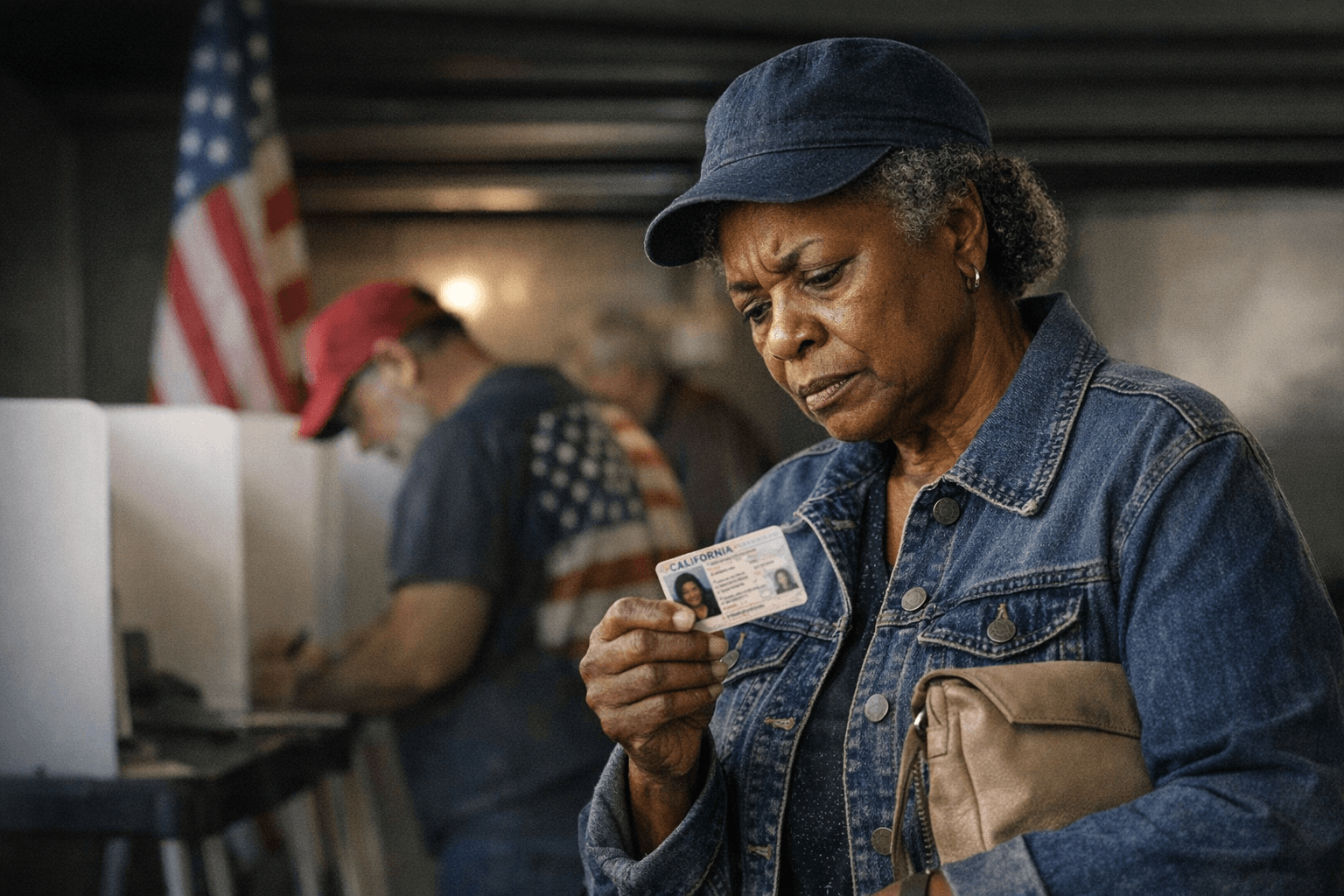
A Republican-backed effort to add voter ID and citizenship checks to California elections cleared the signature threshold and qualified for the Nov. 3, 2026, General Election ballot, setting up a high-stakes fight in a state that has long made voting easier than most of the country.
California Secretary of State Shirley N. Weber announced on April 24, 2026, that the initiative had surpassed the required 874,641 valid petition signatures, equal to 8% of the votes cast for governor in the 2022 election. Officials said the measure also cleared the state’s random-sampling benchmark of 962,106 projected valid signatures. Formal certification is scheduled for June 25, 2026, unless the proponent withdraws the measure first.
The proposal is being driven by Republican Assemblymember Carl DeMaio and allies including Reform California, with support from state Sen. Tony Strickland. Its title, as set by the attorney general, says it would establish additional voter identification and citizenship verification requirements and amend the California Constitution. Supporters are casting it as a common-sense election-security measure in a year when Republicans nationwide are pushing for tighter voting rules, including a separate congressional effort backed by President Donald Trump that would require proof of citizenship.
If approved by voters, the initiative would require people voting in person to show government-issued identification. Mail voters would have to provide the last four digits of a government-issued identification number. The measure would also require the state to provide voter identification cards on request and would force election officials to report every year the percentage of each county’s voters whose citizenship has been verified.

That would mark a sharp shift for California, one of 14 states plus Washington, D.C., that do not require voters to show ID at the polls. The state already requires voters to attest under penalty of perjury that they are U.S. citizens and to provide identity-verification information when registering.
Opponents say the problem the initiative claims to solve is already small and that the new rules would create unnecessary barriers, especially in a state where most residents vote by mail and ballot counts can take weeks. The burden would fall most heavily on voters who do not have easy access to current government identification, or who would have to navigate a new state-issued card process just to cast a ballot.
The fiscal stakes are also large. State analysts estimated one-time implementation costs in the tens of millions of dollars, with ongoing annual costs ranging from the tens of millions to the low hundreds of millions. That combination of cost, access concerns and a national partisan push has turned the California measure into a test of how far voter ID politics can travel, even in a deep-blue state that has built its election system around broad access.
This article was produced by Prism’s automated news system from verified source data, official records, and press releases, then run through automated quality and moderation checks before publishing. The system is built and supervised by the people who set the standards it runs under. Read our full AI policy.
Did this article answer your question?

