Camp East Montana quarantined after measles outbreak; attorneys barred
Camp East Montana on Fort Bliss was closed to visitors and lawyers after a measles outbreak that officials say sickened more than a dozen detainees and isolated 112 people.
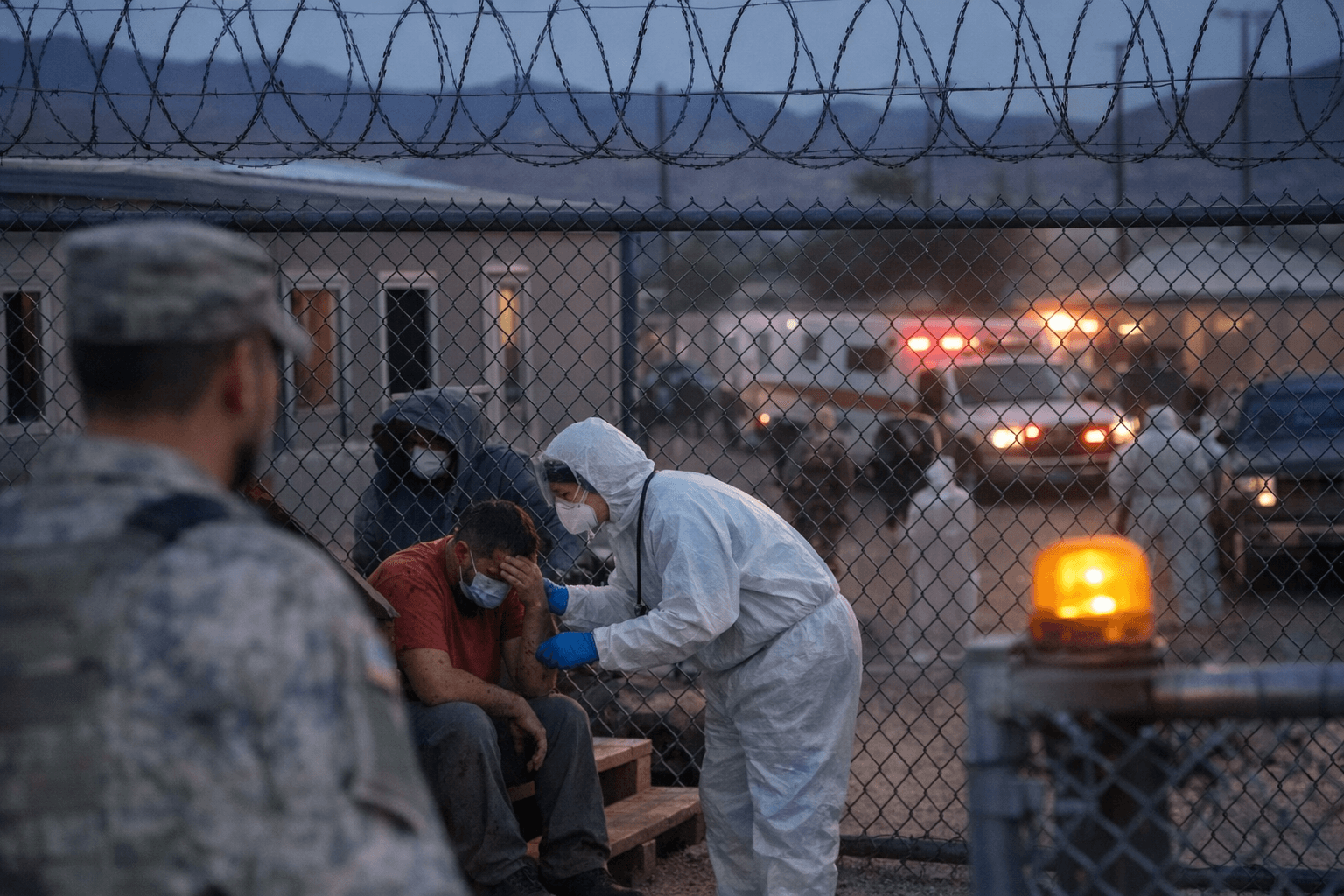
Camp East Montana, the sprawling U.S. Immigration and Customs Enforcement detention center on the Fort Bliss Army base, has been closed to visitors and attorneys and placed under quarantine after a measles outbreak that local officials and a member of Congress say has sickened more than a dozen people inside the facility.
Congresswoman Veronica Escobar said in a March 3 statement that the center is “closed to visitors and attorneys until March 19th or 20th because of a measles outbreak. There are 14 active measles cases inside the facility and 112 individuals are being isolated.” She added the outbreak followed “prior COVID and tuberculosis outbreaks there” and said she had learned “there has been an effort to quarantine detainees with measles at our local hospitals.” Escobar also renewed her call for the Department of Homeland Security to close the facility and for the Justice Department to investigate the contractor operating the site.
City health officials have confirmed measles cases at the detention center but have reported a slightly different count. The City of El Paso Department of Public Health confirmed 13 measles cases at Camp East Montana and identified four additional community cases in El Paso that a city spokesperson said “aren’t connected to the cases at Camp East Montana.” Public-health teams have begun contact tracing and identified possible public-exposure sites between Feb. 20 and Feb. 22, including Cielo Vista Mall, Del Sol Medical Center, the Outlet Shoppes at El Paso and Target Bassett. Officials advised anyone who visited those locations during the cited dates and later developed fever or rash to contact a health care provider.
Camp East Montana, described by officials as a tent city, is run by Acquisition Logistics LLC, with medical services provided by Loyal Source. Escobar’s office says the facility held around 1,800 detainees in February, down from about 3,100 in January, and that “there are likely hundreds of El Pasoans employed there, along with 56 members of the Texas National Guard.” Health workers and advocates say the center has been the scene of repeated public-health incidents: at least two cases of tuberculosis have been identified and earlier this month officials noted cases of COVID-19 among detainees.
Attorneys and advocates say the quarantine has immediate legal and humane consequences. Crystal Sandoval, a lawyer with the immigration rights group Las Americas, reported she was told she could not meet with a potential client because of the spread of infectious disease inside the center. Escobar said detainees would be permitted to access their lawyers virtually but flagged long-standing problems with medical care and infection control: “During my several oversight visits, I have never seen personnel wearing masks or PPE in order to prevent the spread communicable disease. I’ve been informed the staff is finally getting PPE, but I cannot personally confirm that is the case.” Families and former detainees say medical attention inside the facility has been inadequate; relatives who spoke with officials described medical care as “almost non-existent” and reported “regular flooding and unsanitary conditions.”
Public-health officials noted that although about 98 percent of El Paso County residents are vaccinated against measles, unvaccinated or under-vaccinated people remain at highest risk. Measles is highly contagious and “spreads through coughing and sneezing and can remain in the air for up to two hours after an infected person leaves an area,” health guidance states, with initial symptoms that include fever, cough and red eyes followed by a spreading rash.
Federal agencies and the contractors operating the site had not provided a public statement on the quarantine as of March 3. Local and federal health authorities face urgent tasks: confirming and reconciling case counts, ensuring containment without disrupting legal access, and addressing long-running complaints about medical care and living conditions that advocates say place detained people and surrounding communities at risk.
This article was produced by Prism’s automated news system from verified source data, official records, and press releases, then run through automated quality and moderation checks before publishing. The system is built and supervised by the people who set the standards it runs under. Read our full AI policy.
Did this article answer your question?


