Canada’s fire lab turns to wildfire-resistant buildings
Ottawa's fire lab is firing embers and full-scale burns at buildings to rewrite wildfire standards before the next severe season hits.
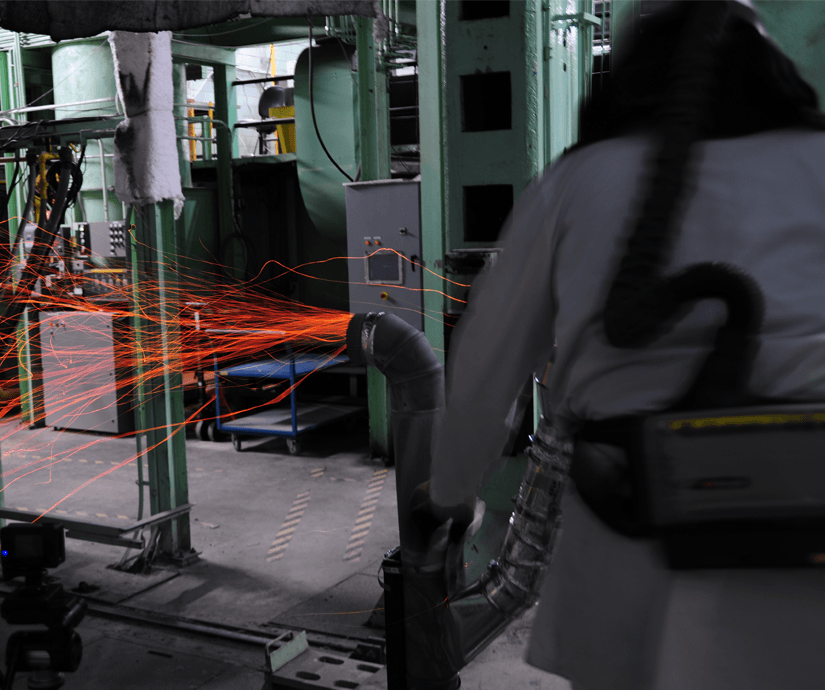
Inside Ottawa’s national fire safety facility, researchers are testing how buildings stand up to ember storms, radiant heat and full-scale wildfire exposure. The work is shaping Canada’s building codes and offering a model for communities, insurers and regulators confronting more destructive fire seasons.
From industrial fire testing to wildfire adaptation
The National Research Council of Canada built its fire safety testing facilities to support fire resistance research, technology development and testing for Canadian industry, government and academia. Those facilities still serve construction, transportation, aerospace and automotive work, but the center of gravity has shifted as wildfire risk has grown.
In 2021, the Construction Research Centre launched the Resilience and Adaptation to Climatic Extreme Wildfires project to support mitigation measures and better preparedness for wildfire threats. The project is funded through the NRC’s Ideation Fund and is scheduled to run through 2025.
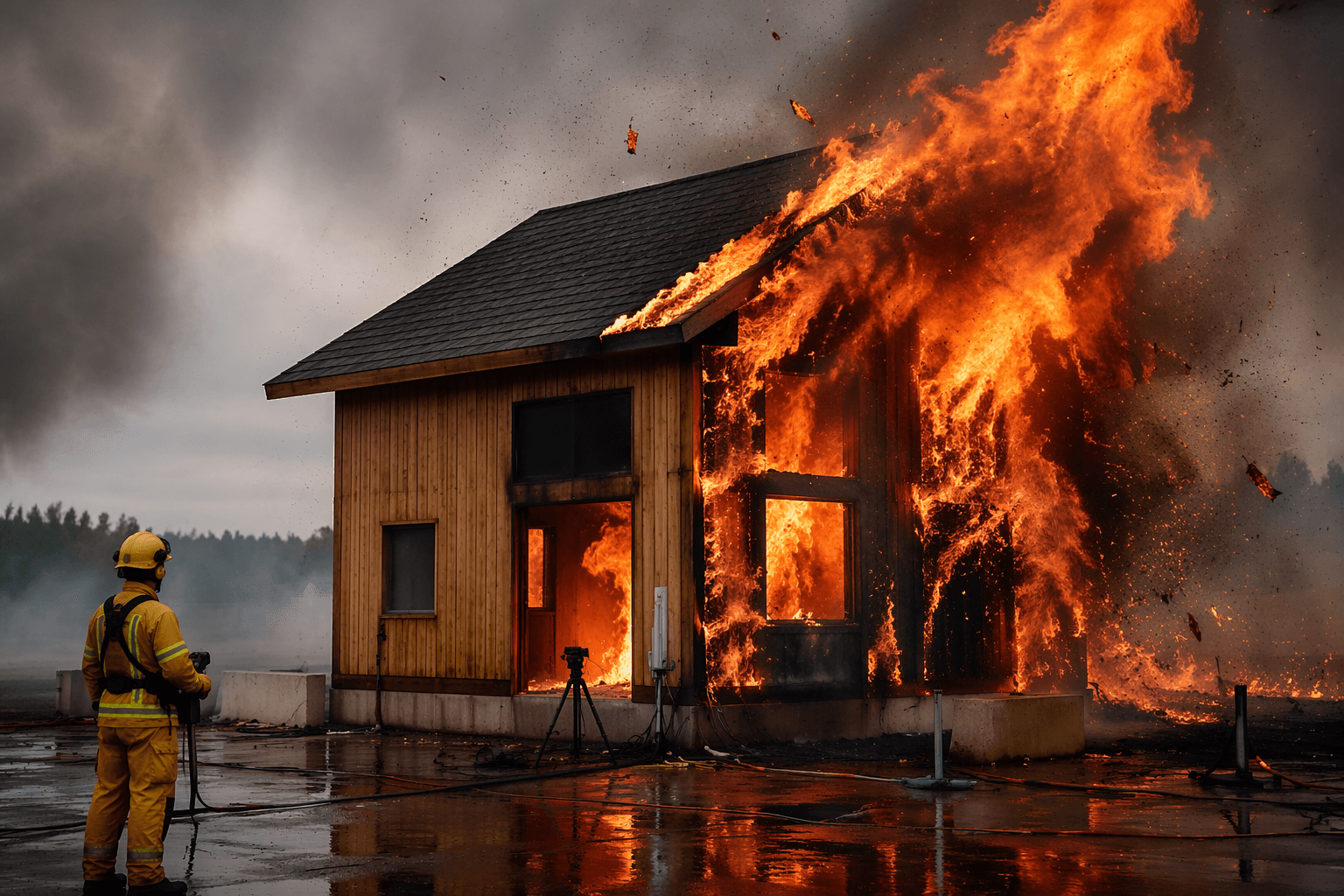
Wildfire does not behave like a conventional building fire. Homes and commercial structures in the wildland-urban interface are often exposed first to windborne embers, then to radiant heat and direct flame contact. The NRC’s work in Ottawa is designed to measure that sequence, not just the point at which a wall fails in a standard test chamber.
The “baby dragon” and the ember problem
At the center of that effort is an ember generator nicknamed the “baby dragon.” NRC uses it to replicate firebrand attacks under wildfire conditions and assess the ignition potential of materials and structures. Firebrands can travel far ahead of a fire front and ignite roofs, vents, decks and other vulnerable parts of a building.
The facility now assesses the wildfire ignition potential of materials and structures rather than limiting itself to traditional fire-resistance questions. In Ottawa, a roof edge, siding choice or vent design becomes a testable variable with direct implications for whether a building survives a firestorm.
NRC’s wildfire work also extends beyond the lab. The agency has tied the research to smoke sampling from intense wildfire plumes over the Prairies, adding another layer of evidence about what severe fire events produce and how those events spread risk across regions.
How experiments become code
NRC publishes Canada’s national model codes, and that gives the research a direct path into rules that shape construction across the country. The National Building Code of Canada 2020 sets technical requirements for the design and construction of new buildings, along with alteration, change of use and demolition of existing buildings.
The National Fire Code of Canada: 2025 was published in late 2025 and updated on July 10, 2026. Together, those codes define the technical baseline that provinces, municipalities and industry often use when deciding how buildings should be designed, altered or rebuilt in a country facing rising wildfire exposure.
NRC has also published a National Guide for Wildland-Urban Interface Fires, the first of its kind for Canada. The guide is meant to reduce damage and loss from WUI fires by improving the resilience of buildings, infrastructure and communities.
Why full-scale burns matter
The Ottawa lab’s wildfire tests are part of a longer Canadian pattern of building experiments at full scale. In June 2022, federal researchers carried out a five-burn mass timber demonstration fire test program in Ottawa. The largest burn involved a two-storey, 3,700-square-foot structure, built to help support market acceptance of large mass timber buildings in Canada.
Full-scale burns do more than prove that a component works in isolation. They help architects, engineers, builders and code officials understand how entire assemblies perform when fire attacks the building as a system.
The same kind of full-scale testing that helped advance mass timber acceptance can be used to examine roofs, cladding, decks, openings and other entry points for embers.
The policy frame: climate resilience, not just engineering
Ottawa announced a five-year, $35-million Climate Resilient Built Environment initiative, placing wildfire adaptation inside a broader infrastructure strategy rather than treating it as a niche research project.
For U.S. communities, the Canadian model points to three practical lessons. First, wildfire standards work best when they are built from measured ember exposure, not generic assumptions about flame alone. Second, full-scale tests give insurers and regulators a better basis for judging which construction details reduce loss in the wildland-urban interface. Third, code development has to keep pace with the speed of climate-driven risk, because a building code written for older fire patterns can lag behind the hazard on the ground.
This article was produced by Prism’s automated news system from verified source data, official records, and press releases, then run through automated quality and moderation checks before publishing. The system is built and supervised by the people who set the standards it runs under. Read our full AI policy.
Did this article answer your question?

