Canadian Rangers tackle record Arctic mission as security fears rise
Frostbite and -30C cold were part of a 5,200-km Ranger patrol that tested how far Canada can project power across the Arctic.
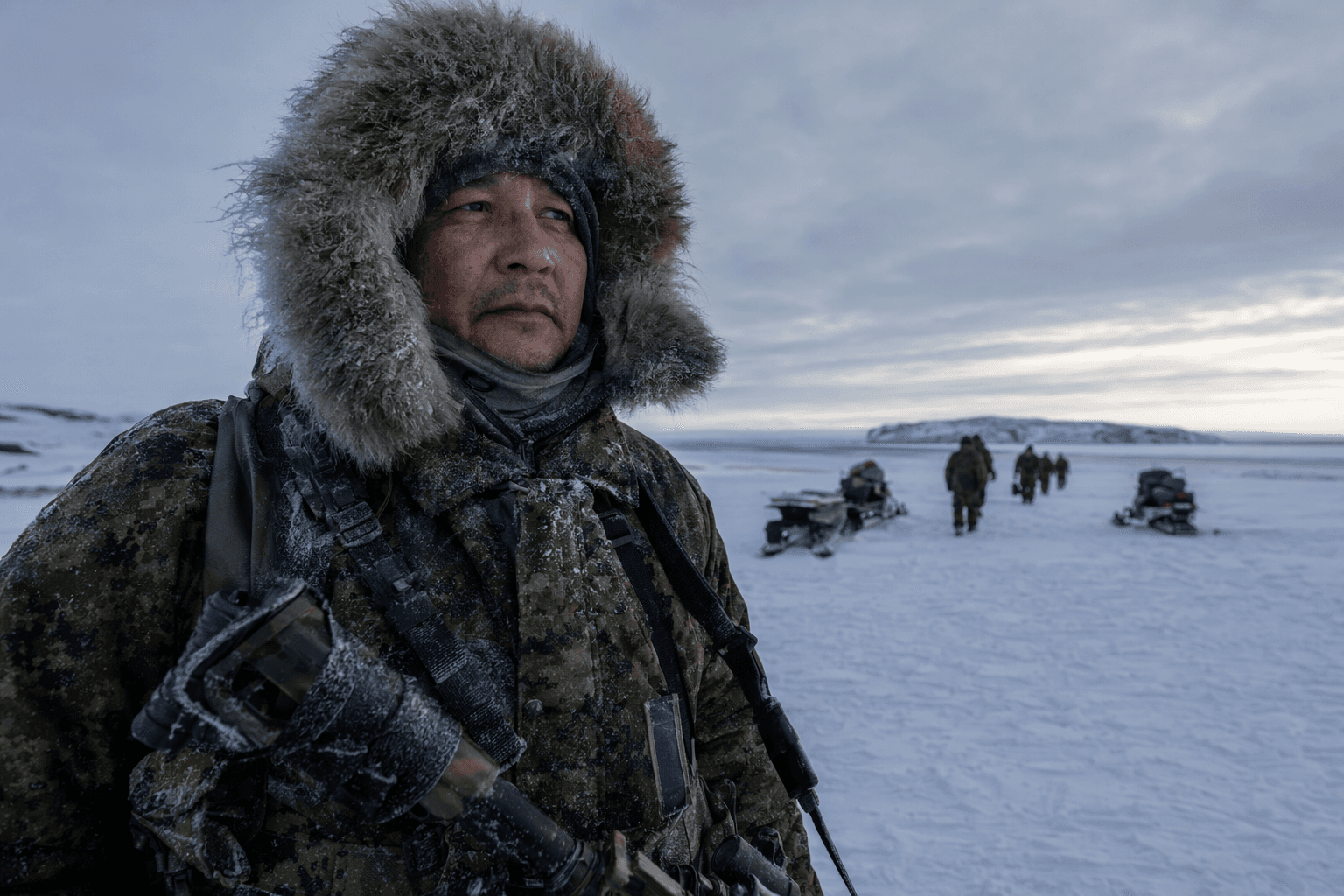
The Canadian Rangers pushed through frostbite risk and sub-zero temperatures on a five-day trek that exposed the scale of Canada’s northern challenge: holding and moving across a vast frontier where sovereignty, military readiness and climate change now collide. The patrol was part of Operation NANOOK-NUNALIVUT 2026, described by the Canadian Armed Forces as the largest and most comprehensive winter operation in the Arctic under the Operation NANOOK umbrella.
Running from February to April 2026, the mission drew about 1,300 Canadian Armed Forces members and nearly 200 vehicles and pieces of equipment, including two M777 howitzers. The long-range patrol covered more than 5,000 kilometres from Inuvik, Northwest Territories, to Churchill, Manitoba, a route said not to have been attempted in 80 years. By the time the journey ended, the Rangers had spent 52 days on the land and crossed some of the most unforgiving terrain in the country.
The physical burden was the point. Logistics flights averaged roughly one every 12 hours, a reminder that every mile in the Arctic has to be supplied, tracked and defended. The operation was not just about surviving cold weather, but about proving that Canadian forces can sustain heavy equipment, move personnel, and keep a patrol functioning across a corridor where mistakes can quickly become life-threatening.
Defence officials said the mission was designed to detect, deter and, if required, defend against threats in the Arctic and North, while also working with allies and northern partners. That mission matters because the region accounts for about 40% of Canada’s landmass and 70% of its coastline, and it is becoming more strategically valuable as climate change opens new routes and makes surveillance harder to ignore.
The Canadian Rangers remain central to that effort. Often described as Canada’s eyes and ears in the North, they bring local knowledge and endurance that regular forces cannot replicate. In a region shaped by Inuit communities, remote settlements, and the distances between Inuvik, Parsons Lake and Churchill, their role is as much about presence as it is about patrols.
Operation NANOOK-NUNALIVUT showed that Canada’s Arctic policy is no longer an abstract map exercise. It is a test of whether the country can move, observe and defend in terrain that is getting easier to reach and harder to secure.
This article was produced by Prism’s automated news system from verified source data, official records, and press releases, then run through automated quality and moderation checks before publishing. The system is built and supervised by the people who set the standards it runs under. Read our full AI policy.
Did this article answer your question?