Cancer centers rush to enroll patients in daraxonrasib access program
Pancreatic cancer patients are being steered into a rare early-access path for daraxonrasib as survival data and desperation collide. The program opens a narrow bridge before full approval.
Patients with advanced pancreatic cancer are being pushed toward a narrow early-access lane for daraxonrasib because standard treatment options remain so limited. Cancer centers are moving quickly to help eligible patients enter the program while Revolution Medicines and the U.S. Food and Drug Administration move the drug through review for previously treated metastatic pancreatic ductal adenocarcinoma.
The urgency follows strong Phase 3 data released on April 13. In the RASolute 302 trial, daraxonrasib produced a median overall survival of 13.2 months, compared with 6.7 months for chemotherapy, with a hazard ratio of 0.40 and p less than 0.0001. The drug is taken orally once daily, a practical advantage for patients already dealing with a disease that often leaves little time and fewer tolerable options.

On May 1, the FDA said it had issued a “safe to proceed” letter for an expanded-access treatment protocol after receiving Revolution Medicines’ request on April 28 and signing off on April 30. The protocol is designed for patients with previously treated metastatic PDAC, and the agency said requests must come from licensed U.S. physicians on behalf of eligible patients. Expanded access is generally reserved for cases where no comparable or satisfactory alternative exists, which helps explain why clinics are trying to move quickly.
The scientific and commercial stakes are enormous. Pancreatic cancer remains one of the deadliest malignancies in the United States, with SEER estimating 67,530 new cases and 52,740 deaths in 2026. The five-year relative survival rate is only 13.7 percent. The National Cancer Institute says there are no screening tests that can catch the disease early before symptoms develop, and that about 1 in 100 people with new-onset diabetes are diagnosed with pancreatic cancer within three years.
Daraxonrasib is aimed at KRAS-driven tumors, a target long considered difficult to drug, and PanCAN said the results were a “truly remarkable” step forward. The advocacy group said RAS mutations are detected in more than 90 percent of pancreatic cancers and noted that earlier studies found rash as the most common side effect, with mouth sores, diarrhea, nausea and vomiting also common. It also warned that resistance remains a concern, underscoring why combination strategies and future trials will matter even if the drug advances toward approval.
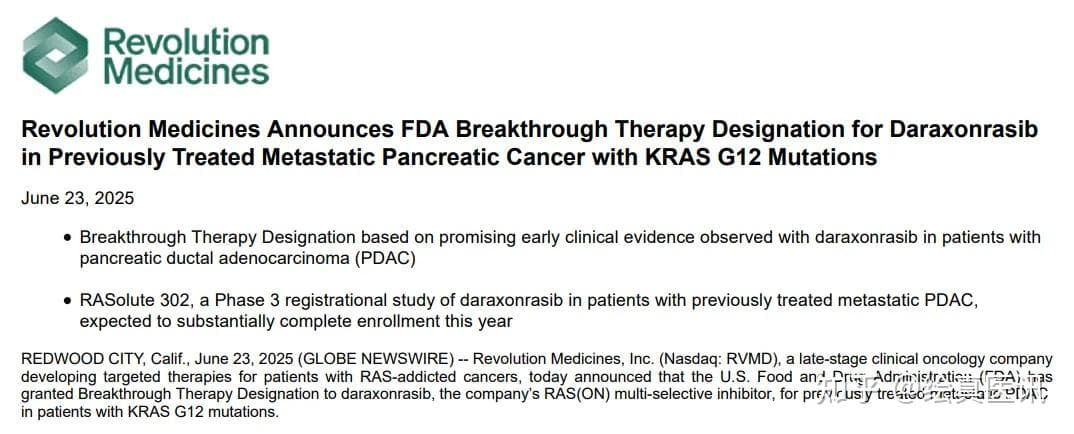
For Revolution Medicines, based in Redwood City, California, the opportunity is as large as the need. The company said the study met its primary and key secondary endpoints and plans to seek U.S. and global approval, while the FDA said the drug had already received a national priority voucher in October 2025, along with Breakthrough Therapy and Orphan Drug designations.
This article was produced by Prism’s automated news system from verified source data, official records, and press releases, then run through automated quality and moderation checks before publishing. The system is built and supervised by the people who set the standards it runs under. Read our full AI policy.
Did this article answer your question?