Carney visits Irish family roots, urges closer Canada-Europe ties
Mark Carney turned a Mayo family homecoming into a message on Canada’s role in a fractured world, linking 21 second cousins to a push for closer Europe ties.
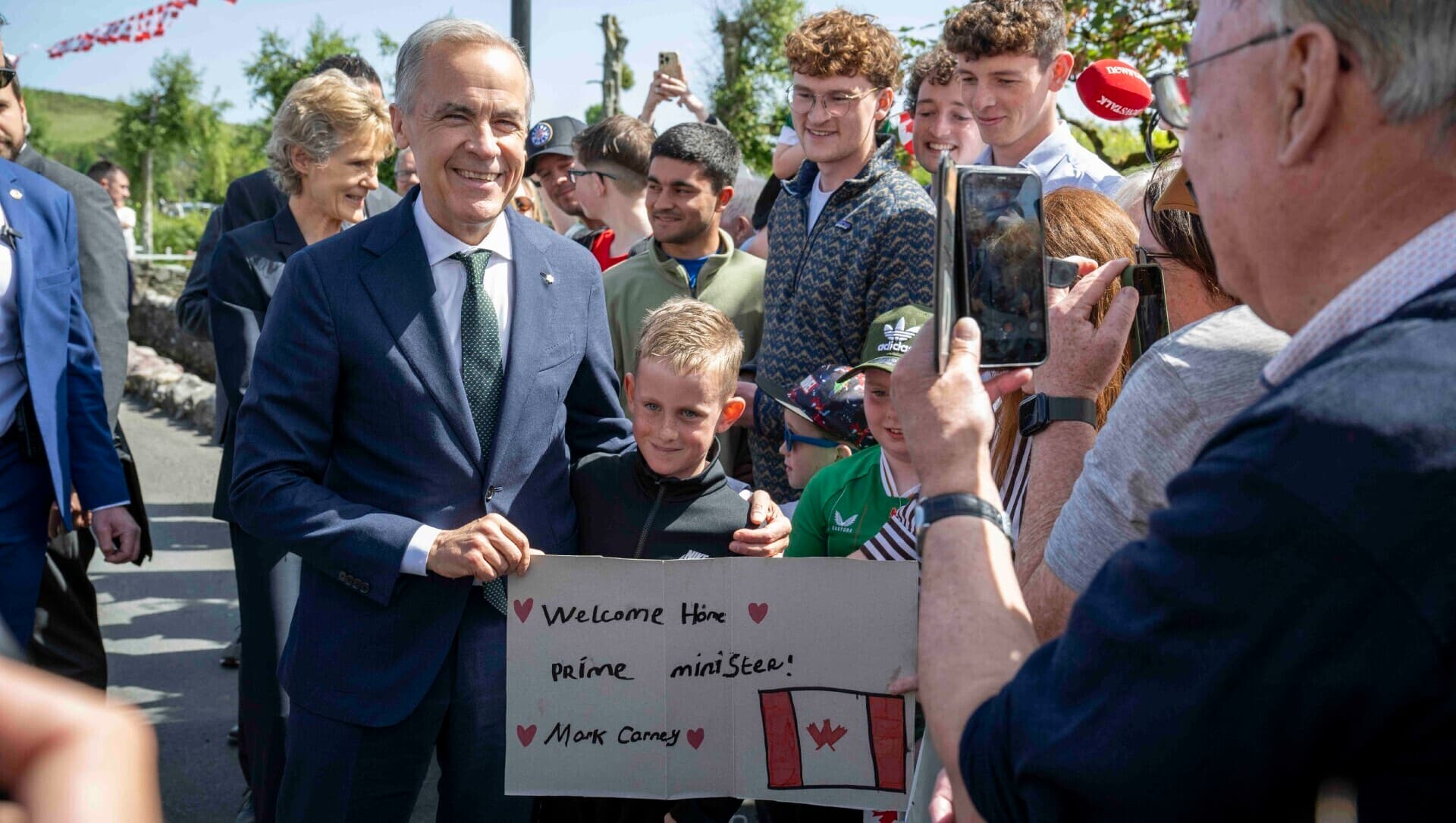
Mark Carney turned a visit to his grandparents’ village in County Mayo into a political signal before heading to the G7 in France, using Irish family history to argue that Canada should tighten its ties with Europe. In Aughagower, he mixed private ritual with public diplomacy, showing how identity can still shape foreign policy.
The two-day official trip began in Dublin on June 13, where Carney delivered the inaugural De Chastelain Public Lecture at Trinity College Dublin. Micheál Martin and Tánaiste Simon Harris were among the invited guests, giving the address a clear government weight as Carney set out a case for closer cooperation among countries facing what he called a “global rupture.”
Carney and his wife, Diana Fox Carney, arrived at Dublin Airport at about 10:00 local time before meeting Martin in the capital and heading west. The Irish government said the leaders underscored the deep Canada-Ireland relationship, rooted in shared history, common values and people-to-people ties, language that matched the tone Carney was trying to strike ahead of high-stakes meetings in France.
The strongest symbolism came in Aughagower, the west of Ireland village where Carney’s paternal grandparents were born. On June 14, he met distant cousins, attended mass in the local Catholic church, visited the family grave and planted a tree. Local reporting said the village had spent days preparing, with Canadian flags displayed across County Mayo and residents comparing the attention to a JFK-style homecoming.
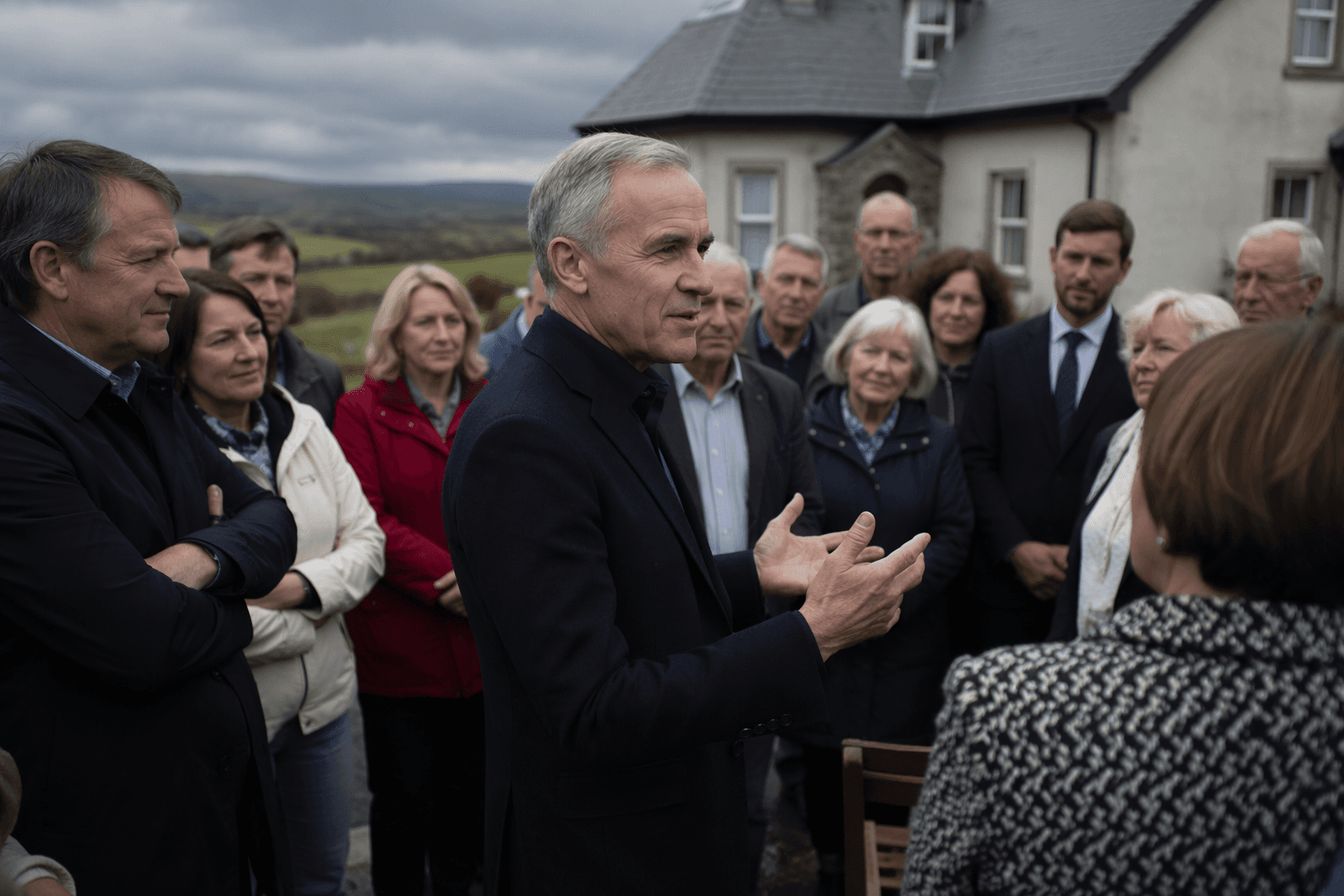
The family connection is unusually broad. Local reporting said Carney has 21 second cousins in Mayo, a detail that gave the visit a scale beyond a routine heritage stop and helped explain why the trip resonated so strongly in the county. Carney said retracing his Irish roots was a “great thrill” and that it felt “wonderful” to be back.
The political message was just as deliberate. Carney said middle-power countries should not compete for favor with the United States, instead pressing for tighter cooperation among like-minded states. He argued that Ireland, Canada and Europe can help build the dense web of connections needed to navigate a post-Cold War order that is breaking down.
That framing made the Mayo stop more than a personal detour on the way to the G7. It positioned Carney as a leader using family history, Irish ties and transatlantic symbolism to reinforce a broader diplomatic argument: in an era of conflict and uncertainty, Canada’s influence may depend less on deference to larger powers than on building stronger ties with Europe and other middle powers.
This article was produced by Prism’s automated news system from verified source data, official records, and press releases, then run through automated quality and moderation checks before publishing. The system is built and supervised by the people who set the standards it runs under. Read our full AI policy.
Know something we missed? Have a correction or additional information?
Submit a Tip