Colombia’s peace deal falters as armed groups unleash drone warfare
A decade after the 2016 deal, Colombia’s armed groups have traded some rifles for drones, coca money and fragmentation, driving mass displacement and civilian casualties.
Colombia’s long-promised peace dividend has given way to a harsher, more adaptive war. A decade after the government signed its final accord with the FARC, armed groups are still killing, displacing and confining civilians, while adding commercial drones to a conflict that never truly ended.
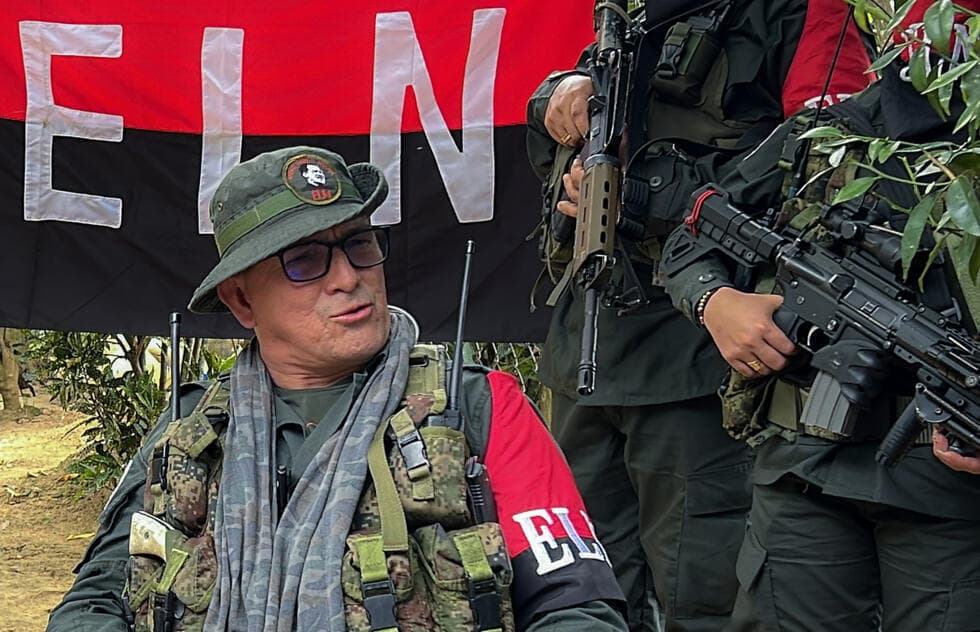
The peace agreement was signed on November 24, 2016, after voters narrowly rejected an earlier version in an October 2, 2016 referendum. About 13,300 FARC combatants disarmed in a United Nations-monitored demobilization in 2017, and Juan Manuel Santos won the 2016 Nobel Peace Prize for helping end Colombia’s more than 50-year civil war. Yet the battlefield has shifted rather than disappeared. FARC dissidents, the ELN and other armed actors have filled the vacuum, using fragmented command structures, illicit revenue and new technology to extend their reach.
Drug money remains central to that evolution. The UN Office on Drugs and Crime said coca cultivation in Colombia rose 10 percent in 2023 to 253,000 hectares, while potential cocaine production climbed to 2,664 metric tons. The U.S. Department of State said coca cultivation and cocaine production reached all-time records, and in October 2025 Washington said it would not certify Colombia’s counternarcotics efforts. The numbers point to a conflict economy that has outlived the accords and kept armed groups funded even as formal war ended.
The human cost has worsened sharply. The U.N. humanitarian office said nearly 1,450,000 people were affected by conflict-related violence in the first half of 2025. OCHA-linked reporting counted 70,284 people hit by mass displacement, while ACAPS reported more than 137,700 people affected by confinement in 2024 and more than 137,800 by mobility restrictions that same year. In a country that once expected reintegration to reduce violence, the opposite has become routine in rural areas.
Nowhere has the breakdown been clearer than Catatumbo, in Norte de Santander, where fighting between the ELN and FARC dissidents escalated on January 15, 2025. The violence displaced tens of thousands of people, pushed President Gustavo Petro to declare a state of emergency and led him to break peace talks with the ELN. In Bogotá and Cúcuta, the crisis underscored how little state control exists in areas where armed groups can still dictate movement, food access and security.
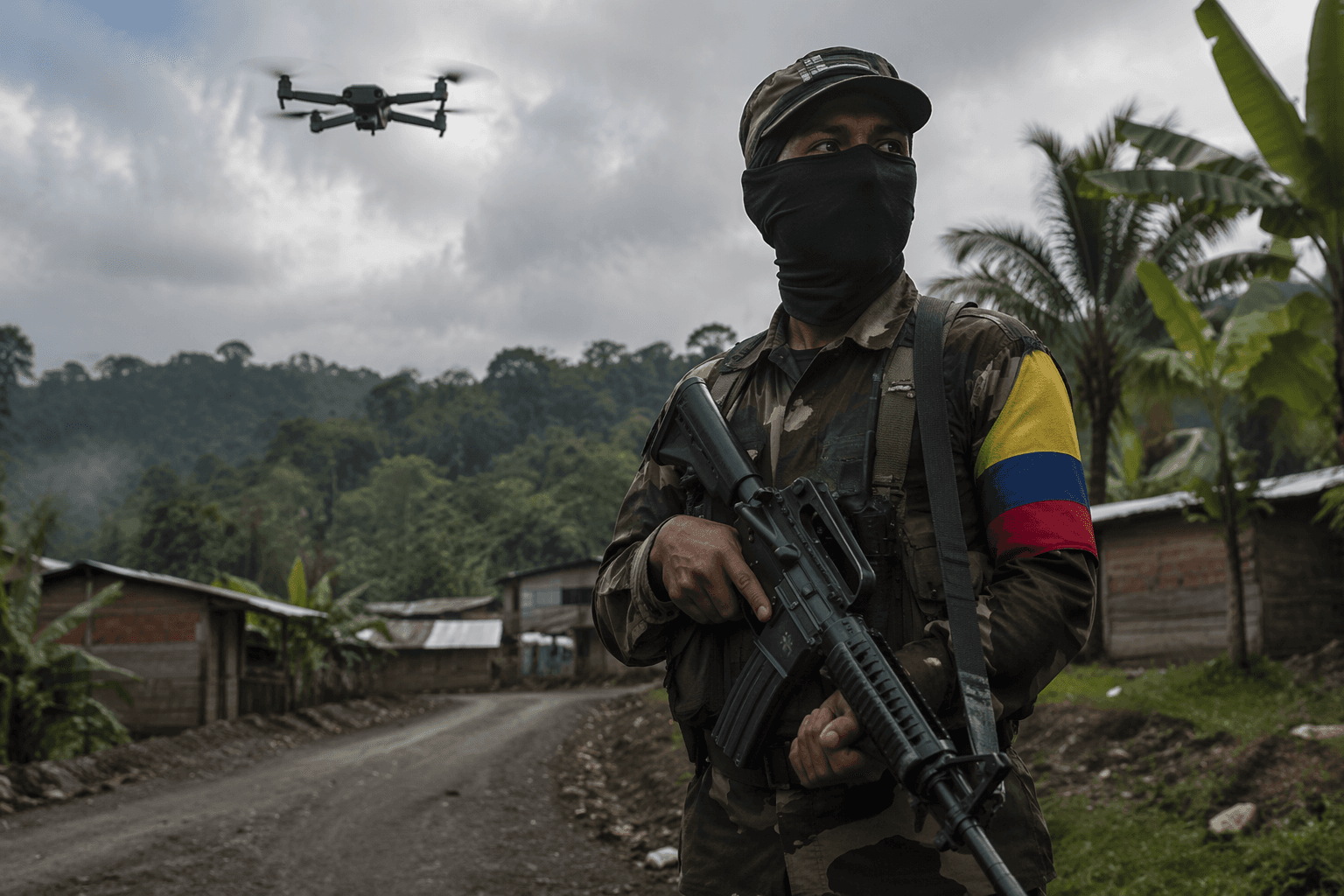
The war has also entered a new technological phase. The Colombian Army formed its first unmanned aircraft battalion in October 2025 as armed groups accelerated their use of commercial drones. The International Committee of the Red Cross said 2025 became Colombia’s most severe humanitarian year in a decade, documenting 965 people killed or injured by explosive devices, most of them civilians. Human Rights Watch says armed-group abuses, limited access to justice and deep poverty among rural, Indigenous and Afro-descendant communities remain entrenched, keeping Colombia among the world’s worst countries for attacks on human rights defenders, child recruitment, displacement and confinement.
This article was produced by Prism’s automated news system from verified source data, official records, and press releases, then run through automated quality and moderation checks before publishing. The system is built and supervised by the people who set the standards it runs under. Read our full AI policy.
Know something we missed? Have a correction or additional information?
Submit a Tip