Russian strikes set fire to Kyiv’s 1,000-year-old monastery
A barrage of 70 missiles and 611 drones set the Dormition Cathedral’s roof ablaze, while monks rushed ancient icons out of Kyiv’s 1,000-year-old Lavra.
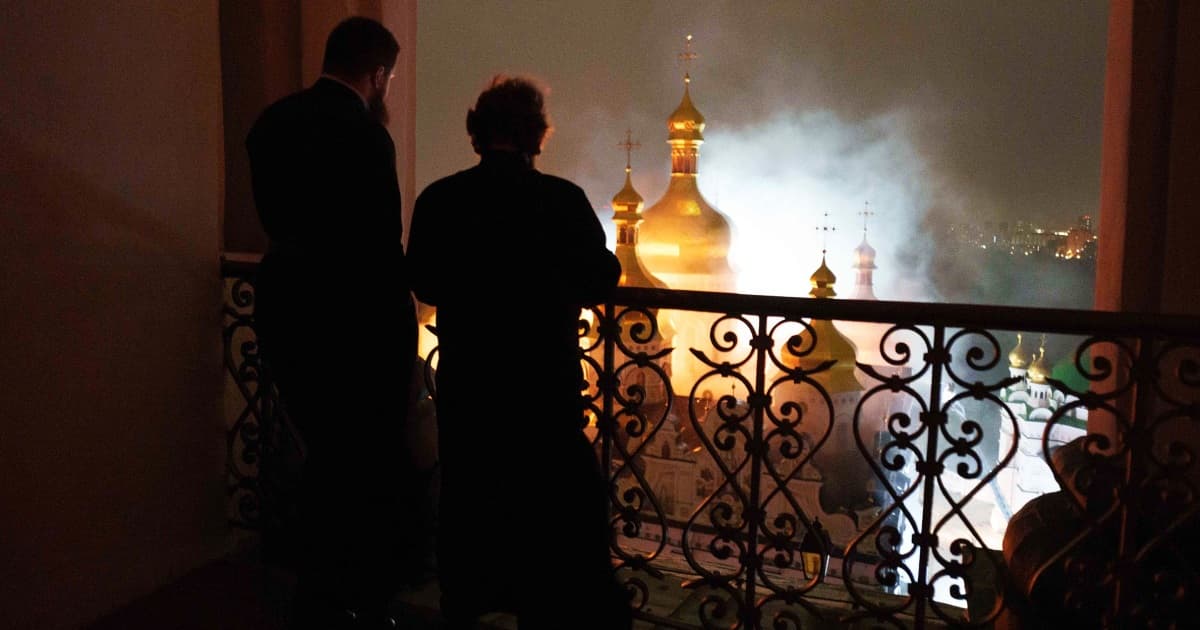
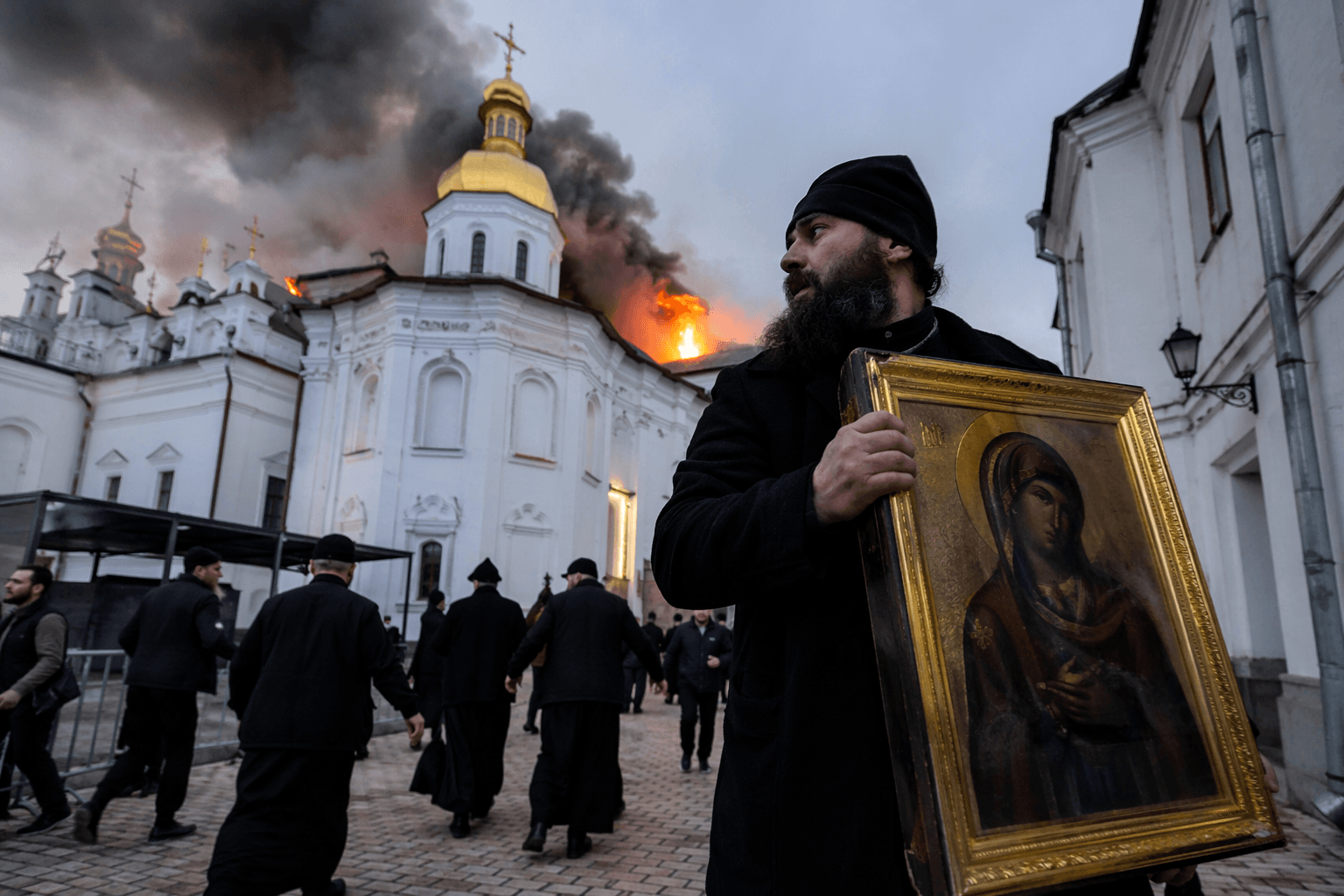
Russian missiles and drones set fire to the roof of the Dormition Cathedral inside Kyiv’s Kyiv-Pechersk Lavra, forcing monks and rescuers to rush ancient icons, antimensia and other relics out of the complex as flames climbed through one of Ukraine’s most sacred landmarks. Fire crews later contained the blaze, and officials said the cathedral suffered no major structural damage, but the strike landed squarely on a site that has stood at the center of Ukrainian religious life for nearly a millennium.
The Lavra was founded in 1051 and UNESCO inscribed it as a World Heritage site in 1990, later adding it to the List of World Heritage in Danger in 2023. It also carries enhanced protection under the 1954 Hague Convention’s Second Protocol, a framework meant to shield cultural property from wartime attack. The Dormition Cathedral at the heart of the complex was destroyed in 1941 and rebuilt in 2000, a history that made the sight of smoke over its roof all the more searing for Ukrainians watching another chapter of destruction unfold.
The attack came during a massive overnight barrage that Ukrainian officials said included 70 missiles and 611 drones, one of the largest in months. At least five people were killed in Kyiv and 29 were injured there, while casualty totals elsewhere in the country were still shifting as rescue work continued. Authorities also said about 140,000 residents in the Kyiv region lost power, and residential buildings and infrastructure in the capital were damaged as the strikes reached beyond the monastery walls.
The symbolism was impossible to miss. The Lavra predates the first written mention of Moscow in 1147, and Yuriy Dolgorukiy, the prince traditionally credited with founding Moscow, is buried on its grounds. That makes the monastery not only a religious center but also a contested marker of historical memory, one that carries meaning far beyond Ukraine’s borders. Volodymyr Zelenskyy, Yulia Svyrydenko and Metropolitan Epiphanius denounced the attack, and Archimandrite Avraamiy called it “yet another act of Russian barbarism.”
The blaze at the Lavra underscored a broader pattern of war damage to churches, monasteries and other protected places, where the loss is measured not only in stone and timber but in identity, memory and law. Even when fire crews contain the damage, every strike on a heritage site adds pressure on reconstruction, deepens the cost of recovery and tests whether international rules meant to protect culture in war can hold under sustained attack.
This article was produced by Prism’s automated news system from verified source data, official records, and press releases, then run through automated quality and moderation checks before publishing. The system is built and supervised by the people who set the standards it runs under. Read our full AI policy.
Know something we missed? Have a correction or additional information?
Submit a Tip