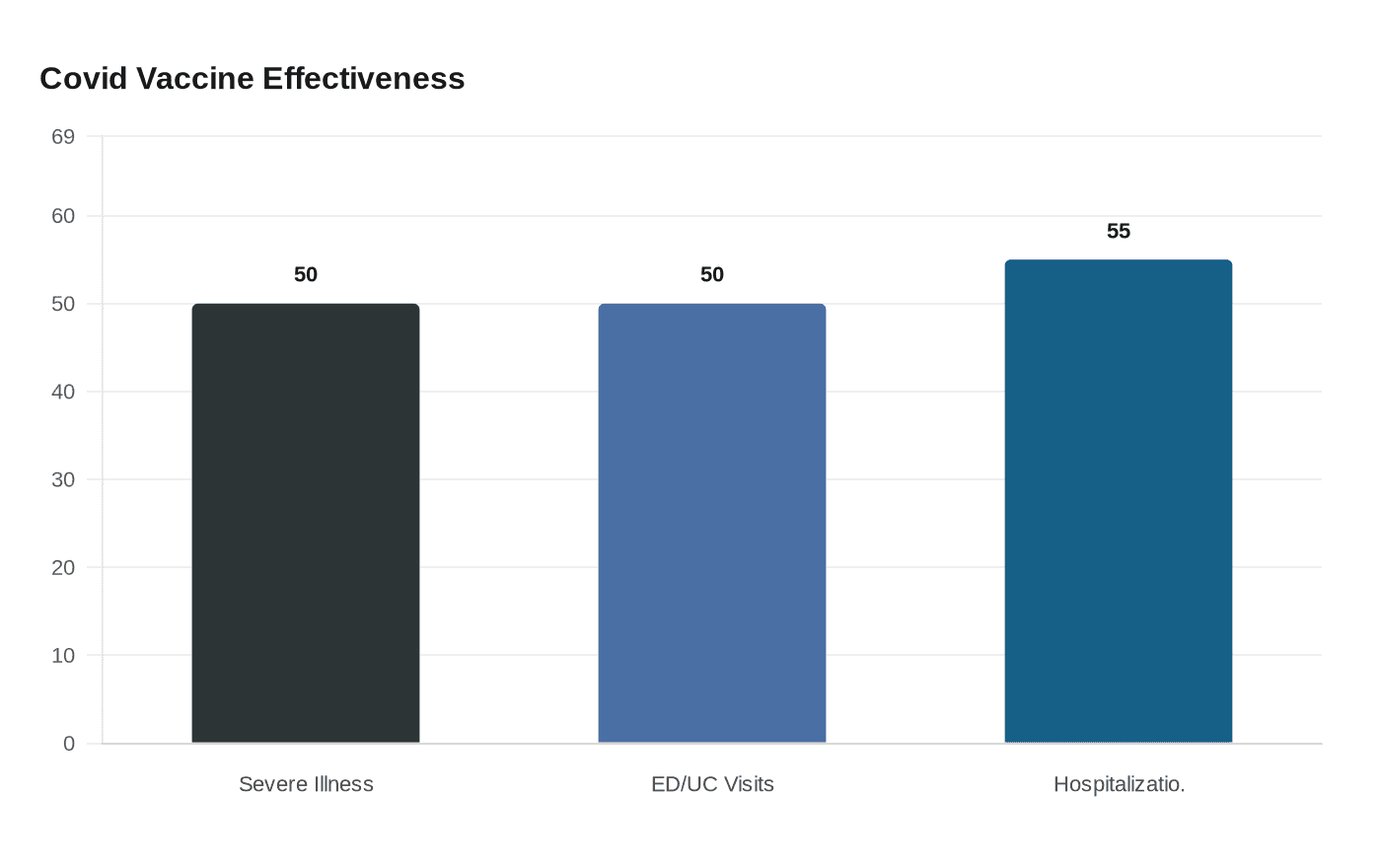
CDC Chief Blocks Covid Vaccine Study Showing 50% Reduction in Severe Illness
Dr. Jay Bhattacharya blocked a CDC study showing Covid vaccines cut hospitalizations by 55%, even after it cleared the agency's full internal scientific review.

A study showing that the current Covid vaccine cuts emergency room visits by roughly half was pulled from publication by Dr. Jay Bhattacharya, the acting director of the Centers for Disease Control and Prevention, weeks before it was set to appear in the agency's premier scientific journal.
The research was scheduled for publication March 19 in the Morbidity and Mortality Weekly Report, and had already completed the CDC's full internal scientific-review process when Bhattacharya intervened. A preliminary summary of the results, obtained by NBC News, showed that the 2025-26 Covid vaccine formulation reduced the likelihood of severe illness by approximately 50% among adults. Between September and December 2025, vaccinated healthy adults reduced emergency department and urgent care visits by about 50% and cut Covid-associated hospitalizations by approximately 55%, compared to unvaccinated adults.
Bhattacharya's stated objection centered on the study's observational methodology, known as a "test-negative design," in which researchers compare the vaccination status of people who tested positive for Covid with those who tested negative. HHS spokesperson Emily G. Hilliard confirmed his intervention: "Dr. Bhattacharya expressed concerns about the observational method used in this study to calculate vaccine effectiveness, and the scientific team is working to address these concerns." A second HHS spokesperson, Andrew Nixon, characterized the review as routine, saying it is "routine for CDC leadership to review and flag concerns about MMWR papers, especially relating to their methodology," and that Bhattacharya "wants to make sure that the paper uses the most appropriate methodology for such a study."

Scientists pushed back sharply on that framing. The test-negative design is a standard CDC tool used for years to assess the effectiveness of flu and other respiratory virus vaccines. The same methodology underpinned a landmark 2021 study in the New England Journal of Medicine on Covid vaccine effectiveness. An HHS official, speaking anonymously, acknowledged that Bhattacharya was not in a position to review earlier CDC flu vaccine studies that relied on the identical method. Current and former CDC employees cited by NBC News expressed concern about political interference with the publication of scientific findings.
Bhattacharya, an economist trained as a physician, rose to prominence as a co-author of the Great Barrington Declaration, a controversial pandemic-era document that argued against broad lockdowns in favor of "focused protection." Confirmed as the 18th NIH director in 2025, he was subsequently tapped by HHS Secretary Robert F. Kennedy Jr. to serve concurrently as acting CDC director while the Trump administration searches for a permanent agency head. Kennedy has granted him broad authority over the CDC.
The blocked study fits a larger pattern of disruption to vaccine science under Kennedy's tenure. In June 2025, Kennedy removed all 17 members of the CDC's Advisory Committee on Immunization Practices and replaced them with individuals, at least nine of whom lack the scientific qualifications required for the role and a majority of whom have publicly expressed anti-vaccine views. That reconstituted committee reversed nearly 30 years of CDC childhood vaccine policy in December 2025. Kennedy also personally ordered changes to CDC website language affirming that vaccines do not cause autism; a federal judge later temporarily blocked him from scaling back childhood vaccine recommendations, ruling he likely violated federal procedures.
The institutional damage is increasingly quantifiable. A study published in January 2026 in the Annals of Internal Medicine found that nearly half of the CDC's regularly updated public health databases had been paused without explanation, with most of those affected being related to vaccines. The suppression of the Covid vaccine effectiveness data adds a consequential chapter to what public health researchers describe as a systematic dismantling of the evidence infrastructure that has guided American vaccination policy for decades.
This article was produced by Prism’s automated news system from verified source data, official records, and press releases, then run through automated quality and moderation checks before publishing. The system is built and supervised by the people who set the standards it runs under. Read our full AI policy.
Did this article answer your question?


