CDC says no Andes hantavirus cases confirmed in US
CDC said no Andes hantavirus cases were confirmed in the United States as officials monitored cruise passengers after a deadly Atlantic outbreak.
The Centers for Disease Control and Prevention said no Andes virus cases had been confirmed in the United States even as health officials monitored travelers from a deadly cruise-ship outbreak in the Atlantic Ocean. The agency said the risk to the American public and travelers remained extremely low, a key point as concern spread around a virus that can look far more alarming than it is for most people.
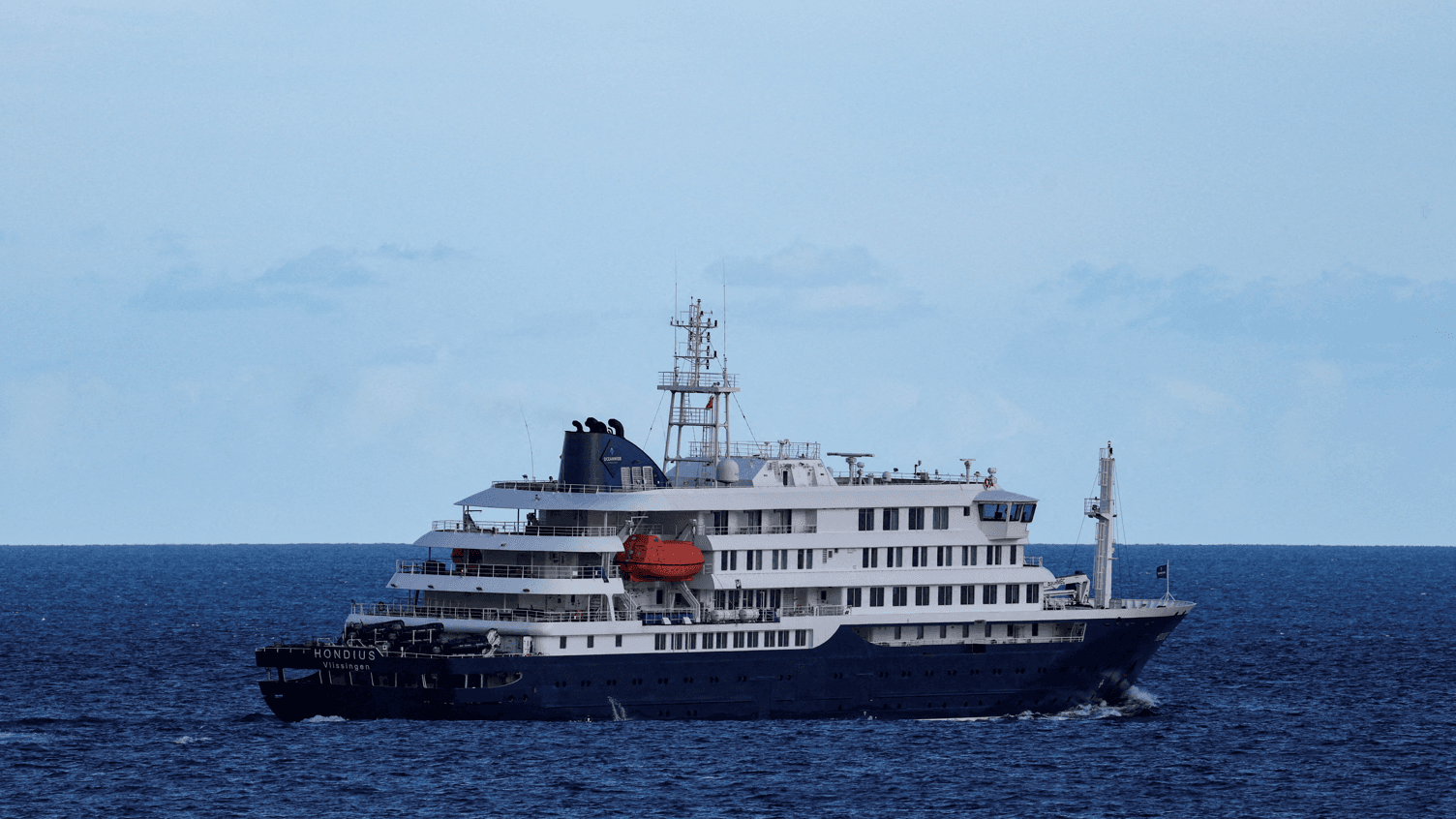
The outbreak was first reported to the World Health Organization on May 2 aboard the MV Hondius, a Dutch-flagged cruise ship carrying 147 passengers and crew. By that point, 34 people had already disembarked. WHO later counted 11 total cases by May 16, including eight confirmed infections, two probable cases and one inconclusive case, with three deaths. Illness onset ranged from April 6 to April 28, underscoring that exposures happened well before the public health response intensified.
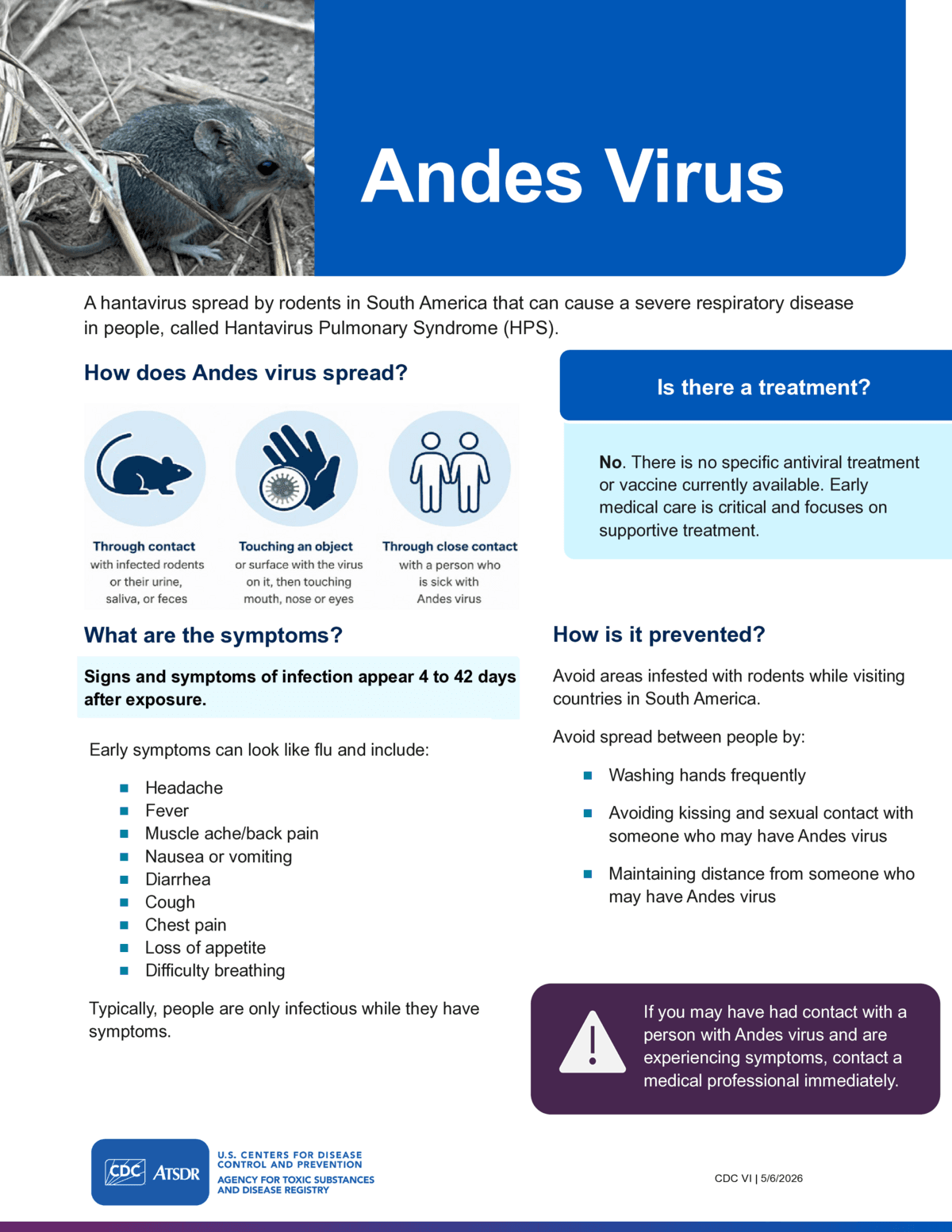
CDC officials said the illness involved Andes virus, a type of hantavirus associated with South America and distinct from the Sin Nombre hantavirus found in California and Los Angeles County. The Los Angeles County Department of Public Health stressed that Andes virus is the strain involved in the cruise outbreak. The CDC also said Andes virus is the only hantavirus known to spread person-to-person, usually requiring close, prolonged exposure. Dr. David Fitter, the agency’s incident manager for hantavirus, said the virus does not pass easily between people and needs close, prolonged contact.
That distinction matters because hantavirus is not one disease with one route of spread. Andes virus can spread from person to person, but most hantavirus infections are tied to contact with infected rodents or their droppings, urine or saliva. In this case, CDC guidance focused on people with possible exposure aboard the ship, not on the general public. The agency said symptoms of hantavirus pulmonary syndrome caused by Andes virus usually appear four to 42 days after exposure.
In the United States, Nebraska Medicine and the University of Nebraska Medical Center received U.S. citizens from the ship in the National Quarantine Unit on the UNMC campus, working with local, state and federal health partners. The unit, which opened in November 2019, is the only federally funded quarantine unit in the country. Reports said 41 people in the United States were being monitored for possible exposure.
The response also saw one major false alarm resolved. Dr. Stephen Kornfeld, the American doctor who initially tested positive, later tested negative after additional testing and said there was no evidence that he had hantavirus. For now, officials are treating the outbreak as a serious but contained international event, not a U.S. spread story, with targeted monitoring instead of broad quarantine.
This article was produced by Prism’s automated news system from verified source data, official records, and press releases, then run through automated quality and moderation checks before publishing. The system is built and supervised by the people who set the standards it runs under. Read our full AI policy.
Did this article answer your question?