CDC says rare hantavirus outbreak on cruise ship poses low U.S. risk
A cruise ship cluster of Andes virus has already caused two deaths, but CDC says the chance it reaches the U.S. remains extremely low.
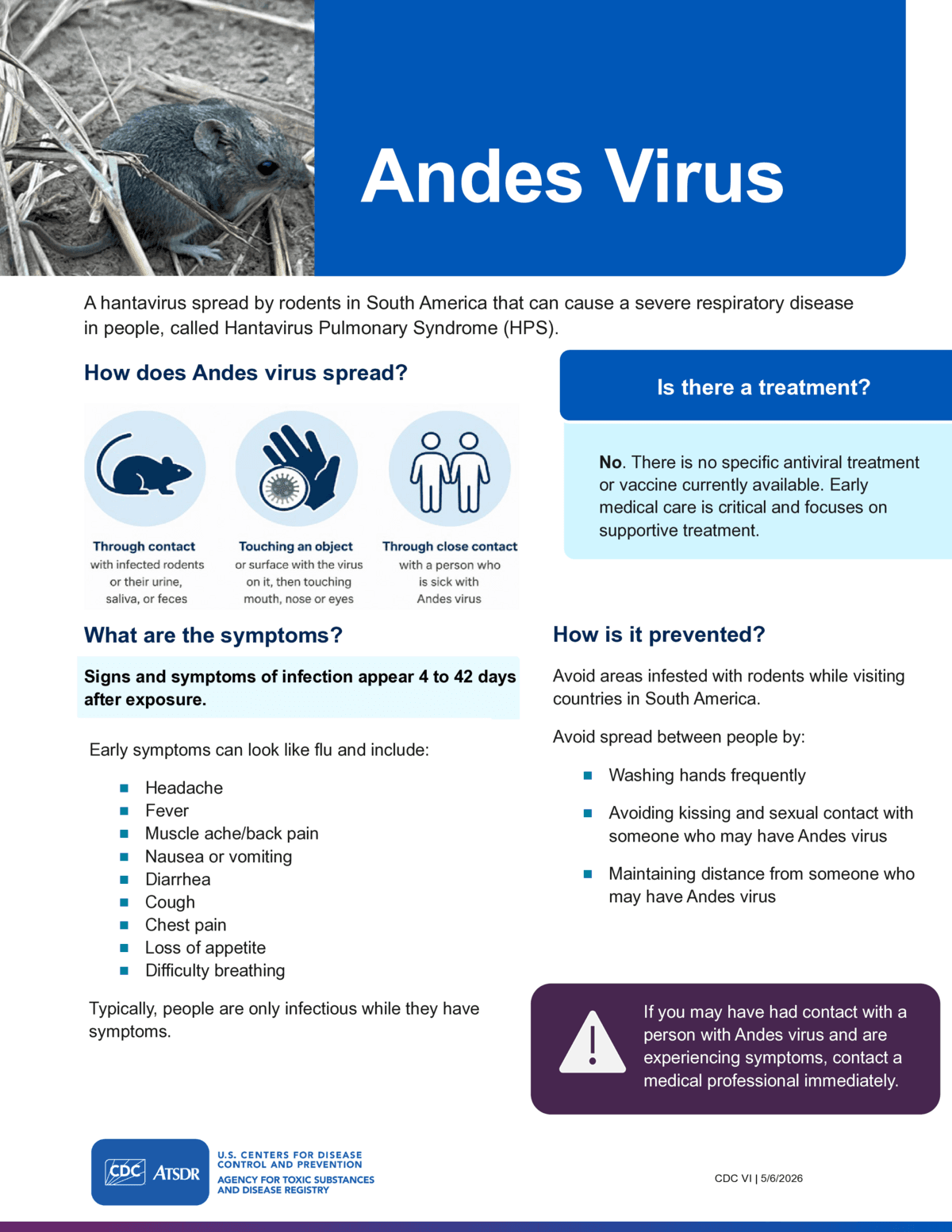
The danger is real, but so is the distinction officials are trying to draw: the cruise ship outbreak involves Andes virus, the one hantavirus known to spread from person to person, yet the Centers for Disease Control and Prevention says the risk to Americans and travelers remains extremely low.
That tension matters because hantaviruses are usually a rodent-borne problem, not a human-to-human one. CDC says Andes virus can spread through contact with rodents, contaminated objects, or, more rarely, close contact with a sick person. When person-to-person transmission does happen, it is usually limited to direct physical contact, prolonged time in close or enclosed spaces, or exposure to body fluids.
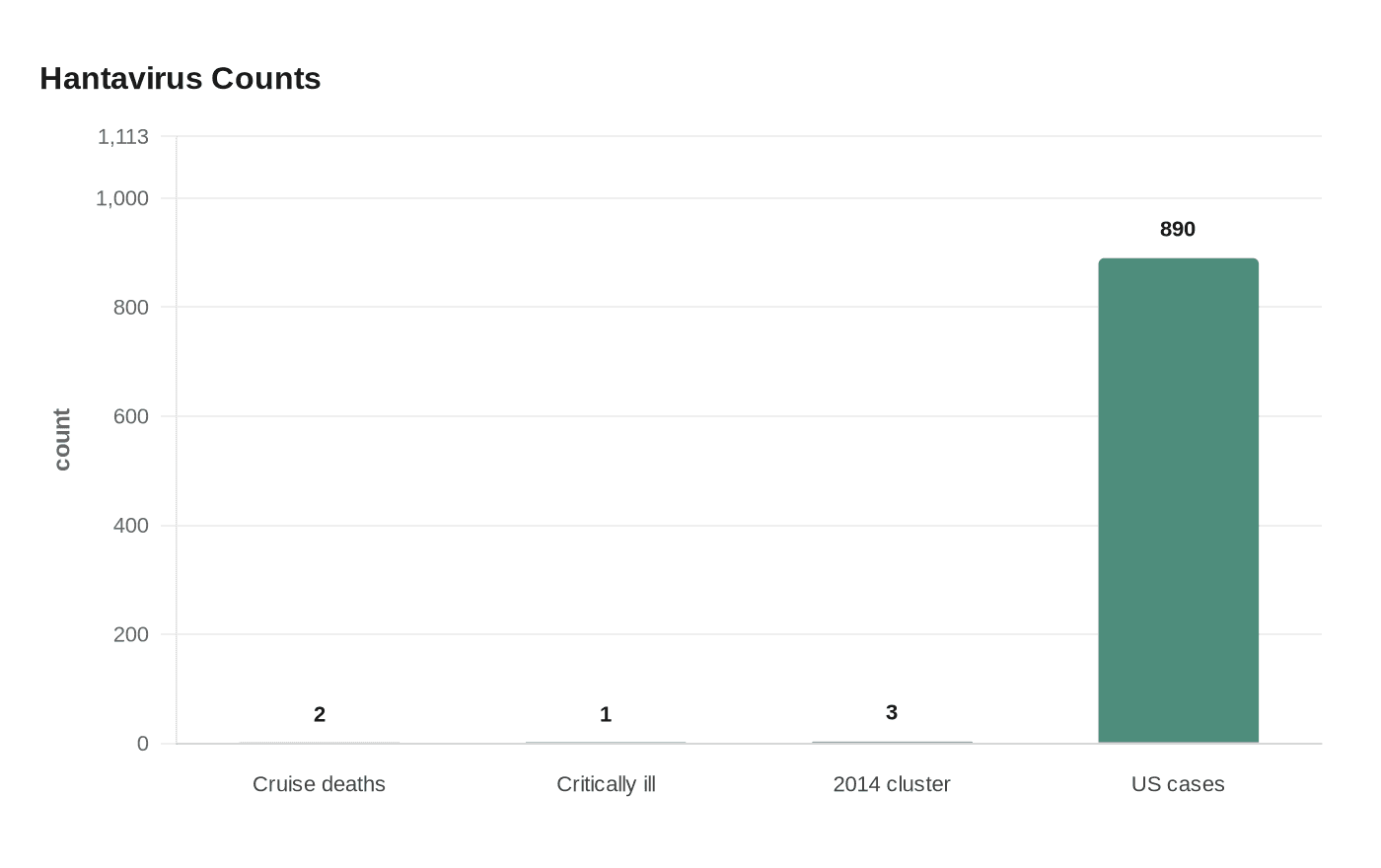
The current outbreak, tied to a cruise ship in the Atlantic Ocean, was serious enough to include two deaths and one critically ill passenger. The World Health Organization was notified of the cluster on May 2, 2026, and confirmed Andes virus on May 6, 2026. CDC’s outbreak guidance, issued in May 2026, said the overall risk to the American public and travelers remains extremely low even as health officials treat the cluster as a dangerous event.
Officials are also leaning on the broader record of the virus. Andes virus is not new, and CDC says it is normally found in South America, not in the United States. A CDC review in 2020, published in Emerging Infectious Diseases, reinforced that Andes virus is unique among hantaviruses because it can spread between people, including a confirmed 2014 cluster in Argentina involving three cases. CDC says that unlike Andes virus, U.S. hantaviruses are generally spread by rodents and are not known to spread between people.
The agency’s caution sits against a much longer U.S. surveillance history. Monitoring began in 1993 after a severe respiratory illness outbreak in the Four Corners region, and CDC says 890 hantavirus disease cases were reported in the United States from 1993 through 2023. The public-health message now is narrowly framed: the cruise ship outbreak is deadly, but the conditions that usually allow Andes virus to jump from one person to another remain uncommon, and the threat to the broader U.S. public is still judged to be low.
This article was produced by Prism’s automated news system from verified source data, official records, and press releases, then run through automated quality and moderation checks before publishing. The system is built and supervised by the people who set the standards it runs under. Read our full AI policy.
Did this article answer your question?