CDC warns cyclosporiasis outbreak is spreading across 34 states
Confirmed domestic cases reached 1,645 across 34 states, and CDC says diarrhea from Cyclospora can linger for weeks if untreated.
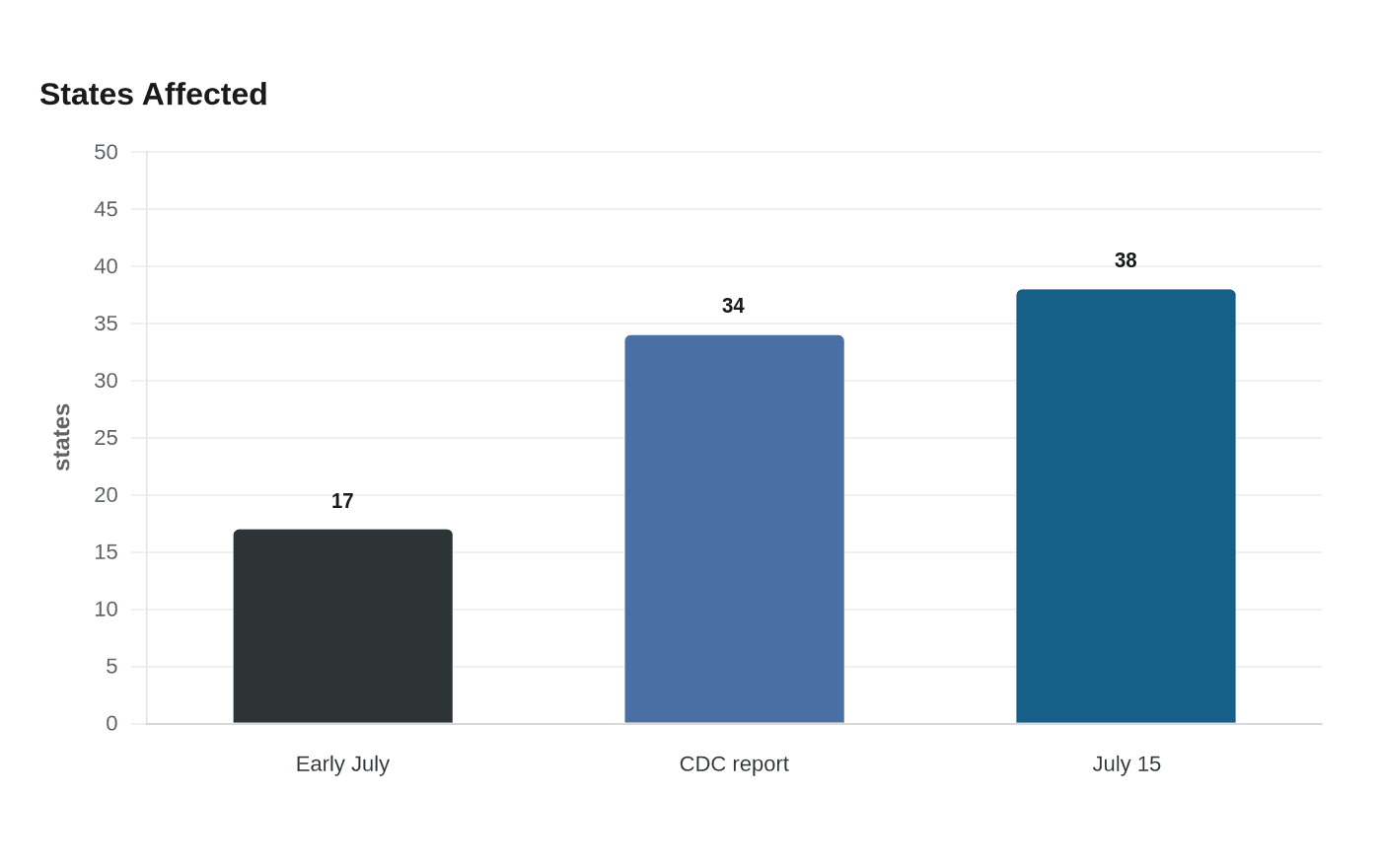
The CDC said confirmed domestic cyclosporiasis cases had climbed to 1,645 across 34 states, with a large cluster in at least four Midwestern states. People exposed to Cyclospora cayetanensis should watch for diarrhea and fatigue, and untreated illness can last from a few days to more than a month.
The agency’s July 14 Health Alert Network notice described a multistate outbreak that was already spreading beyond the Midwest. By July 15, local and state health data placed the toll at at least 6,756 cases in 38 states, a much larger footprint than the federal count alone suggested.
That gap is one reason cyclospora outbreaks are so difficult to pin down quickly. Cases can appear in different states, symptoms may not show up right away, and investigators often have to work backward through restaurants, grocery purchases and supply chains before they can match illnesses to a single source. The CDC’s July 15 lab advisory warned healthcare and laboratory providers as the case count continued to rise.
Produce is the central concern. Investigators have been examining produce items, and CDC has previously documented a cyclosporiasis outbreak linked to shredded iceberg lettuce, a reminder that leafy greens can carry the parasite through a wide distribution network before anyone sees the pattern. That makes recalls slower and more complicated, especially when a contaminated ingredient is blended into salads, sandwiches and ready-to-eat meals across multiple chains.
The problem also complicates public guidance. Without a single confirmed product lot, restaurants may have to review lettuce suppliers, pull suspect ingredients from menus and monitor employee illness reports while federal and state agencies continue tracing exposures. For consumers, the practical warning remains the same: diarrhea and fatigue after eating fresh produce should not be brushed off, particularly when the illness can drag on for weeks if untreated.
The July 2026 outbreak has grown quickly. CDC was investigating only 145 domestically acquired cases across 17 states in early July, before the count expanded to more than 1,600 confirmed domestic cases and, in state and local tallies, more than 6,700 suspected or confirmed illnesses.
This article was produced by Prism’s automated news system from verified source data, official records, and press releases, then run through automated quality and moderation checks before publishing. The system is built and supervised by the people who set the standards it runs under. Read our full AI policy.
Did this article answer your question?