Ceasefire Takes Hold in Southern Lebanon, Residents Begin Returning Home
Ceasefire brought traffic back toward south Lebanon, but in Khiam residents were told to wait as mines, shelling damage and Israeli forces still blocked a safe return.
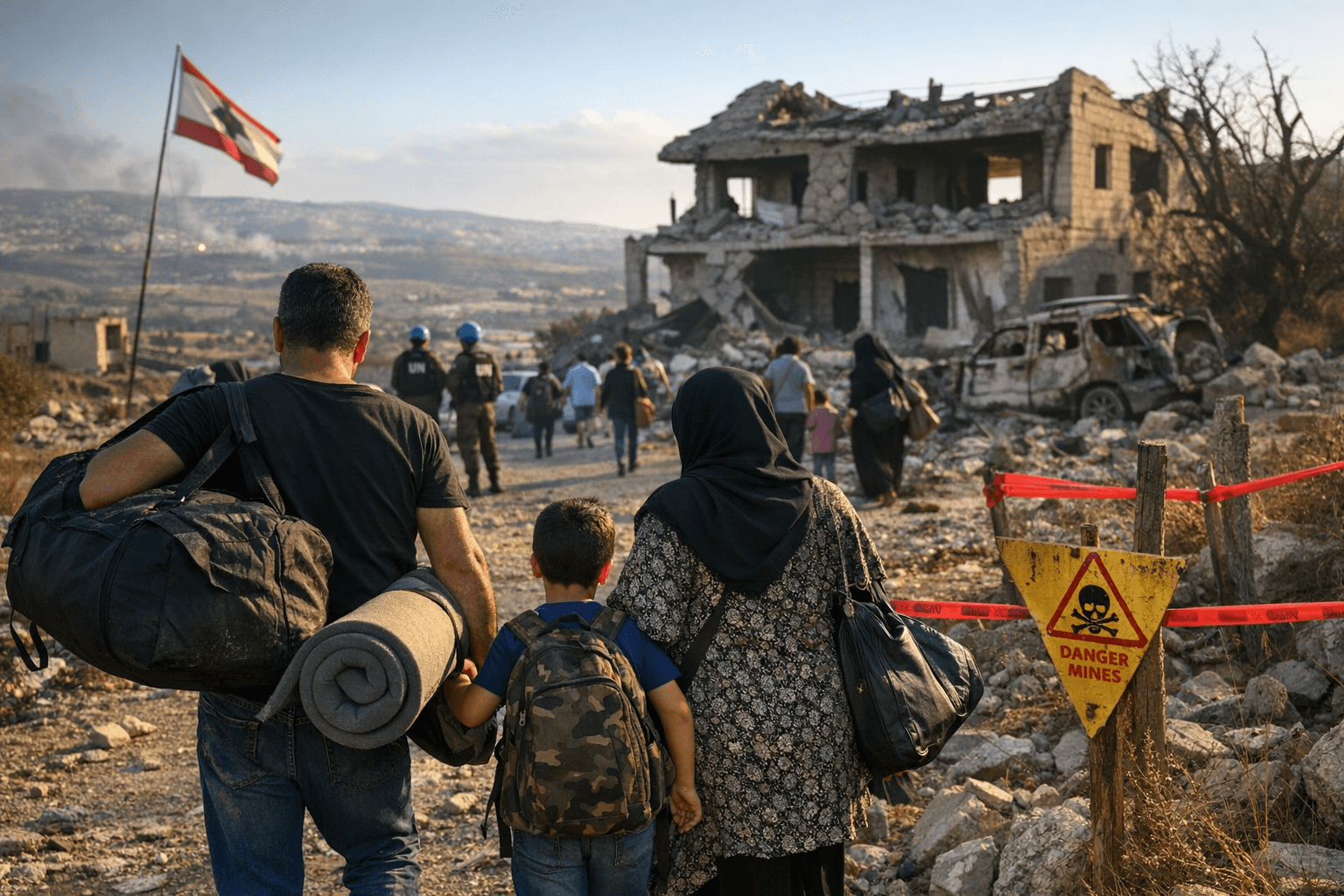
Residents started heading home as soon as the ceasefire between Israel and Hezbollah took effect early Wednesday, 27 November 2024, but in Khiam the return exposed how far peace remained from ordinary life. The truce, tied to the implementation of UN Security Council Resolution 1701, sent families from south Lebanon, the southern suburbs of Beirut and the Bekaa back toward their towns even as the International Organization for Migration said the fighting had uprooted more than 886,000 people.
Khiam’s municipality moved quickly to slow that return. On Thursday morning, 28 November 2024, it urged residents to wait for an official green light before coming back, saying Israeli forces were still present in parts of the town. It said the first day of the ceasefire had already brought gunfire and artillery shelling, and warned that mines, unexploded ordnance and booby-trapped sites had to be cleared before civilians could safely enter. Debris also had to be removed from the streets so people could reach their homes by car, a basic step that underscored how damaged the town remained.
The ceasefire framework called for an Israeli withdrawal over 60 days and for Hezbollah to pull back north of the Litani River, but the path back to Khiam was still uneven in the first weeks after the agreement. On 12 December 2024, the Israel Defense Forces confirmed it had withdrawn from Khiam in line with the ceasefire. The Lebanese Army said it was deploying around the town in coordination with the United Nations Interim Force in Lebanon and scanning for unexploded ordnance, a reminder that the end of fighting did not immediately translate into safe civilian access.
UNIFIL said the truce brought much-needed calm after more than two months of intense hostilities, and that thousands of displaced people initially began heading back to villages across south Lebanon. Yet many could not fully return because of continued Israeli military presence. One year later, the mission said the Israel Defense Forces still remained in five locations inside Lebanese territory and had imposed buffer zones, leaving families in limbo even after the guns quieted.
The wider cost of the war reached beyond the border town. South Lebanon suffered extensive destruction, and the conflict deepened Lebanon’s already severe humanitarian crisis. Aid groups warned that returning families would need safe access, winter assistance and reconstruction, because for many people in Khiam and beyond, the hardest part of the ceasefire was not its announcement but the work of making homes livable again.
This article was produced by Prism’s automated news system from verified source data, official records, and press releases, then run through automated quality and moderation checks before publishing. The system is built and supervised by the people who set the standards it runs under. Read our full AI policy.
Did this article answer your question?


