CENTCOM says U.S. blockade of Iranian ports will continue indefinitely
CENTCOM said its blockade of Iranian ports started April 13 and will stay in force until Trump ends it, as oil flows and Gulf shipping face escalating risk.
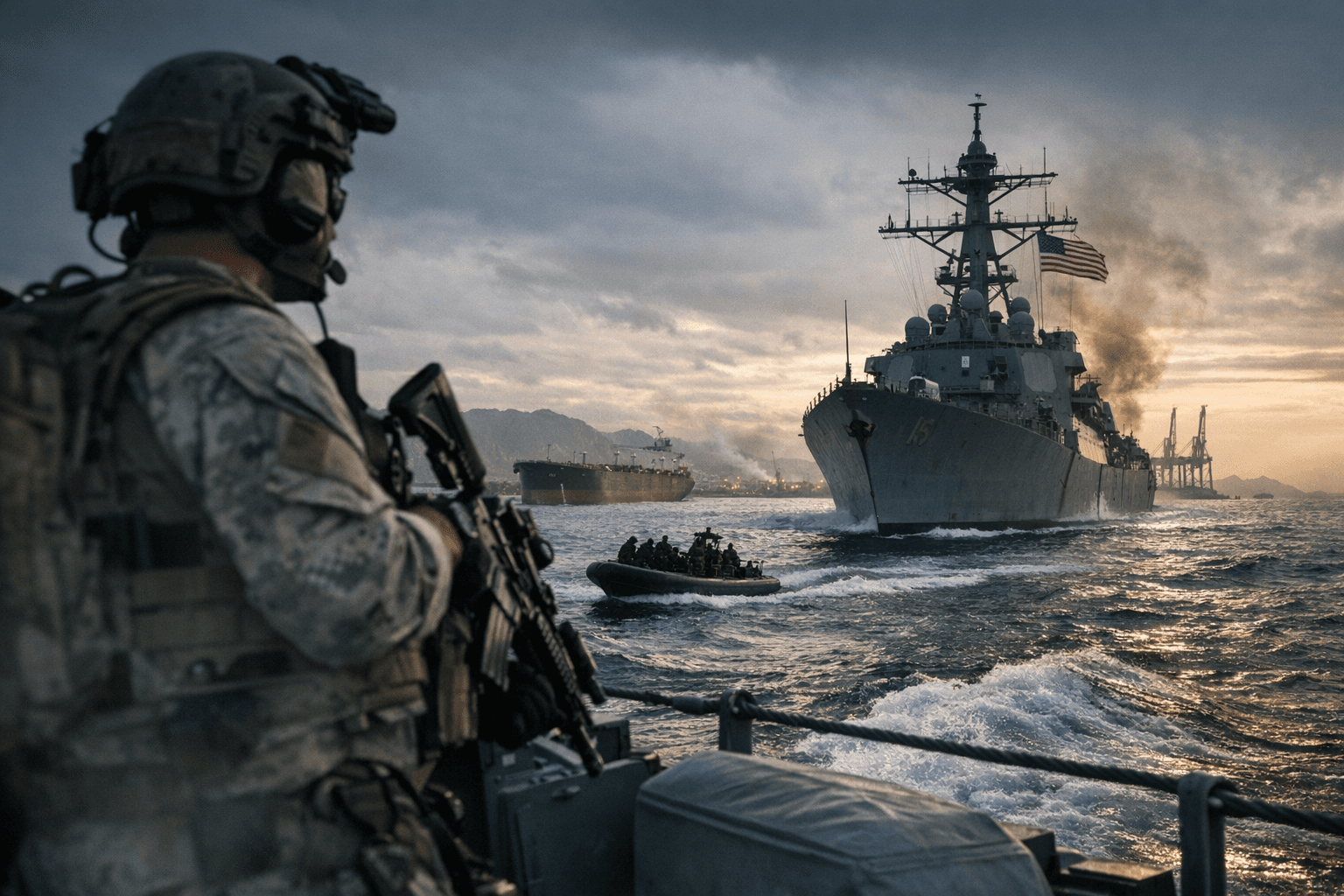
U.S. forces have sealed off Iranian ports under a blockade that CENTCOM said began April 13 at 10 a.m. ET, covering vessels entering or leaving Iranian ports and coastal areas on the Arabian Gulf and Gulf of Oman. The order applies to ships of all nations, but CENTCOM said it would not block freedom of navigation for vessels merely transiting the Strait of Hormuz to and from non-Iranian ports. More than 10,000 U.S. troops, more than a dozen Navy ships and fighter jets in the Gulf of Oman and the Arabian Sea have been tied to the operation.
The decisive fact is political as much as military: the blockade will continue until Donald Trump ends it. That puts the operation’s duration squarely in the hands of the White House, not on a battlefield timetable. Trump said the aim was to force Iran to reopen the strait and negotiate, after peace talks in Pakistan collapsed, and he warned that any vessel coming near the blockade would be “immediately” eliminated. The arrangement leaves CENTCOM enforcing a sweeping maritime shutdown, while Trump holds the lever that determines whether it remains temporary pressure or becomes a long-running confrontation.
Military analysts have warned that a naval blockade of this scale is an open-ended undertaking that could be difficult to sustain. Dana Stroul, a former senior Pentagon official now at The Washington Institute for Near East Policy, said Trump wants a quick fix but the mission is hard to execute and likely unsustainable over the medium to long term. Retired Adm. Gary Roughead said Iran could retaliate by firing on ships in the Gulf or striking infrastructure in Gulf states that host U.S. forces, raising the risk that the blockade spreads beyond Iranian waters.
The economic stakes are severe. More than 90% of Iran’s $109.7 billion in annual seaborne trade moves through the Strait of Hormuz, and Iran has few meaningful alternate routes. CNBC estimated the blockade could cost Iran about $435 million a day in combined economic damage. In the first 24 hours, CENTCOM said no ships made it past the blockade and six merchant vessels were ordered to turn back toward an Iranian port. Windward later identified at least two vessels that still transited the strait during the first full day under active U.S. enforcement, including a U.S.-sanctioned Chinese-owned tanker, Rich Starry.
Tehran has answered with threats to disrupt trade across the Gulf if the blockade is not lifted, and Iran’s joint military command said it could halt regional trade in response. U.S. officials have also signaled more pressure through secondary sanctions on financial institutions doing business with Iran. With the war already triggered by U.S.-Israeli strikes on Iranian territory on February 28 and a shaky ceasefire hanging over the region, the blockade now reaches far beyond Iran, into global oil markets, commercial shipping and the security calculations of Gulf states and major importers such as China, India and South Korea.
This article was produced by Prism’s automated news system from verified source data, official records, and press releases, then run through automated quality and moderation checks before publishing. The system is built and supervised by the people who set the standards it runs under. Read our full AI policy.
Did this article answer your question?


