Cadaver dogs search for missing American woman after Bahamas overboard incident
Cadaver dogs were sent to search for Lynette Hooker, who went overboard in the Bahamas on April 4, as her family pressed for answers.
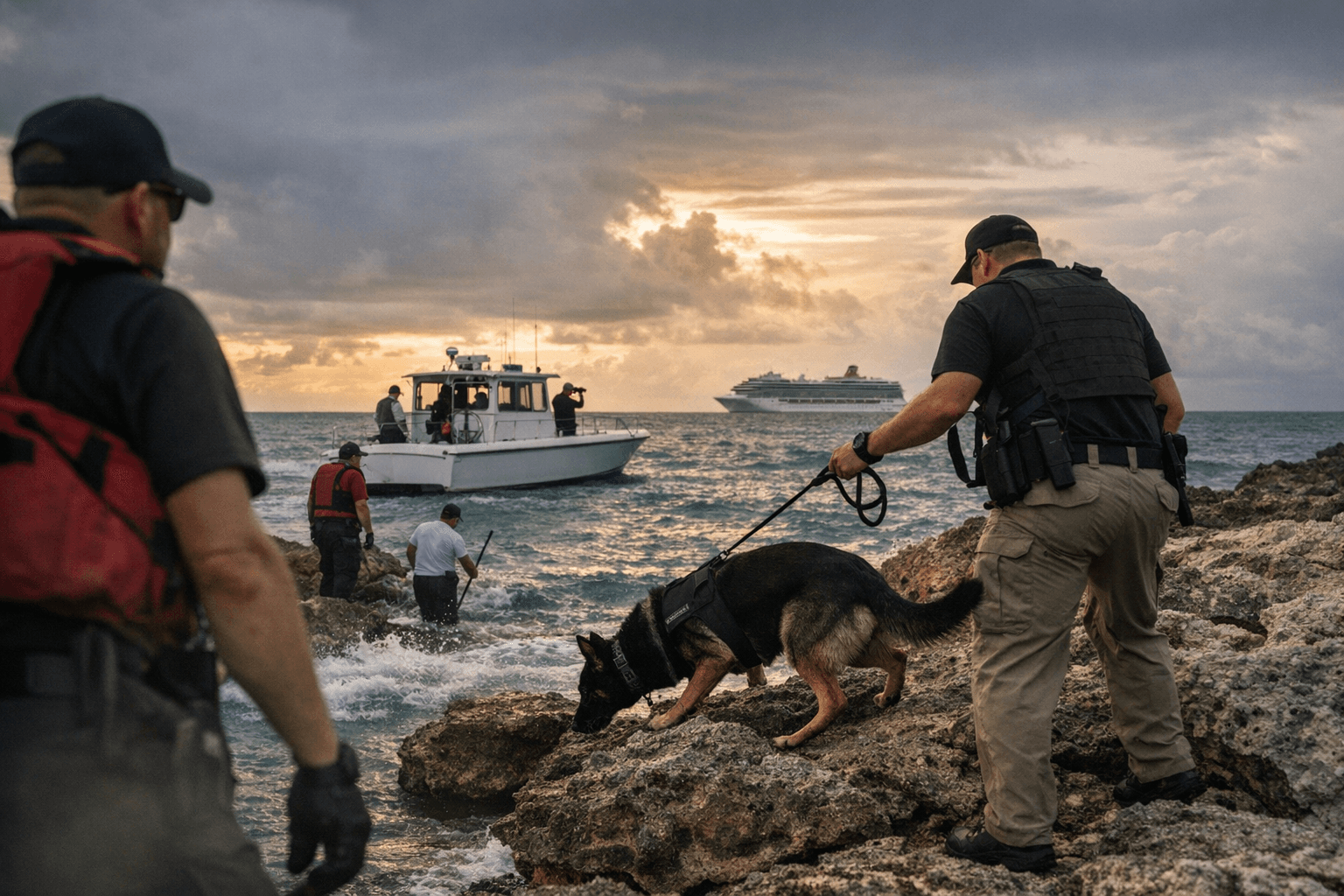
Cadaver dogs were sent to search for Lynette Hooker, the American woman who went overboard in the Bahamas on April 4, adding a grim new phase to a case that has left her family searching for answers.
Hooker’s disappearance has drawn attention in the United States because it crosses national lines at sea, where jurisdiction can become fragmented and families are often left waiting for updates from more than one authority. The central question remains unchanged: what happened after Hooker went overboard, and what evidence, if any, can still be recovered.
The search effort took on new urgency with the deployment of cadaver dogs, which are used to detect human remains or trace evidence linked to a death. Their use suggested investigators were no longer only looking for signs that Hooker might be alive, but also for clues that could help determine whether the incident was accidental or whether other circumstances were involved.
Hooker has been missing since April 4, and the lack of a confirmed account of how she entered the water has kept the case open. Her daughter has continued seeking answers, underscoring the strain on families when a disappearance unfolds far from home and the path to information is uncertain.
For Americans abroad, especially in a maritime setting such as the Bahamas, cases like Hooker’s can quickly become difficult to track. The location of the incident, the role of local authorities, and the involvement of U.S. citizens all shape how information moves, and how slowly families may learn what investigators are finding.
For now, the search remains focused on what the waters and shoreline may still reveal. The outcome of the cadaver-dog sweep could prove important in determining whether Hooker’s disappearance was a tragic accident or part of something more troubling.
This article was produced by Prism’s automated news system from verified source data, official records, and press releases, then run through automated quality and moderation checks before publishing. The system is built and supervised by the people who set the standards it runs under. Read our full AI policy.
Did this article answer your question?


