Pope Leo XIV to visit Angola shrine tied to slave trade history
Leo XIV’s Angola trip puts Muxima, a shrine where enslaved Africans were baptized before exile, at the center of Catholic reckoning with slavery.
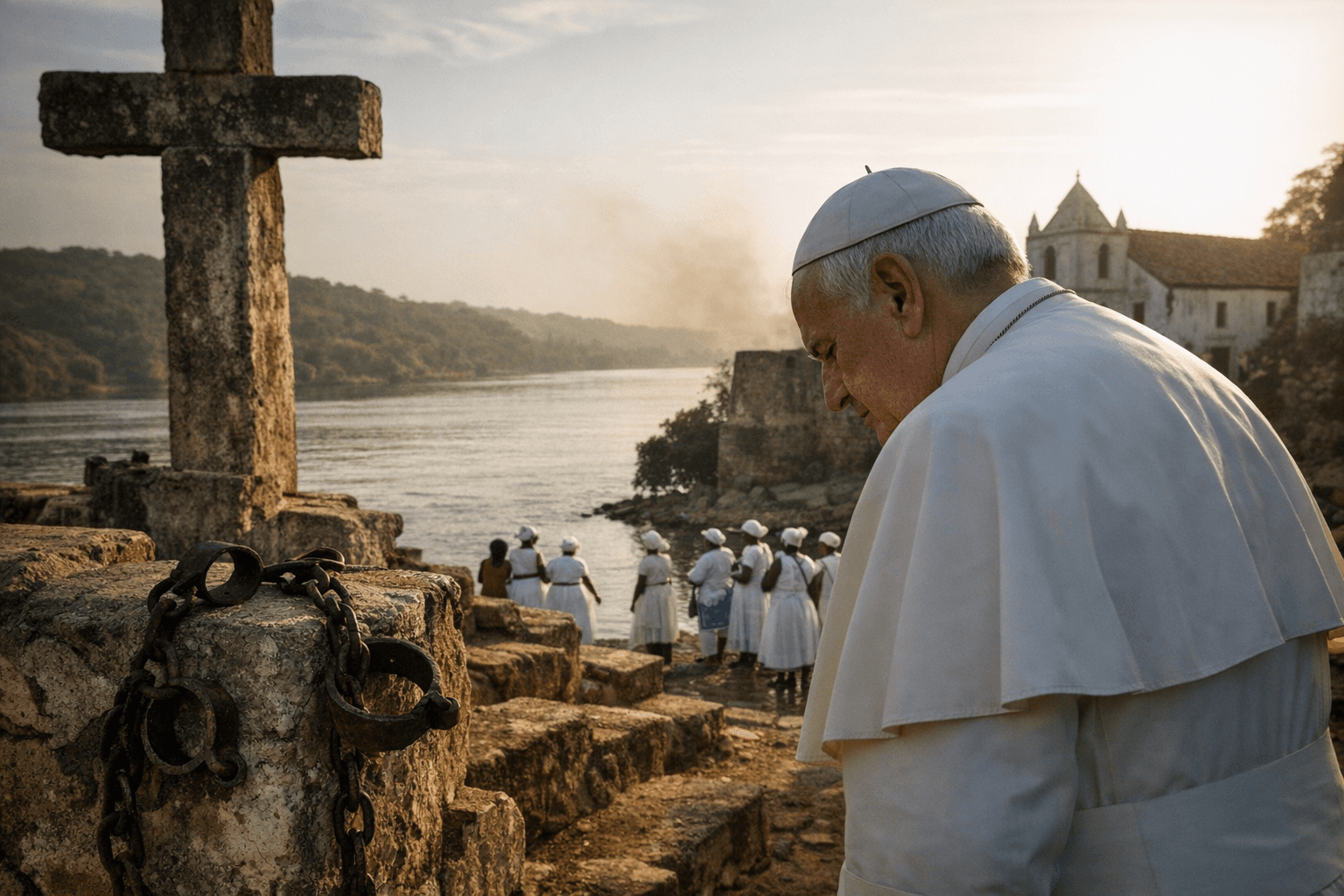
Pope Leo XIV’s Angola itinerary placed one of the country’s most revered Catholic shrines inside a painful history of forced migration, colonial power and religious memory. The prayer stop at Muxima, about 130 kilometers from Luanda on the left bank of the Kwanza River, brought the Vatican to a place where enslaved Africans were once gathered, baptized and sent onward toward the Atlantic coast and the Americas.
The Church and Sanctuary of Our Lady of Muxima, also known as Nossa Senhora da Conceição da Muxima, dates to the late 16th century. Portuguese forces occupied the area in 1589, the fortress was founded in 1599, and the church rose as part of the same colonial complex. Over time, the site became tied not only to conquest and slave transport but also to a powerful Marian devotion after believers reported an appearance of the Virgin Mary around 1833. That dual identity, as a place of suffering and pilgrimage, has made Muxima one of Angola’s most important Catholic destinations and, by some accounts, one of the most significant Marian shrines in sub-Saharan Africa.
The Vatican’s provisional programme placed Angola on the papal calendar from April 18 to 21, 2026, with Leo scheduled to arrive in Luanda on April 18 and make a prayer visit to Muxima on April 19. The visit carried meaning far beyond a routine stop on a church tour. Angola was a major departure point in the trans-Atlantic slave trade, and Muxima’s history has long stood as a stark example of the Catholic Church’s entanglement with colonial rule and African suffering. For many African Catholics, the pope’s presence there offered symbolic weight. For others, the shrine’s association with slavery remained impossible to overlook.
Church and state officials in Angola have also continued to shape Muxima as both a religious and cultural landmark. In 2022, President João Lourenço backed a new basilica project at the shrine. The Diocese of Viana said the first stone was laid and blessed on July 19, 2022, with bishops of the Catholic Bishops’ Conference of Angola and São Tomé, known as CEAST, present alongside Lourenço. The planned basilica was reported to hold about 4,000 faithful, underscoring how the shrine remains central to Angolan Catholic life even as its history demands harder reflection.
This article was produced by Prism’s automated news system from verified source data, official records, and press releases, then run through automated quality and moderation checks before publishing. The system is built and supervised by the people who set the standards it runs under. Read our full AI policy.
Did this article answer your question?


