Japan’s Kyoto cherry blossom record continues after successor steps forward
Kyoto’s 1,200-year blossom record nearly lost its keeper after Yasuyuki Aono died, until a successor stepped in to preserve the climate benchmark.
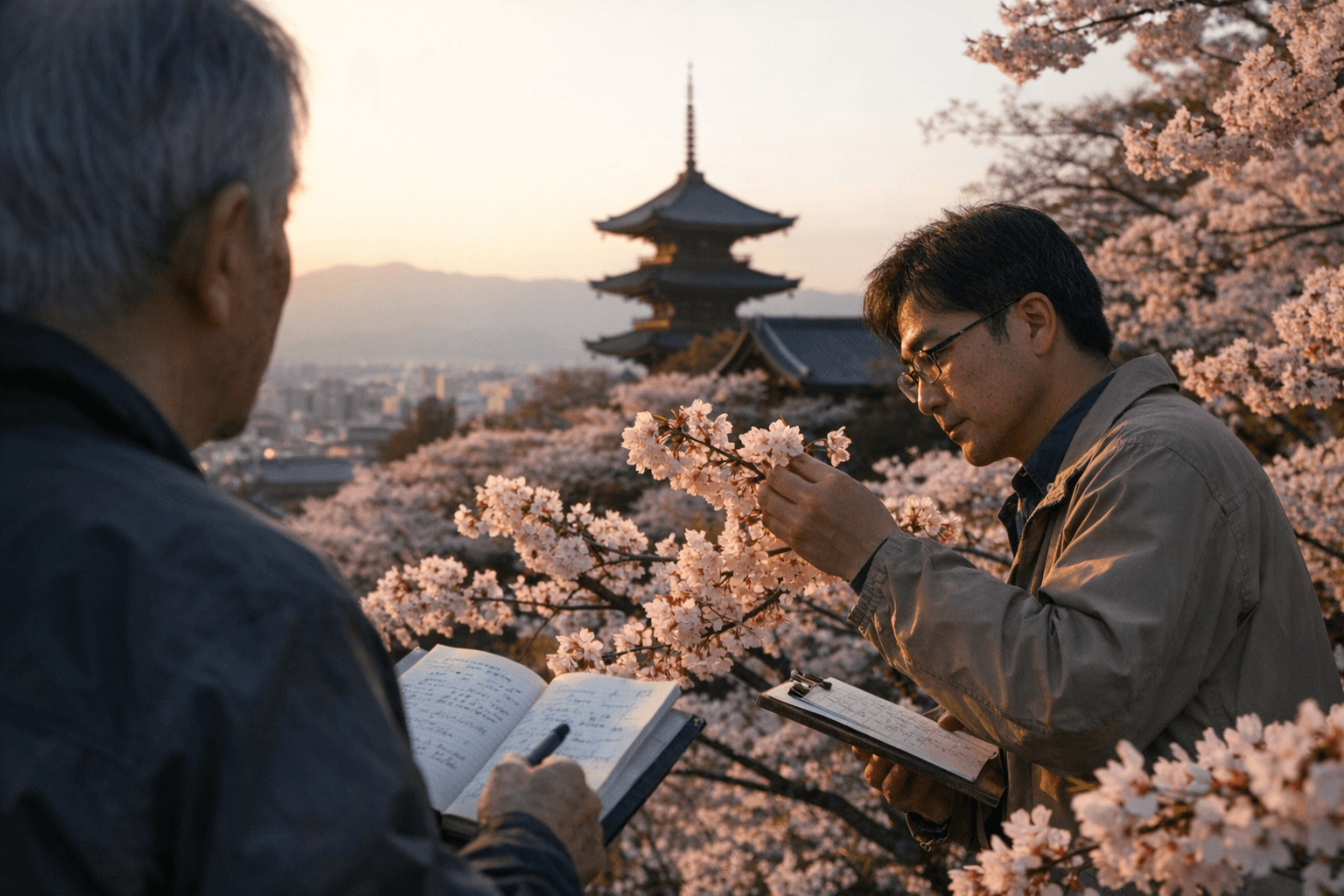
Kyoto’s cherry blossom log survived the death of the researcher who had carried it for decades, after a successor in Japan stepped forward to keep one of the world’s longest climate records alive. The dataset, which reaches back to the year 812, has become a rare measure of how warming is changing the timing of spring itself.
Yasuyuki Aono of Osaka Metropolitan University maintained and expanded the record by combing through historical diaries and chronicles written by emperors, aristocrats, governors and monks. His work turned scattered references into a continuous scientific series that climate researchers use to study how flowering plants respond to changing temperatures. The record is widely described as the world’s longest known climate dataset of its kind, and researchers say it captures something modern thermometers cannot: how extreme today’s warming looks against more than a millennium of natural variation.
Aono died on August 5, 2025, and the continuity of the series briefly looked uncertain. By then, Kyoto’s peak cherry blossom date for 2025 had already come on April 4, underscoring how closely the record is tied to the city’s seasonal rhythm. One analysis says Kyoto cherry blossoms now bloom, on average, nearly two weeks earlier than they did in 1850, a shift that has turned a cultural marker into a climate signal.
The work will continue. A researcher in Japan has stepped forward to make formal observations and consult the same sources Aono used, preserving the method that gave the record its scientific value in the first place. That continuity matters because long climate series are only as strong as the people who keep them going, year after year, across institutional changes and personal loss.
The urgency of that stewardship was visible in 2026, when Kyoto’s cherry blossoms reached full bloom on April 2. Thousands of visitors gathered to see them, while Japan recorded a nationwide travel surge and 42.7 million international visitors in 2025. For climate scientists, the blossoms remain more than a seasonal spectacle. They are evidence, measured in dates and preserved in archives, of how a warming world is rewriting the calendar.
This article was produced by Prism’s automated news system from verified source data, official records, and press releases, then run through automated quality and moderation checks before publishing. The system is built and supervised by the people who set the standards it runs under. Read our full AI policy.
Did this article answer your question?


