U.S. officials visit Cuba, discuss reforms, prisoners, and Starlink access
A U.S. government plane landed in Cuba for the first time since 2016, even as Trump tightened sanctions and threat rhetoric. Talks touched prisoners, reforms and Starlink.
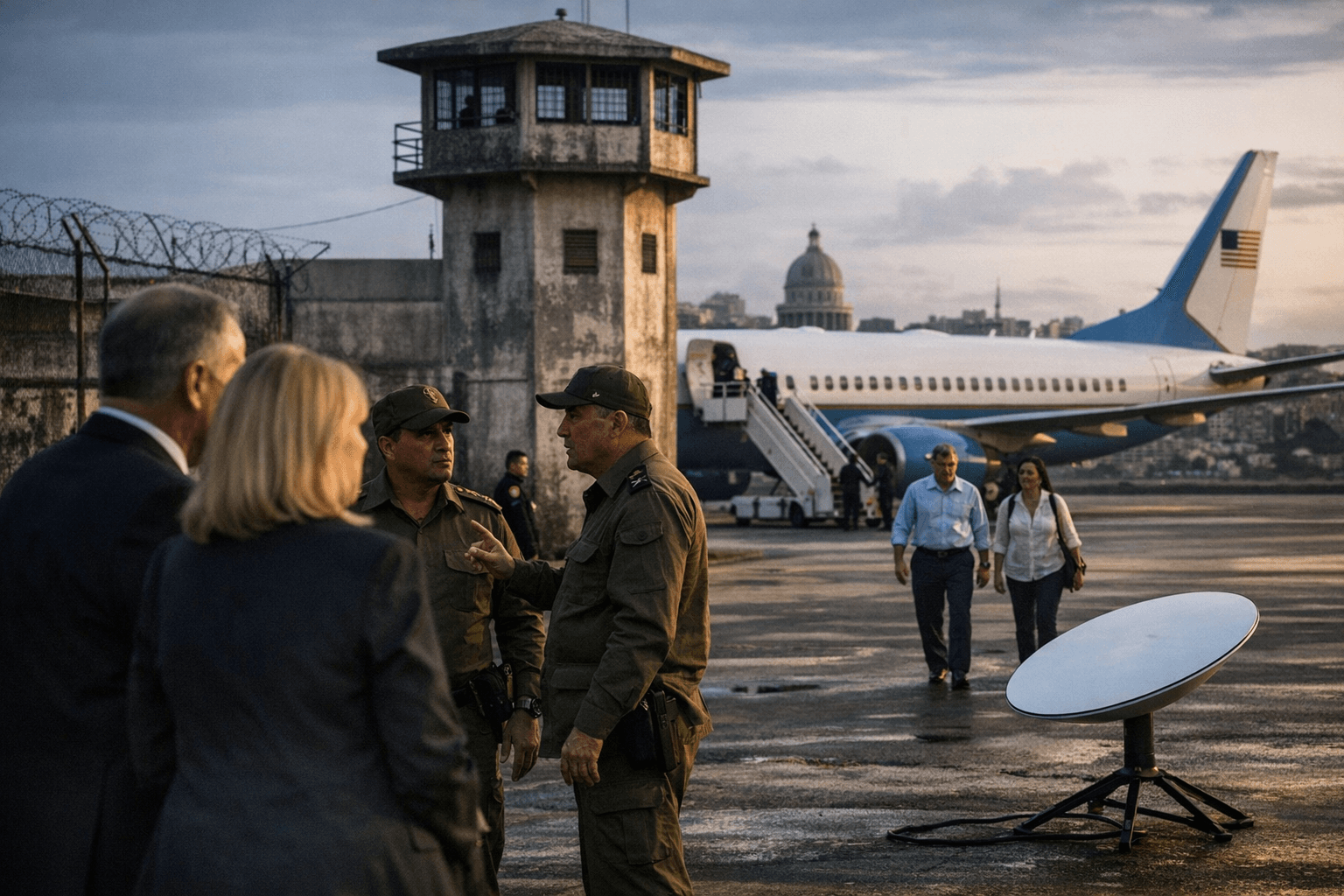
A senior State Department delegation went to Cuba on a U.S. government plane last week, opening a back channel even as Washington kept ratcheting up pressure on the island. The talks put the contradiction in sharp relief: public punishment from the Trump administration, paired with quiet diplomatic contact over political prisoners, economic reform and even Starlink internet access.
During the visit, one U.S. diplomat met with Raúl Guillermo Rodríguez Castro, the grandson of former Cuban leader Raúl Castro. The delegation discussed the Trump administration’s demands for political and economic reforms, including the release of political prisoners, while also floating the possibility of giving Cuba access to Starlink, the satellite internet service backed by SpaceX.
The trip was symbolically significant. It was the first time a U.S. government plane had landed in Cuba since Barack Obama’s 2016 visit, and the first U.S. government flight to land there other than at Guantánamo Bay since 2016. Marco Rubio, the secretary of state and one of the sharpest critics of the Cuban government, was not part of the delegation.
The visit came as Cuba faces a worsening months-long energy crisis and deepening economic strain. The Trump administration has threatened heavy tariffs on countries that export oil to Cuba, and oil shipments to the island have effectively stopped. Last month, the U.S. allowed a Russian-flagged tanker to dock in Havana as what officials described as a humanitarian reprieve, underscoring how fragile the island’s fuel supply has become.
Trump has kept up the pressure in public, calling Cuba a “failing country,” suggesting it could “be next,” and saying this week that the U.S. may “stop by Cuba” after other foreign-policy priorities. Miguel Díaz-Canel answered that the United States had no valid reason to attack or depose Cuba and said the island was ready to fight back if needed.
The diplomacy followed a separate visit by Reps. Pramila Jayapal and Jonathan Jackson, who traveled to Cuba in early April and described Trump’s fuel policy as an “illegal blockade of energy supplies.” They urged the president to “bring the rhetoric down” and said they saw severe suffering during hospital visits. The two lawmakers also said Cuba had begun talks with U.S. officials, though few details have been made public.
The broader split in Washington is now hard to miss. The White House said Trump signed a memorandum on June 30, 2025, tightening Cuba policy by enforcing the ban on U.S. tourism and restricting transactions with military-linked entities such as GAESA. Yet even as the administration hardens its public line, senior officials are still sitting down with Cuban figures, searching for leverage, and testing whether isolation, diplomacy, or both will define the next phase of U.S.-Cuba policy.
This article was produced by Prism’s automated news system from verified source data, official records, and press releases, then run through automated quality and moderation checks before publishing. The system is built and supervised by the people who set the standards it runs under. Read our full AI policy.
Did this article answer your question?