Certified hoses save boats - choose the right marine plumbing lines
Guidance warned that wrong hose materials degrade quickly in saltwater and UV, causing leaks, contamination, or fire risk. Verify certified hoses and proper installation to keep systems safe and survey-ready.
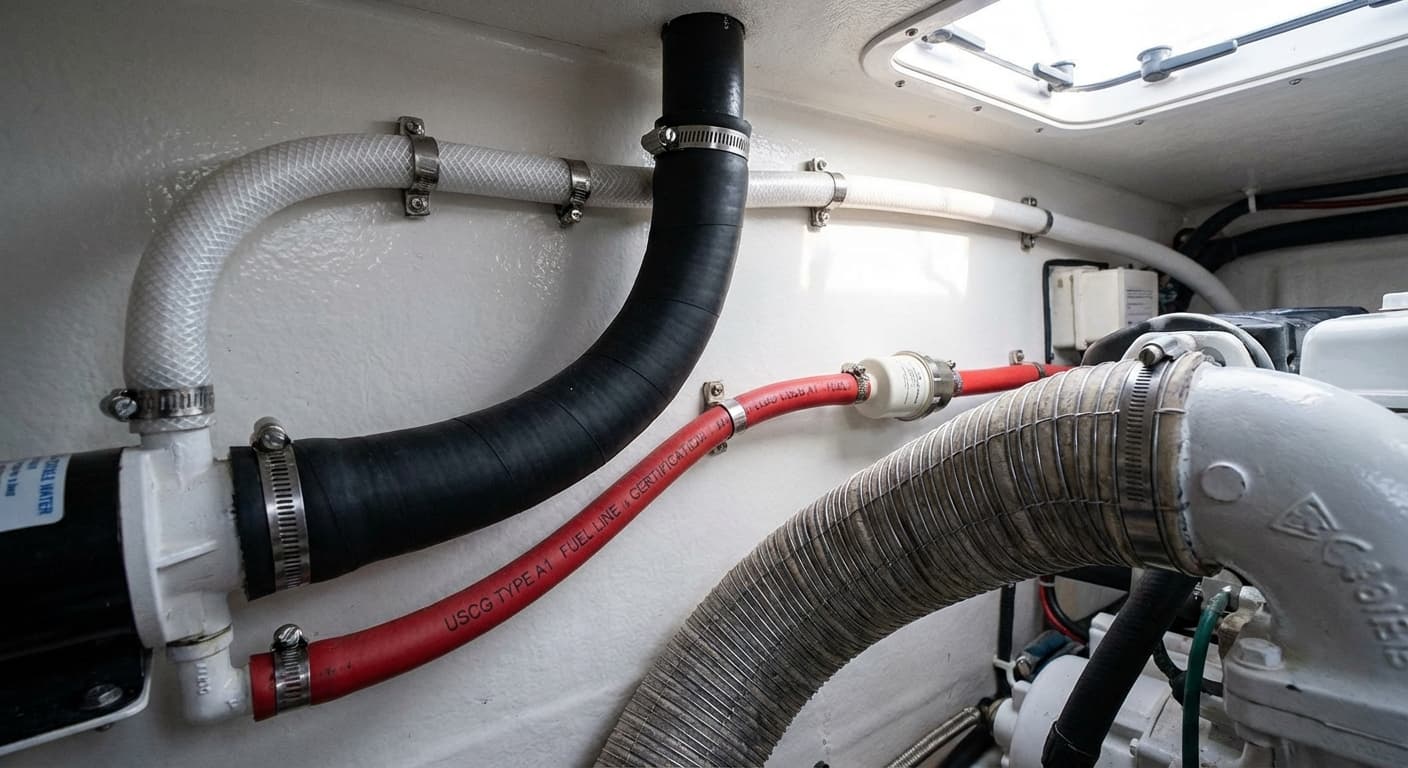
New guidance made clear that marine plumbing failures start with the wrong hose and that certification matters for safety and longevity. Hoses intended for potable water, waste, fuel, bilge, livewell and exhaust systems each have specific material and construction requirements; using garden, automotive or generic vinyl hose risks rapid degradation, contamination, vapor permeation and catastrophic failure.
Potable and freshwater systems require FDA-approved potable-water hoses, usually white or blue, with smooth inner liners to resist biofilm and avoid chemical leaching. Garden and vinyl hoses are unsafe for drinking water and will introduce taste, odor and potential health hazards. Sanitation and waste plumbing needs marine sanitation-specific hose with multiple barrier layers and odor-blocking compounds; cheaper hoses will permeate smells within weeks and fail to contain sewage.
Fuel lines carry the highest risk. Use USCG-certified marine fuel hoses: Type A1 or A2 for fill and vent lines and Type B1 or B2 for engine feed. Automotive fuel hose and uncertified lines can allow vapor permeation and create explosion and fire hazards. Exhaust hoses must handle extreme temperatures, be wire-reinforced and be rated for the application; the wrong exhaust hose can blow out, flood the boat or produce deadly fumes belowdecks. Bilge and livewell lines need crush-resistant, corrugated or reinforced hose that will not collapse under foot traffic, tanks or gear; route and support these hoses to prevent kinks and low spots.
Installation practice matters as much as material. Use stainless steel worm-drive clamps for most connections and double-clamp critical fittings; do not rely on spring clamps for permanent marine plumbing. Respect minimum bend radii, cut hoses square, support runs approximately every 18 inches and avoid sharp bends that invite chafe and collapse. Inspect hoses regularly for soft spots, cracking, bulging, discoloration or excessive stiffness and replace at the first sign of degradation. Verify visible certification markings on every hose before installation; insurers and surveyors commonly flag unreadable or uncertified lines.
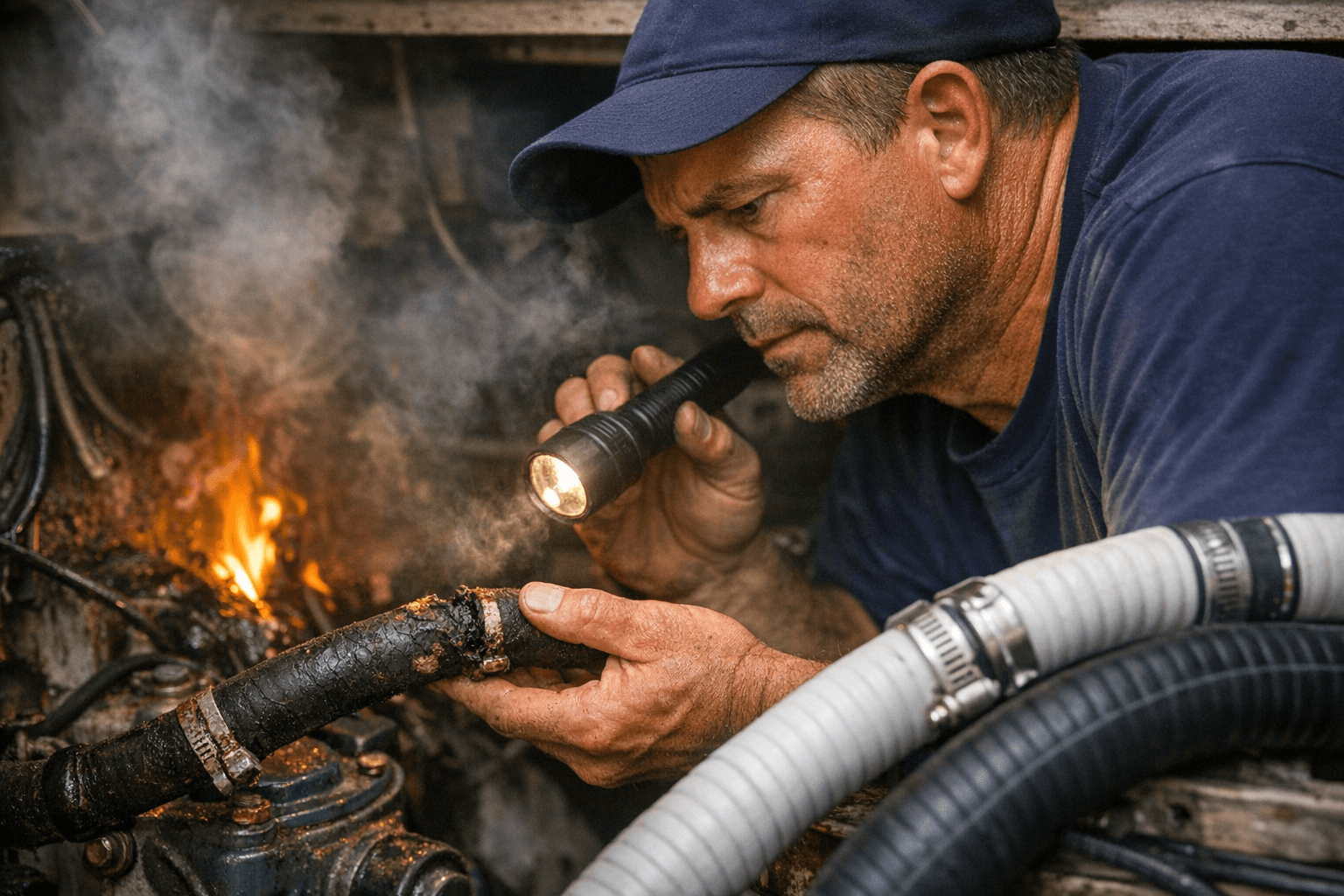
Think of marine plumbing as a meritocracy: good hose plus good installation equals longevity and safety; cheap shortcuts lead to expensive, potentially dangerous failures. That applies whether you are refitting a pocket cruiser or maintaining a hard-worked tournament boat.
For practical next steps, check visible markings on your hoses now, swap garden or automotive hoses off boats, and schedule a survey or update for fuel and exhaust systems if certification is missing. Keeping the right hose in the right place keeps the bilge dry, the head odor-free and the engine room safe.
Know something we missed? Have a correction or additional information?
Submit a Tip