Build Your Own Sailboat Autopilot With These Three DIY Approaches
Three open-source builds, pyPilot, Fenix, and ESP32, let small-boat owners ditch a $2,000+ commercial autopilot and build one themselves.
Offshore passages have a way of clarifying what gear you actually trust. For small-boat sailors who've priced out commercial autopilots and winced at the four-figure tags, the DIY autopilot movement offers something genuinely compelling: functional, hackable, community-tested systems built from open-source projects that you understand because you built them yourself.
Three paths have emerged from the community as the most well-developed and repeatable options: pyPilot, Fenix, and ESP32-based builds. Each takes a different approach to the same core problem, holding a course without a human hand on the tiller, and each suits a different kind of builder. Here's how they break down.
pyPilot: The Software-First Approach
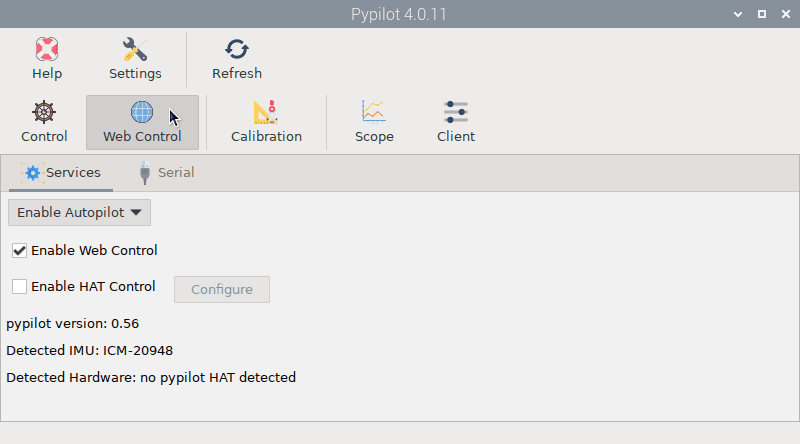
pyPilot is the most established of the three, with roots deep in the open-source marine electronics world. It runs on a Raspberry Pi and integrates directly with OpenCPN, the free chart plotter that many small-boat sailors already have aboard. That integration is the project's biggest selling point: rather than running as a standalone black box, pyPilot talks to your existing navigation stack, receives course-over-ground data, and adjusts heading accordingly.
The system handles compass-based steering as a baseline, but its real capability shows when connected to a GPS feed. Wind mode, in which the autopilot steers relative to apparent wind angle, is achievable with the right sensor input, which matters enormously on a sailboat where holding a fixed compass course through a wind shift wastes sail trim. The software is actively maintained, and the community around it is large enough that troubleshooting a sensor calibration issue or a motor drive configuration rarely means going it alone.
Hardware requirements for a pyPilot build center on a Raspberry Pi, a motor controller board matched to whatever drive mechanism you're using (tiller pilots typically use a linear actuator; wheel steering requires a different mechanical interface), and an IMU (inertial measurement unit) for compass and heel data. The barrier to entry is moderate: you'll need basic Linux familiarity and patience for initial calibration, but you don't need to write code.
Fenix: Built for the Mechanical Purist
Fenix takes a different philosophy. Where pyPilot leans into software sophistication, Fenix emphasizes a clean, reliable mechanical and electrical design that's easier to audit and repair offshore. It's the choice that appeals to sailors who want to understand every component in the chain and who are skeptical of putting too much complexity between the sensor and the rudder.
The project is designed around discrete, well-documented hardware stages: heading reference, controller logic, and drive output. Each stage can be tested and verified independently, which is a meaningful advantage if something goes wrong mid-passage and you're diagnosing the problem with a multimeter rather than a laptop. That modularity also means Fenix builds can be adapted to a wider range of boat sizes and drive systems without rewriting core logic.
Community builds of Fenix have appeared on boats from small trailer-sailers up to offshore-capable 35-footers, and the documentation reflects that range. For sailors who already have some electronics competence but are wary of the Raspberry Pi ecosystem, Fenix offers a path that feels more like traditional marine electronics and less like a home automation project.
ESP32: The Minimalist's Option
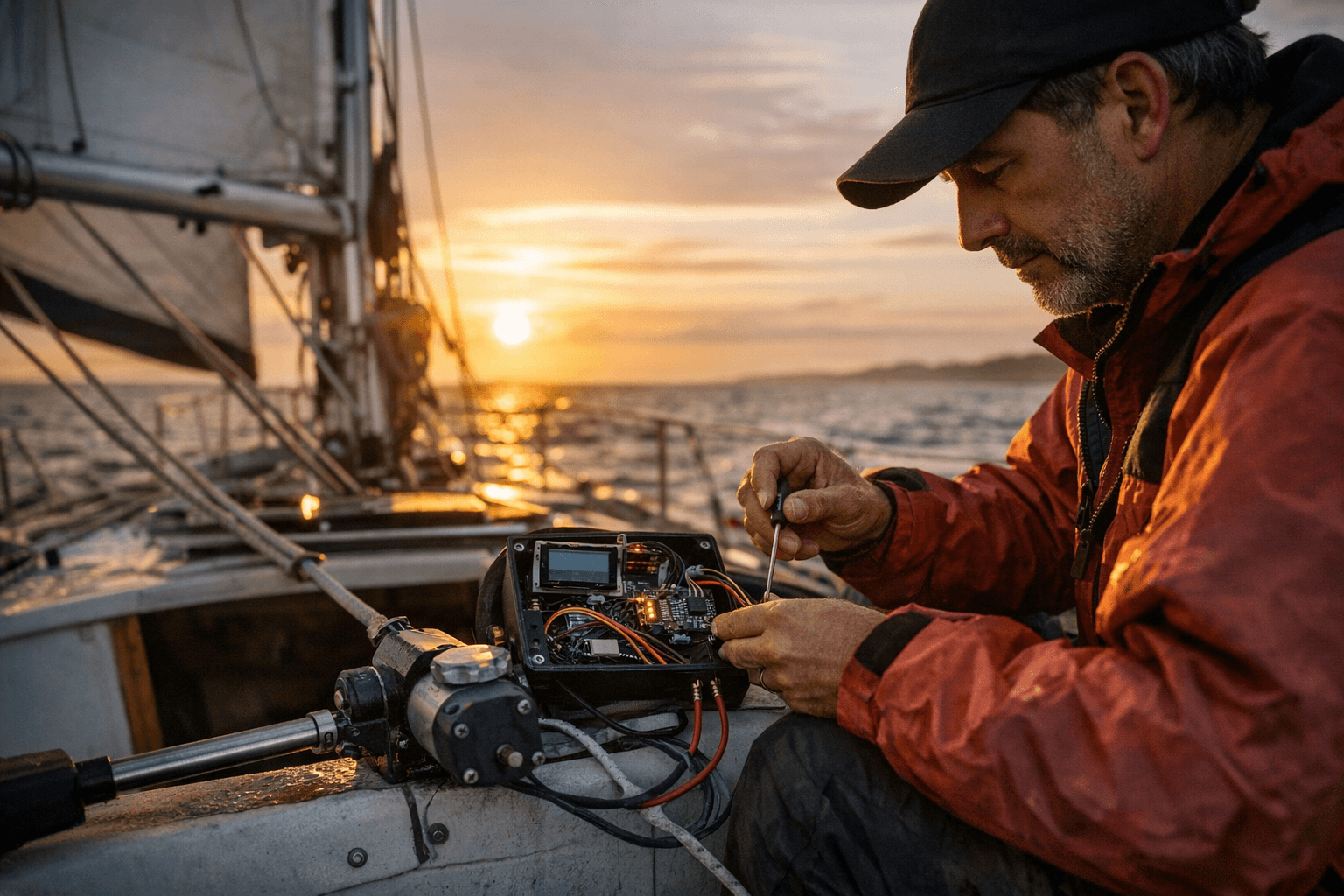
The ESP32 is a microcontroller, the same class of component as an Arduino but with built-in Wi-Fi and Bluetooth, considerably more processing power, and a price point that routinely comes in under $10 per chip. For DIY autopilot builders, it's become the foundation of an increasingly capable set of builds that prioritize simplicity, small physical footprint, and low power draw.
An ESP32-based autopilot won't have the full navigation integration of a pyPilot out of the box, but for sailors whose primary need is compass steering or wind-vane-assist on coastal passages, it delivers the core function with minimal complexity. Several builders in the community have published full schematics and firmware for ESP32 autopilots that include NMEA 2000 or NMEA 0183 connectivity, meaning they can receive GPS and wind data from existing instruments and adjust their behavior accordingly.
The low cost makes the ESP32 path particularly attractive as a redundant system: some sailors run a commercial autopilot as primary and an ESP32 build as backup, with total backup system cost well under $100 in components. That kind of redundancy used to require a second commercial unit. Power consumption on an ESP32 build is also measurably lower than Raspberry Pi-based systems, which matters on a boat where amp-hours are finite.
Choosing Your Path
The right build depends less on the boat and more on the builder. Consider a few deciding factors:
- If you're already running OpenCPN and want tight navigation integration, pyPilot builds on infrastructure you have.
- If you want maximum repairability offshore and prefer discrete, auditable hardware, Fenix rewards the methodical builder.
- If you want the lowest cost, smallest footprint, or a capable backup system, an ESP32 build gets you there fastest.
All three projects share a common advantage over commercial units that goes beyond cost: you can actually understand what your autopilot is doing and why. When a commercial unit throws an error code 200 miles from the nearest chandlery, you're at the mercy of a service manual. When you built the thing yourself, you're in a far better position to fix it.
The open-source autopilot movement is still maturing. Firmware updates, new sensor integrations, and documented builds from community members continue to expand what's possible without a big-brand budget. For small-boat sailors willing to put in the bench time before the season starts, any of these three paths leads to a functional, passage-capable system that you'll trust precisely because you made it yourself.
This article was produced by Prism’s automated news system from verified source data, official records, and press releases, then run through automated quality and moderation checks before publishing. The system is built and supervised by the people who set the standards it runs under. Read our full AI policy.
Did this article answer your question?