Chernobyl photos reveal disaster, evacuation and decades of radioactive fallout
The images show a reactor blast, a mass evacuation and a fallout zone that still shadows millions across Belarus, Ukraine and Russia.
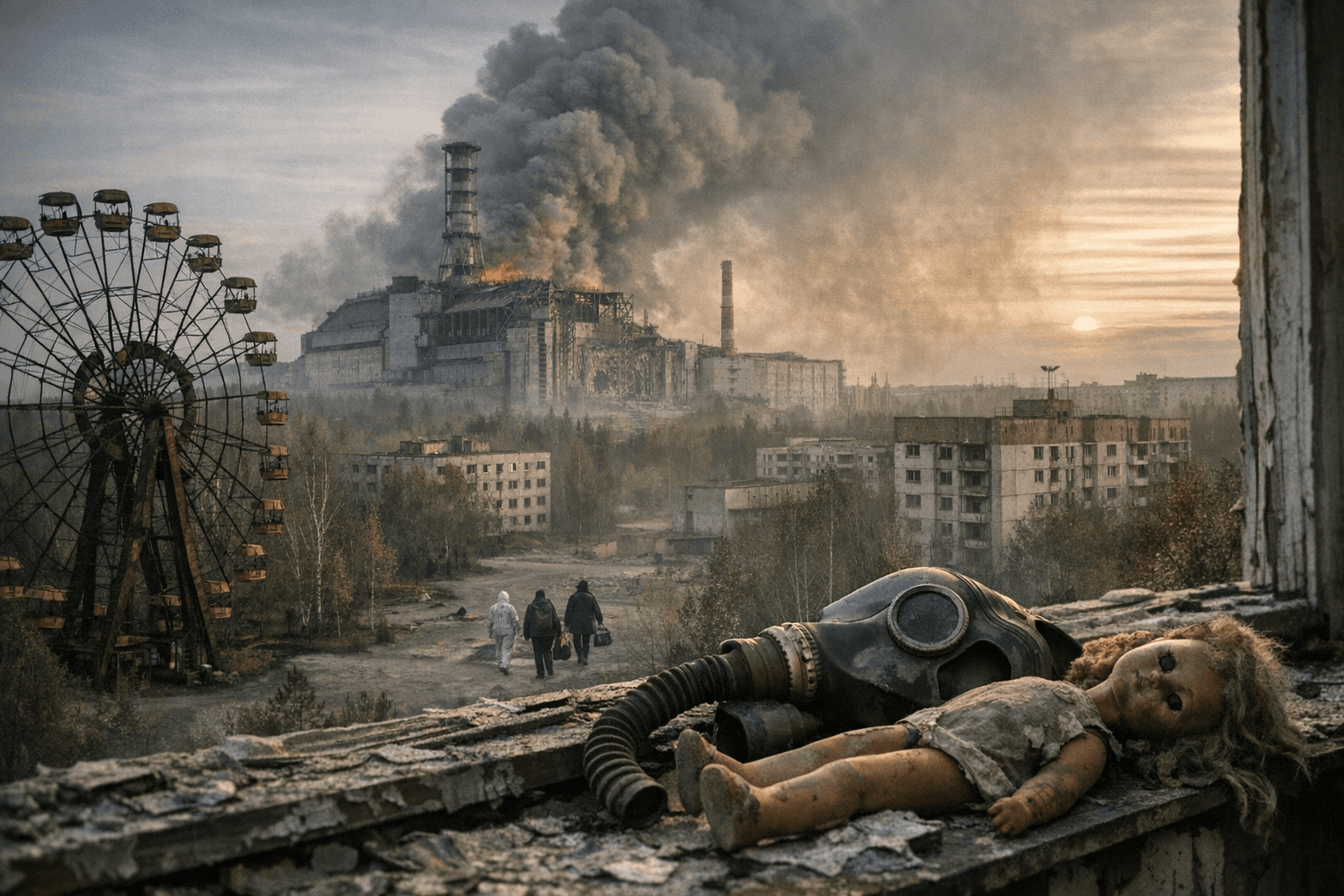
The explosion that changed the map of Europe
The first photographs from Chernobyl capture a single terrible rupture, but the story they tell does not end at the blast. On April 26, 1986, the No. 4 RBMK reactor at the Chernobyl nuclear power plant in the Soviet Union went out of control during a low-power safety test, exploded and burned, and sent radiation into the atmosphere. The reactor building was destroyed, the fire lasted about ten days, and the accident became one of the largest radioactive releases in civil nuclear power history.
Those early images matter because they show both the violence of the initial event and the scale of the response that followed. The disaster was not simply the result of one failed test. It grew out of major design deficiencies in the RBMK reactor, violations of operating procedures and a lack of safety culture, a conclusion reflected in assessments by Soviet experts, the International Nuclear Safety Advisory Group, the International Atomic Energy Agency and the World Nuclear Association.
The human cost in the first hours and weeks
The death toll began immediately. Two plant workers died on the night of the accident, and 28 more people died within weeks from acute radiation syndrome. Among the most heavily exposed were emergency and recovery workers, later known as liquidators, who entered the damaged site and the surrounding area to contain the fire, clear debris and carry out the grim work of stabilization.
The photos from those days often show exhausted workers, scorched structures and a plant whose familiar industrial silhouette had been shattered. They also mark the beginning of a long public-health crisis. The disaster did not stay inside the reactor building, and it did not end when the flames finally died down.
Evacuation and displacement on a massive scale
The evacuation photographs from spring and summer 1986 show a different kind of catastrophe: a population forced to leave homes, schools and farmland in haste. According to the World Health Organization, 116,000 people were evacuated in 1986 from areas around the reactor, and another 230,000 were relocated in subsequent years. Entire communities were uprooted, and families were scattered across Ukraine, Belarus and the Russian Federation.
Those removals were only part of the wider human impact. The World Health Organization says the accident affected the lives of millions across Belarus, Ukraine and the Russian Federation, while about five million people still live in areas with elevated cesium contamination. That long exposure has made Chernobyl less a closed chapter than an ongoing condition, one defined by illness fears, economic disruption, abandoned settlements and the psychological strain of living with contamination.
What the long tail of fallout looks like
The most haunting later photographs are often the least dramatic: empty apartment blocks, rusted playgrounds, forest roads overtaken by vegetation and the silent remains of villages that were never fully returned to public life. These images capture the aftermath years later, when the accident had become less visible but no less consequential. International agencies continue to describe Chernobyl as a major humanitarian, environmental and public-health disaster with lasting psychosocial effects on displaced communities.
The environmental damage also persisted through radioactive deposition. Elevated cesium contamination shaped land use, relocation policy and daily life long after the headline moment had passed. In that sense, Chernobyl was not only a reactor accident but also a governance failure with consequences that crossed borders and generations.
From emergency response to international remembrance
Chernobyl eventually became a global reference point for nuclear oversight, disaster response and institutional accountability. The United Nations General Assembly designated April 26 as International Chernobyl Disaster Remembrance Day on December 8, 2016, turning the anniversary into a formal reminder of the human and environmental cost of nuclear failure. The date now anchors a wider public memory that extends far beyond the Soviet-era plant.
That remembrance matters because it resists the temptation to reduce Chernobyl to a single photograph or a single blast. The United Nations, the World Health Organization, the International Atomic Energy Agency and UNSCEAR have all helped keep attention on the accident’s enduring effects, not just its origin story. The lesson embedded in the record is clear: nuclear disasters can outlast the moment that causes them by decades.
Containing the wreckage, not erasing the history
Even the effort to enclose the ruined reactor became a symbol of the long-term burden. The New Safe Confinement, a giant arch financed and managed through international cooperation with the European Bank for Reconstruction and Development at the center of the project, was slid into place in November 2016. It was designed to seal the destroyed Unit 4 from the environment and reduce the risk posed by the radioactive waste left behind.
The structure was a major engineering achievement, but it also underscored a harder truth. Three decades after the explosion, the world still needed a vast containment system to manage the legacy of one failed test, one flawed reactor design and one collapsed safety culture. The photographs from Chernobyl, from the first day to the years of abandonment and containment, show that disaster is rarely an event alone. It is a process, and at Chernobyl that process has stretched across generations.
This article was produced by Prism’s automated news system from verified source data, official records, and press releases, then run through automated quality and moderation checks before publishing. The system is built and supervised by the people who set the standards it runs under. Read our full AI policy.
Did this article answer your question?


