Chile, US to sign mining and security agreements in Santiago
Chile and the United States moved to lock in mining and security ties in Santiago, with copper, lithium and narcotics control at the center. The deal deepened Washington’s push for critical mineral supply chains.
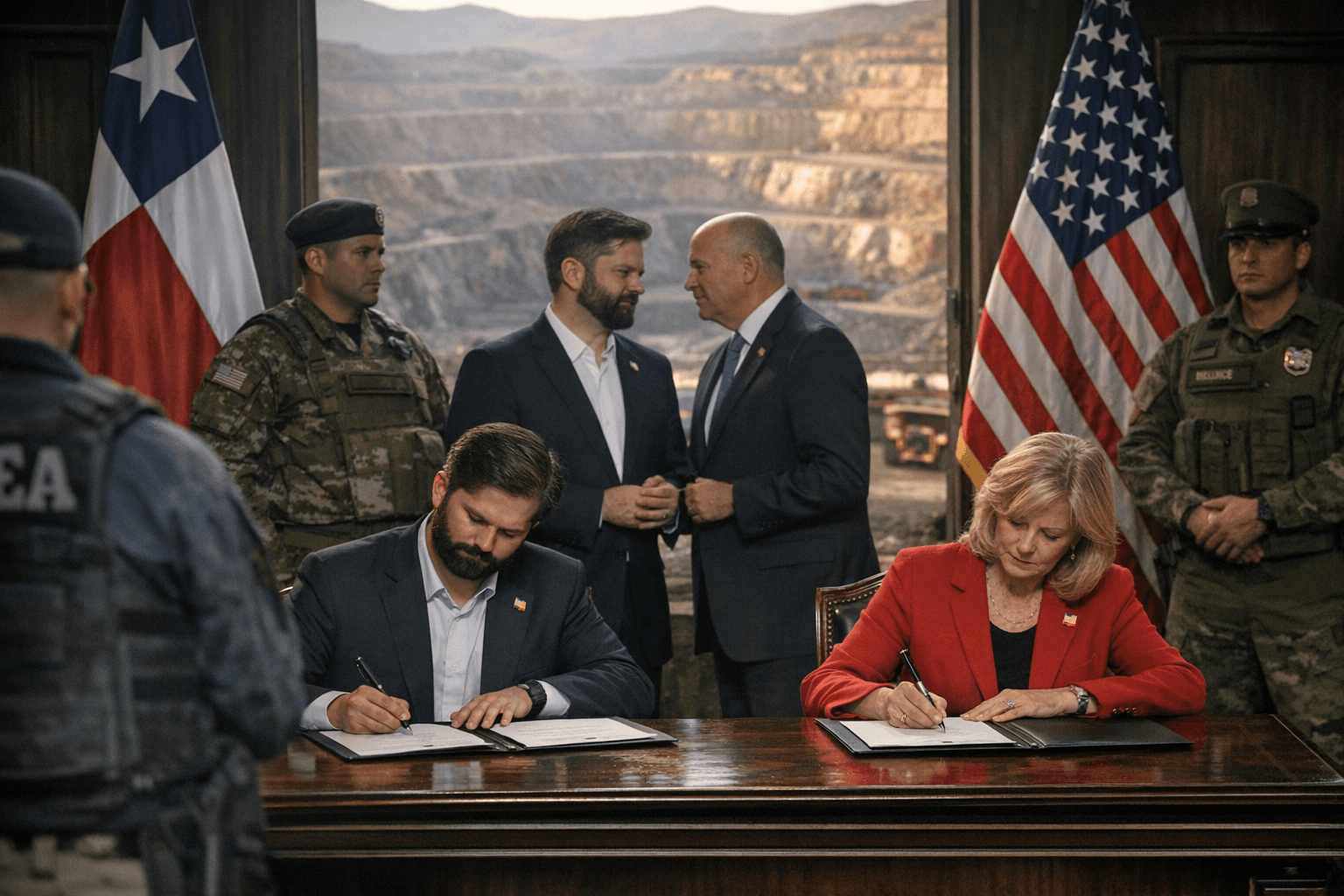
Chile and the United States signed mining and security agreements in Santiago, putting critical minerals, investment and law-enforcement cooperation into one diplomatic package at a time when Washington is racing to harden supply chains and reduce exposure to geopolitical rivals.
The ceremony brought together Chilean Foreign Minister Francisco Pérez Mackenna, Minister of Mining and Economy Daniel Mas and U.S. Undersecretary of State for Arms Control and International Security Thomas DiNanno, a line-up that showed the talks were being handled at senior political and technical levels. The agreement also included a review of both countries’ narcotics control policies, widening the scope beyond mineral extraction and into security coordination.
The mining piece built on a March 12 joint declaration that created a framework for bilateral consultations on critical minerals and rare earth elements. That earlier deal was designed to support reliable supply chains, identify joint projects, explore financing mechanisms and improve the handling of mineral scrap and recycling. The first consultation under that declaration was expected within 15 days, underscoring how quickly the two governments moved from a policy framework to a visible signing in Santiago.
Chile’s role in the arrangement carries unusual weight. The country is the world’s largest copper producer, the second-largest lithium producer, the largest rhenium producer and a major source of molybdenum. Those minerals sit at the heart of electric vehicles, power grids, defense manufacturing and advanced electronics, making Chile a natural partner as the United States works to diversify away from overreliance on concentrated foreign supply chains.
The timing also matched Chile’s domestic mining agenda. A separate report on Monday said Santiago was trying to accelerate permit approvals to unlock an investment pipeline worth more than $100 billion, a sign that the government wants foreign partnerships to translate into faster projects and more capital. For Chile, the agreements may help turn its mineral endowment into faster investment and more resilient growth. For Washington, they fit a broader strategy of building hemispheric partnerships around the energy transition and strategic materials.
The United States Embassy in Chile said on February 4 that Washington had signed eleven new bilateral critical minerals frameworks or memorandums of understanding that day, part of a wider effort to reshape the global market for critical minerals and rare earths. In that context, the Santiago signing was not a routine diplomatic flourish. It was a concrete step in a larger competition over the minerals, financing and security ties that will shape the next phase of the energy transition across the Americas.
This article was produced by Prism’s automated news system from verified source data, official records, and press releases, then run through automated quality and moderation checks before publishing. The system is built and supervised by the people who set the standards it runs under. Read our full AI policy.
Did this article answer your question?