China accelerates space tourism push while seeking deep-space edge
China vows suborbital and orbital space tourism within five years and plans gigawatt-scale space infrastructure to sharpen its deep-space edge.
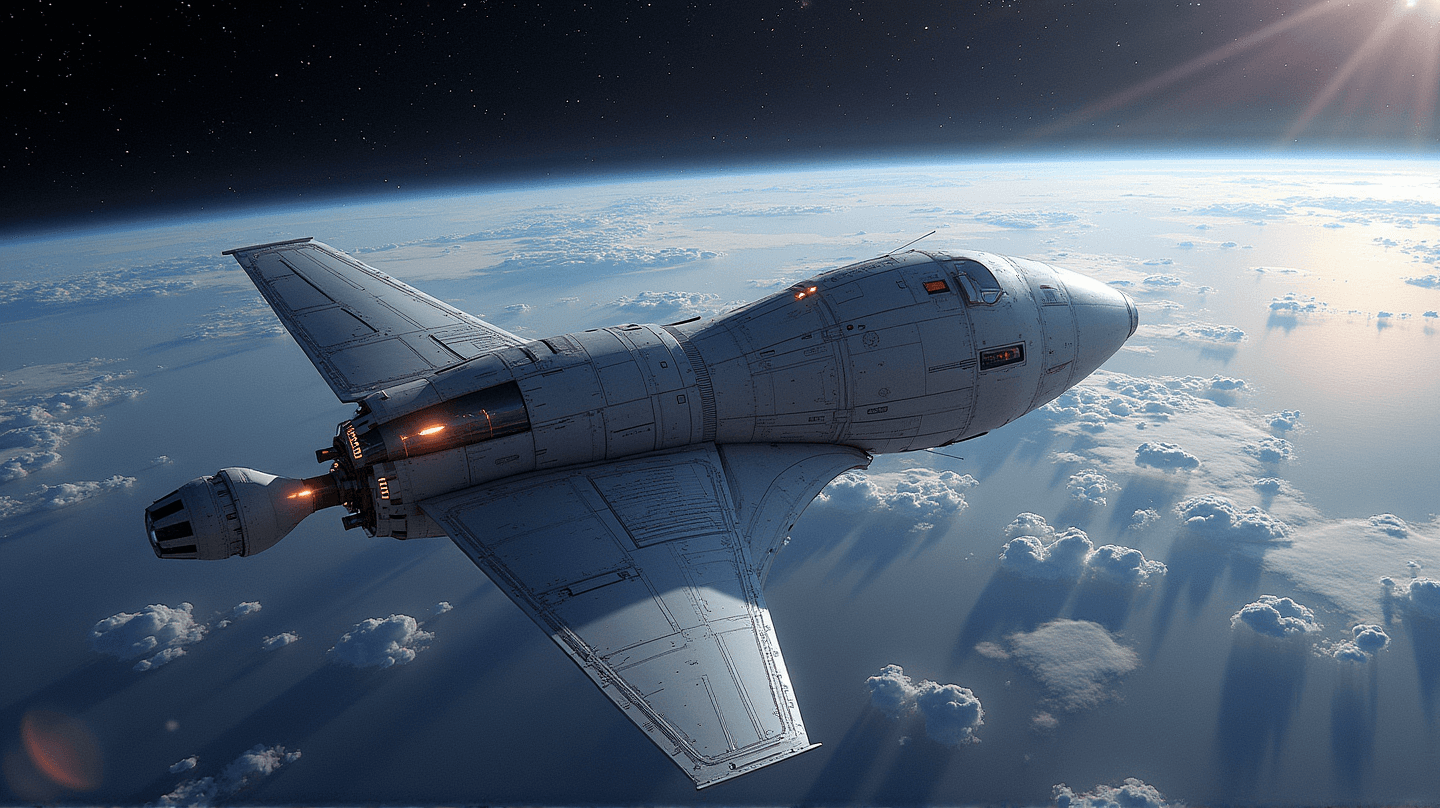
China’s principal state aerospace contractor announced today an ambitious dual track to commercialize human spaceflight and accelerate deep-space capabilities. The China Aerospace Science and Technology Corporation told state media it will “achieve the flight operation of suborbital space tourism and gradually develop orbital space tourism” within five years and will “build a gigawatt‑level space digital intelligence infrastructure,” part of a broader pledge to become a “world‑leading space power” by 2045.
The declaration frames an intensifying competition with the United States in both commercial and strategic domains. Beijing’s plan places state planners and major state-owned enterprises at the center of a national push, while an expanding group of private and quasi-public companies pursue reusable launch technologies that industry observers regard as the turning point for affordable, routine access to low Earth orbit.
Reusability is the central technical and economic bottleneck. Chinese reporting and analysts note that Chinese entities have so far “failed to complete a reusable rocket test,” leaving them behind firms that have demonstrated reusable first-stage recovery. In the United States, a reusable Falcon 9 rocket has dramatically lowered launch costs, enabled large low Earth orbit constellations and been used to carry orbital tourists, illustrating the strategic and commercial payoff of recoverable systems.
Commercial developers in China are moving to close that gap. Deep Blue Aerospace, the Beijing-founded startup behind the Nebula-1 reusable orbital rocket, has publicly declared ambitions to offer suborbital tourist flights beginning in 2027 and is preparing further vertical takeoff, vertical landing tests after a September VTVL flight ended with the loss of a first stage. CAS Space, a commercial spin-off tied to the Chinese Academy of Sciences, reported a successful maiden suborbital flight of a vehicle designated PH‑1 from the Jiuquan range. Shi Xiaoning, PH‑1’s chief designer and project manager, described the craft as primarily intended for low-cost suborbital scientific experiments that can provide “minute-level, high-quality microgravity,” with potential applications in plant breeding, biomedical research and materials testing and as a precursor to tourism once the technology matures.

Companies and state contractors differ on timetables. CASC’s state pledge sets a five-year window for suborbital operation and a gradual progression to orbital tourism. Many commercial actors now cite 2027 as a likely start for paid suborbital flights, while earlier concept renders and corporate statements had suggested more aggressive demo timetables in 2022–2024 that did not materialize. Public setbacks in reusable testing have prompted more cautious projections.
The scale of China’s effort is notable. Government and industry materials point to an annual national space budget in the low tens of billions of dollars and a workforce measured in the hundreds of thousands, resources Beijing argues will underpin its push into commercial services, deep-space probes and space-based intelligence infrastructure. For policymakers overseas, the combination of state direction and a growing private sector raises questions about export controls, space traffic management and rules of the road in an increasingly congested orbital environment.
For now, the salient fact is convergence: state planners are promising infrastructure and strategic ambition while Chinese firms pursue the reusable systems that will determine who can routinely fly people and payloads to suborbital and orbital destinations. The near-term yardsticks will be confirmation of upcoming VTVL tests, verification of recovery outcomes and clarity on how state funding and regulatory regimes will mesh with private developers’ commercial timelines.
This article was produced by Prism’s automated news system from verified source data, official records, and press releases, then run through automated quality and moderation checks before publishing. The system is built and supervised by the people who set the standards it runs under. Read our full AI policy.
Did this article answer your question?