China accuses U.S. of distorting defence policy, blocking China India warming
Beijing on Thursday accused the United States of mischaracterising its defence posture and of trying to undermine a nascent improvement in China India ties, a diplomatic spat that highlights rising strategic mistrust. The exchange, sparked by a Pentagon assessment issued Tuesday, matters for regional diplomacy and markets because it colors the strategic calculus for trade, investment and defence spending across Asia.
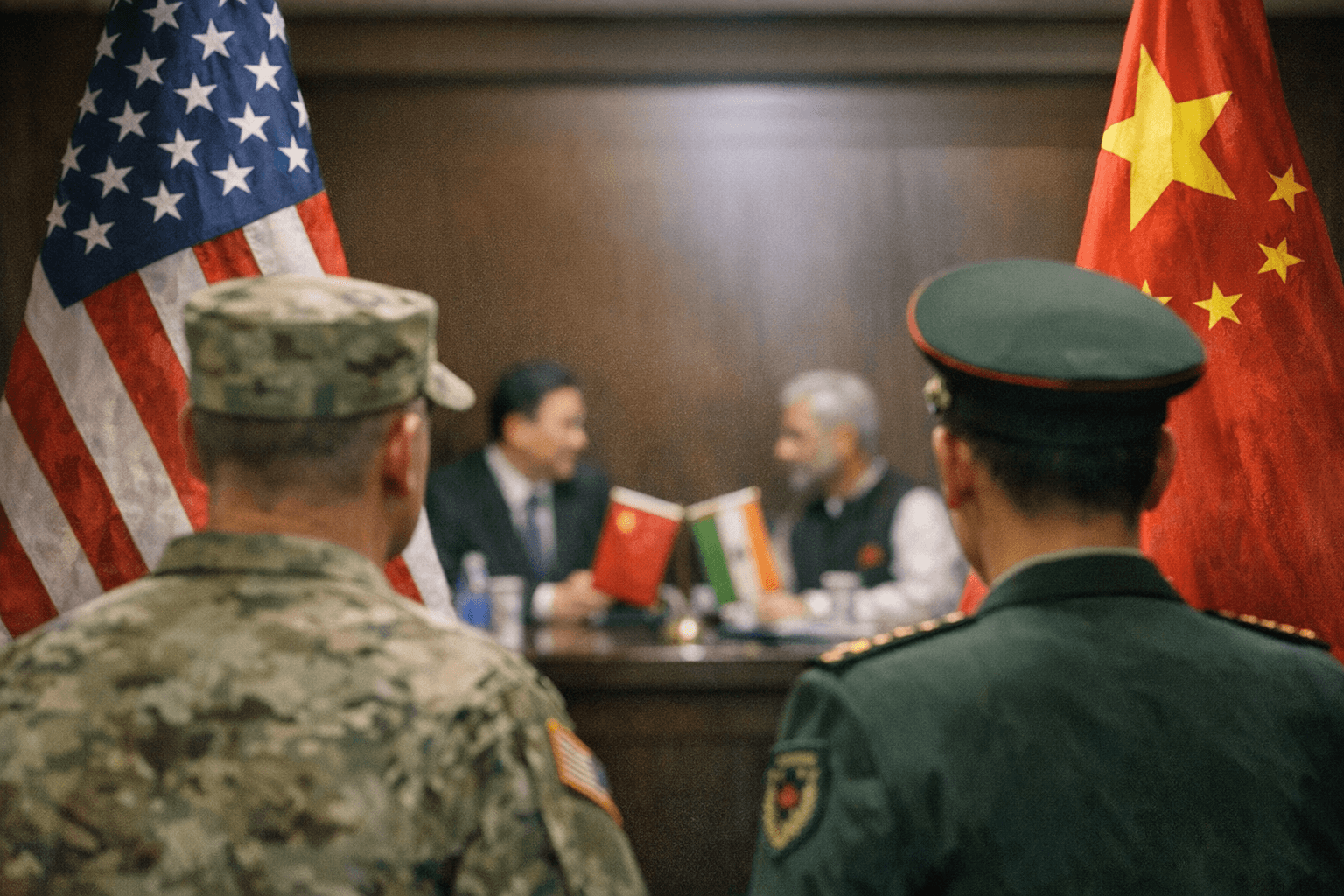
Beijing accused the United States on Thursday of misrepresenting China’s defence policy and of seeking to disrupt an easing of tensions with India, in a public rebuke that underscores deepening suspicions between the world’s major powers. The charge was delivered at a regular Foreign Ministry press briefing by spokesperson Lin Jian, who was responding to questions about a recent Pentagon assessment.
The U.S. Department of Defense report, published on Dec. 23, said China “probably seeks to capitalise on decreased tension… to stabilise bilateral relations and prevent the deepening of US India ties.” Chinese officials seized on that line, characterising U.S. commentary as a distortion of Beijing’s motives and saying Washington was attempting “to thwart an improvement in China India ties.” Lin also framed the border diplomacy as a bilateral matter, saying “the border issue was a matter between the two nations.”
The exchange reflects a larger strategic tug of war over how China, India and the United States will manage overlapping security and economic interests. For Beijing, portraying the India rapprochement as a bilateral normalization helps limit third party involvement and preserves room for negotiation on sensitive territorial questions. For Washington, analysts said in prior commentary, closer China India relations could complicate efforts to build a strategic architecture across the Indo Pacific that supports shared security and economic priorities.
The immediate diplomatic fallout was limited to formal rebuttals rather than new measures, and there was no public response from U.S. officials in the coverage of the exchange. Still, the dispute could influence policy choices in capitals across the region. If Washington remains sceptical of Beijing’s intentions, it may intensify alliance building with New Delhi through deeper security cooperation, technology agreements and investment screening. Beijing’s insistence on bilateralism could harden its posture in negotiations and shape how it sequences economic ties and military signalling.
Markets could take notice even if the rhetoric does not escalate. Heightened strategic mistrust typically raises risk premia for regional supply chains and for sectors tied to defence and critical technologies. Investors and companies that manage production networks spanning China and India could face greater policy uncertainty, potentially accelerating diversification plans that have been under way for several years. Governments may also justify higher defence budgets in the near term, a trend that would redirect public resources and influence long term fiscal planning.
The public back and forth also highlights the limits of open intelligence assessments and the role they play in shaping public diplomacy. The Pentagon report’s phrasing served as a focal point for Beijing’s rebuttal, but the reporting does not present direct evidence that Beijing is pursuing the strategy as characterised. Absent further, verifiable detail, the dispute remains one of interpretation, with consequences that reach beyond diplomatic chambers into markets and policy decisions across the Indo Pacific.
This article was produced by Prism’s automated news system from verified source data, official records, and press releases, then run through automated quality and moderation checks before publishing. The system is built and supervised by the people who set the standards it runs under. Read our full AI policy.
Did this article answer your question?