China Accuses U.S. of Distorting Taiwan Pressure as Tensions Rise
Beijing blasted Washington’s Taiwan warnings as a distortion while Xi met a top KMT leader and Chinese warplanes flew near the island, sharpening the sovereignty fight.
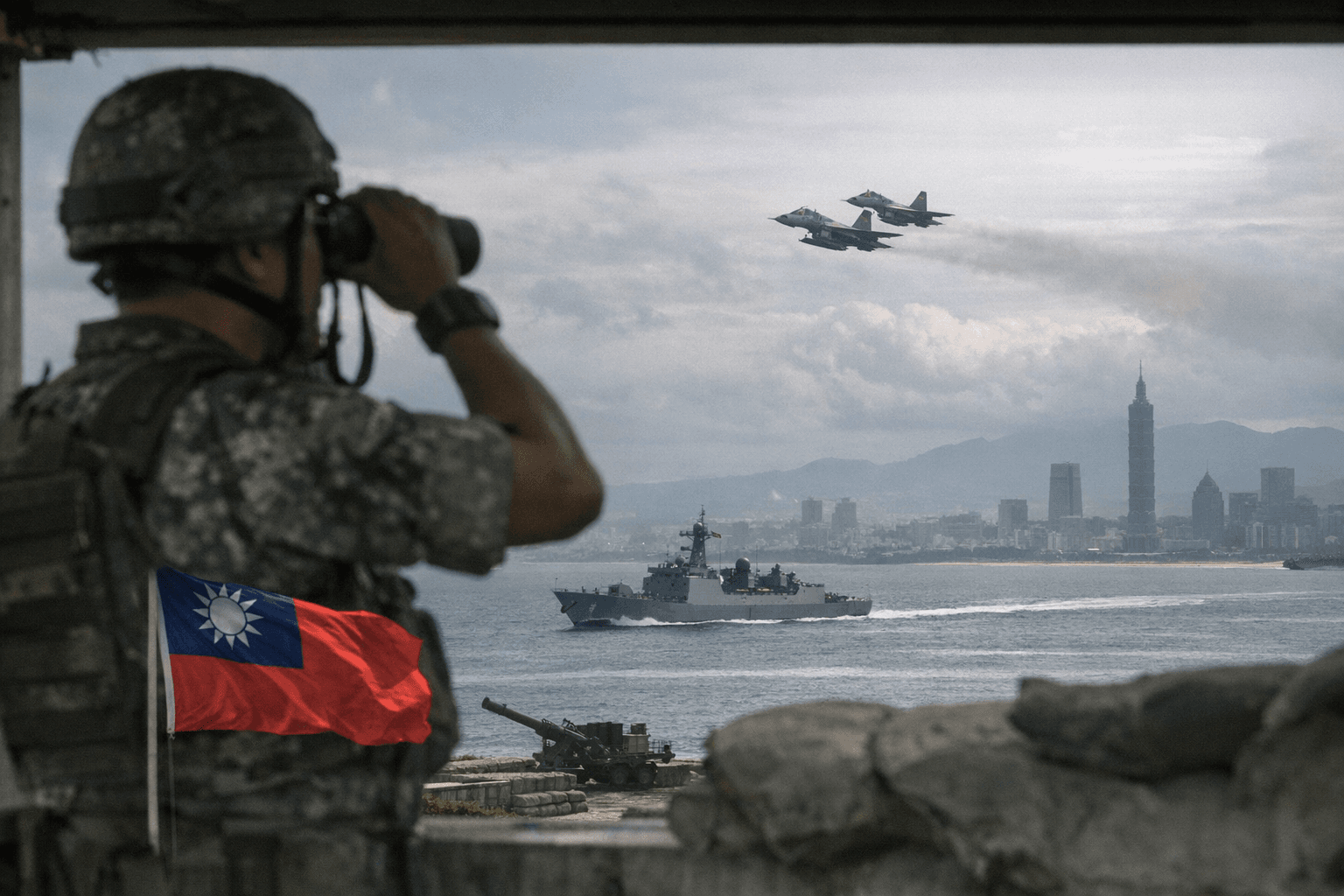
China escalated its war of words with Washington by rejecting U.S. criticism of pressure on Taiwan as a distortion and accusing American officials of malicious intentions, a sign that the struggle over narrative is intensifying alongside the military buildup around the island.
Chen Binhua, the spokesperson for China’s Taiwan Affairs Office, said the United States was “jumping up and down” and repeating what he called the mainland threat and military pressure narrative. He called those claims a complete distortion of the facts and said they reflected malicious intentions. The rebuke came after the U.S. State Department said in January that China’s military activities and rhetoric toward Taiwan and others in the region increased tensions unnecessarily, urging Beijing to exercise restraint, cease military pressure against Taiwan and engage in meaningful dialogue.
The dispute unfolded as China continued to step up activity around Taiwan, which Beijing views as its own territory and has never renounced the use of force to bring under its control. China has held several rounds of war games around the island, including live-fire drills in late December. Taiwan’s defense ministry said it spotted 16 Chinese warplanes near the island on April 10, the same day Xi Jinping met Cheng Li-wun, the chairwoman of Taiwan’s largest opposition party, the Kuomintang, in Beijing.
Xi told Cheng that he would not tolerate Taiwan independence. Cheng, who is the first KMT chairperson to lead a delegation to the Chinese mainland in the past decade, said she hoped to advance the institutionalization of peace across the Taiwan Strait. She also said, “We can definitely go down the path of peace.” Lai Ching-te, Taiwan’s president, responded that peace could not be achieved by compromising and conceding sovereignty.
Beijing has paired the pressure with inducements. It unveiled measures it said would benefit Taiwan, including easing controls on exports of food, even as military activity continued around the island. That combination of offers and force has become a familiar pattern in the standoff, one that leaves Taiwan’s political camps divided over how to balance deterrence, trade and the risk of escalation.
The hardening rhetoric also sits atop a deeper institutional freeze. Beijing cut off a cross-strait communication mechanism in 2016 after Tsai Ing-wen took office and declined to endorse Beijing’s one-China principle. Nearly a decade later, the lack of regular contact has left every exchange more politically charged, with Beijing and Washington each trying to define who is destabilizing the region before any military move is made.
This article was produced by Prism’s automated news system from verified source data, official records, and press releases, then run through automated quality and moderation checks before publishing. The system is built and supervised by the people who set the standards it runs under. Read our full AI policy.
Did this article answer your question?


