China Considers Limiting Solar Equipment Exports to the U.S.
Beijing’s talks on curbing solar-tool exports could squeeze U.S. factory plans and raise costs for the clean-energy buildout. The move would deepen the tech fight with Washington.
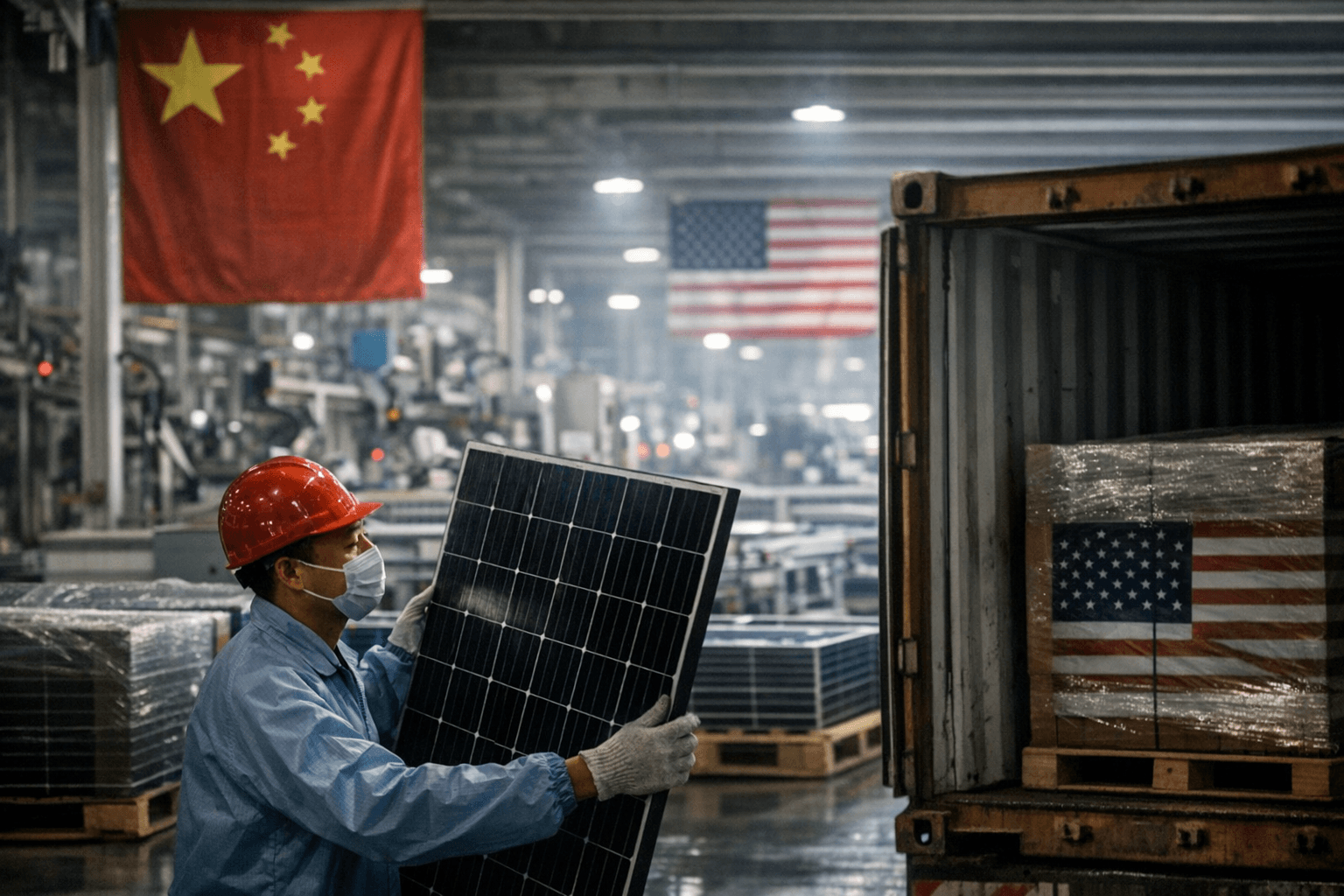
China’s early talks about limiting exports of advanced solar-panel manufacturing equipment to the United States carried stakes far beyond one industry. If Beijing moved ahead, the biggest immediate effect would likely be slower U.S. efforts to build a domestic clean-energy supply chain, tighter access to specialized tools and fresh uncertainty for factory investments already underway.
Chinese officials had been consulting with suppliers of solar-panel manufacturing equipment about possible curbs on the most advanced tools, according to people familiar with the discussions. No rule had been adopted, and the talks had not progressed to formal industry feedback, but even the possibility underscored how much leverage China held in a sector it dominated. China was estimated to make more than 80% of the world’s solar-panel components, and many of the leading makers of the equipment used to produce solar cells were based there.
That manufacturing edge gave Beijing a powerful pressure point in a market central to both climate policy and industrial strategy. Solar hardware has become essential not only to power grids and emissions targets, but also to the next wave of computing infrastructure, including space-based systems and other power-hungry artificial intelligence applications. A restriction on advanced equipment exports would therefore reach into energy security, data-center expansion and the race to control the hardware behind the AI boom.
For U.S. companies trying to expand domestic production, the timing was especially sensitive. The reporting said curbs could threaten investment plans and slow factory expansions by American firms seeking to build more solar capacity at home. Tesla had been working to expand or create manufacturing capacity in the United States, while Google and Amazon were investing in solar and storage systems as they sought to meet rising electricity demand tied to AI growth.
The move also fit a broader pattern in China’s industrial policy. Beijing had already used export controls in other strategic sectors, including rare earths, and was now weighing whether to extend that playbook to another field where it held a manufacturing lead. That raised the prospect of a wider competition over supply chains, not just tariffs or market access.
The issue gained added significance as Beijing and Washington prepared for a summit between Xi Jinping and Donald Trump in the Chinese capital next month. Both sides wanted a relatively stable trade relationship, but the talks around solar equipment showed how quickly that balance could be strained. If China acted, it would remind developers, manufacturers and policymakers that the energy transition was increasingly being shaped by geopolitics as much as by economics or climate ambition.
This article was produced by Prism’s automated news system from verified source data, official records, and press releases, then run through automated quality and moderation checks before publishing. The system is built and supervised by the people who set the standards it runs under. Read our full AI policy.
Did this article answer your question?