China detains Berkeley scholar after Trump-Xi meeting, raising tensions
China’s detention of Berkeley Ph.D. candidate U Min Zin came days after Trump met Xi Jinping, alarming scholars who study Myanmar’s war and U.S.-China rivalry.
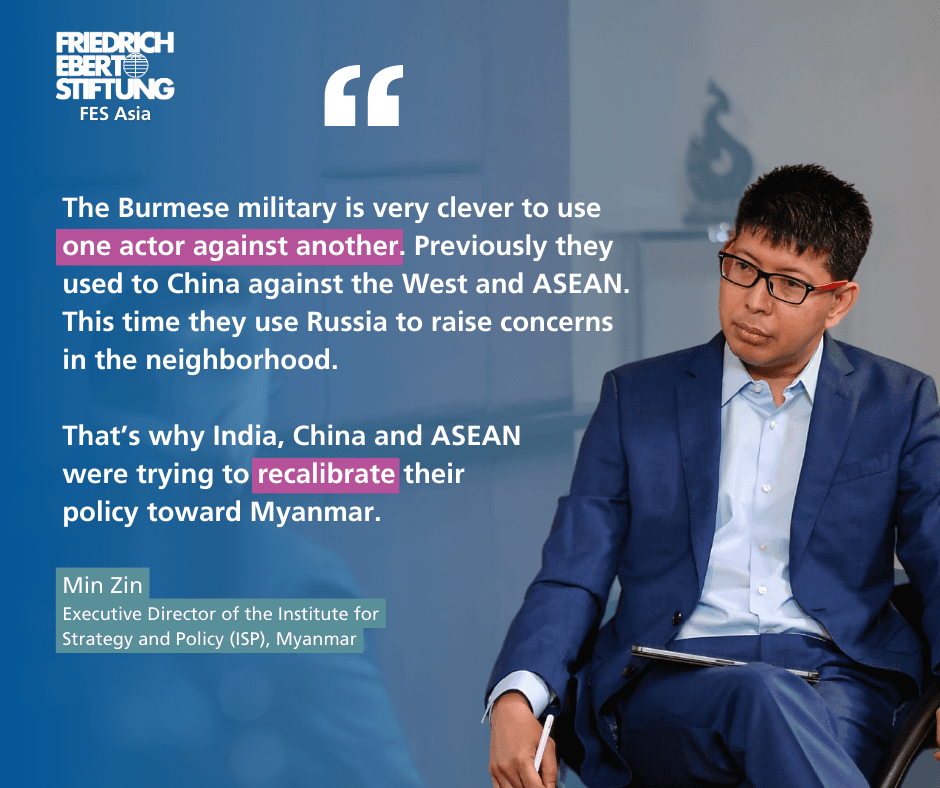
China’s detention of U Min Zin, a University of California, Berkeley Ph.D. candidate and Myanmar analyst, has stirred concern well beyond one campus. His work has focused on Myanmar’s civil-military relations, democratization, ethnic conflict and the country’s wider geopolitics, placing him at the crossroads of academic freedom, diaspora activism and U.S.-China tensions.
Min Zin is identified by Berkeley as a graduate student in political science, and the Institute for Strategy and Policy-Myanmar lists him as its founding member and executive director. He has long been described in academic and policy circles as a former student activist from Burma’s 1988 democracy movement, a background that gives his scholarship added weight among researchers and exiles who follow Myanmar’s politics after the February 1, 2021 military coup.
The arrest came soon after Donald Trump’s state visit to China from May 13 to 15, 2026, when Trump met Xi Jinping in Beijing. The U.S. Mission in China said the two leaders discussed economic cooperation, market access, Chinese investment, fentanyl precursors and American agricultural purchases, part of a broader effort to present a constructive relationship with strategic stability. Min Zin’s detention, arriving in that diplomatic window, highlights how quickly a scholar’s fate can become entangled with state-to-state friction.
For researchers of Myanmar, the case carries particular force because Min Zin’s expertise reaches into one of Asia’s most volatile arenas. Myanmar has been under military rule since the 2021 coup, and analysts have described the country as a major theater of regional competition involving China, Russia, India and neighboring states. Min Zin’s public writing and interviews have examined those pressures, as well as the country’s civil war and political opening and closure. Detaining a scholar with direct ties to an American university risks chilling the flow of research, narrowing space for diaspora advocacy and complicating the informal exchanges that often help policymakers read events in Myanmar.
The wider context is already troubling. Scholars at Risk said its Free to Think 2025 report documented 395 attacks on scholars, students and institutions across 49 countries and territories, underscoring how often academic work collides with political power. In China, where advocacy groups have tracked repeated pressures on scholars and universities, Min Zin’s arrest is likely to be watched closely by academic freedom advocates, China watchers and Myanmar specialists alike.
This article was produced by Prism’s automated news system from verified source data, official records, and press releases, then run through automated quality and moderation checks before publishing. The system is built and supervised by the people who set the standards it runs under. Read our full AI policy.
Did this article answer your question?