China expands desert missile complex, bolstering nuclear second-strike capability
China is adding launch pads, bunkers and command links around its Xinjiang silos, a buildout that could make its nuclear force harder to knock out.

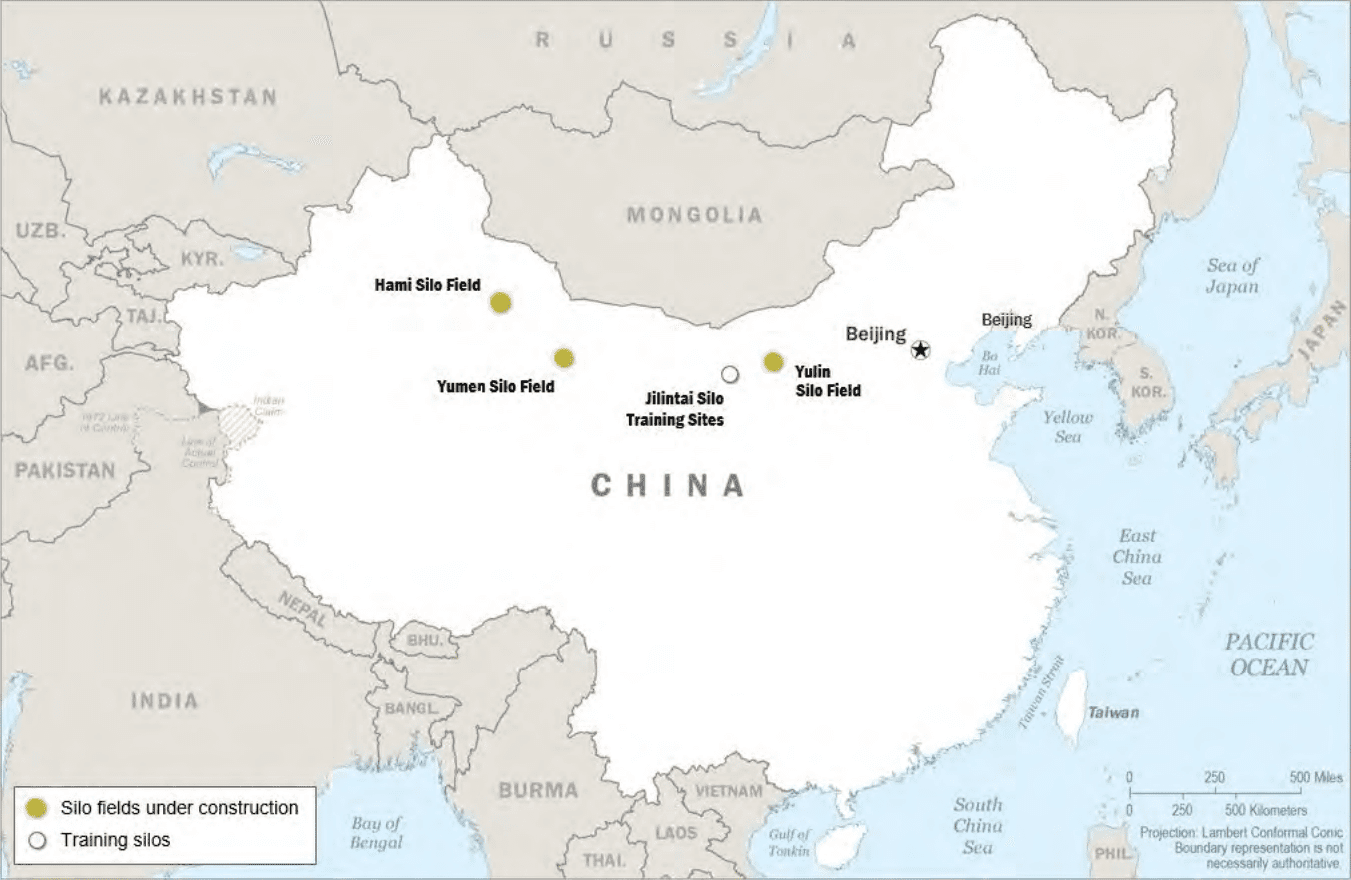
Satellite images of China’s desert missile zone show a widening web of launch pads, bunkers and communications nodes around the Hami silo field in Xinjiang, a shift that could make Beijing’s nuclear forces more survivable in a crisis and harder for U.S. and allied planners to track.
The imagery shows more than 80 pads that could support mobile missile launchers and air-defense systems, spread across thousands of square kilometers of desert. The construction also appears to include facilities that could support electronic warfare, satellite communications and command operations, suggesting a broader effort than simple concealment around known silo sites.
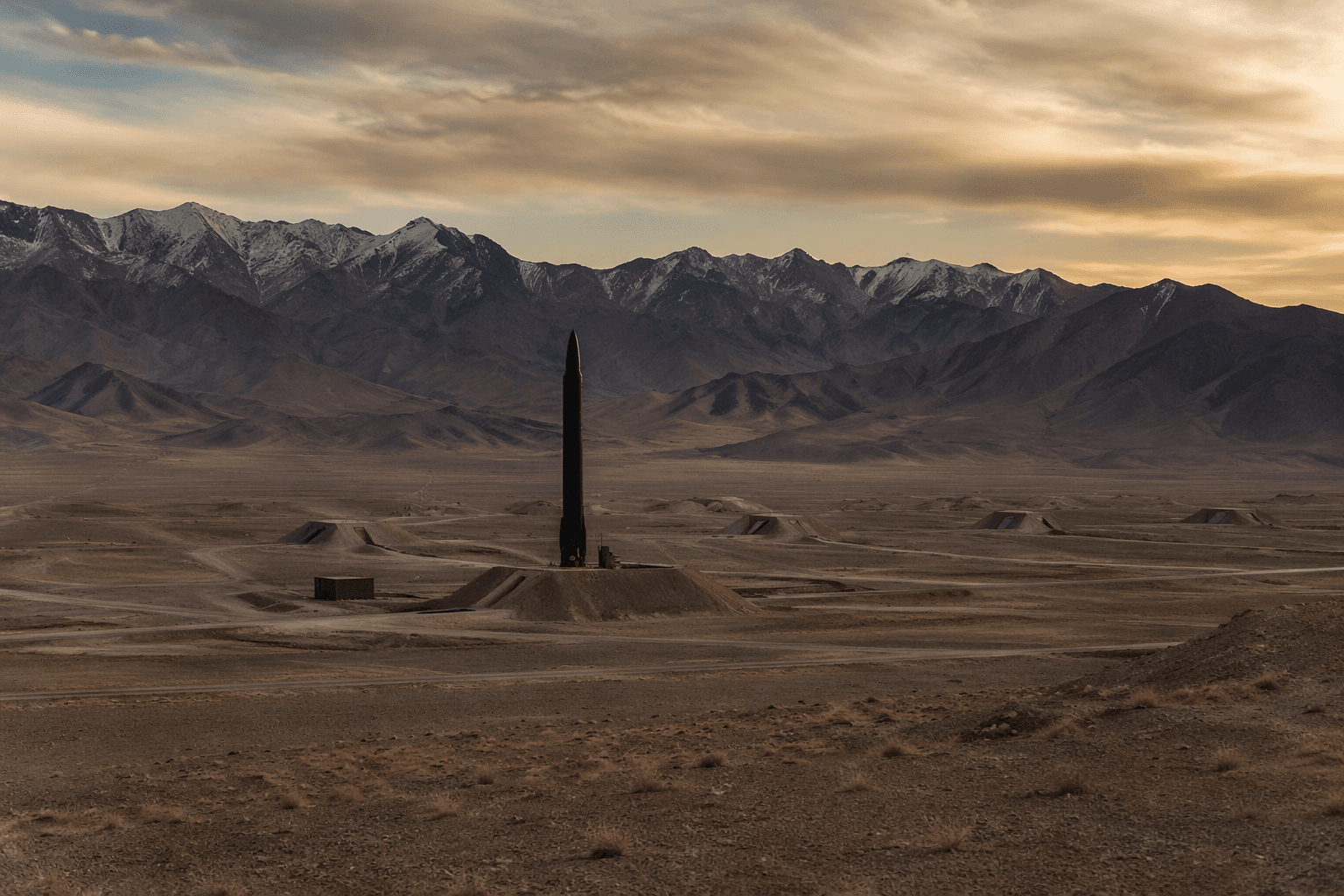
The Hami field has become one of the clearest markers of China’s nuclear expansion. The Federation of American Scientists says the site covers about 800 square kilometers and includes 110 missile silos. Construction there began in March 2021, and the last inflatable domes were removed in August 2022, signaling that the most sensitive phase of work had ended. FAS has also said that perhaps 30 silos had been loaded earlier this year.
The new buildout extends beyond Hami itself. Two octagon-shaped military installations in eastern Xinjiang appear tied to the silo fields by roads, rail lines and possible fiber-optic networks. Those sites have been described as potential housing, vehicle depots, armored bunkers, fortified storage areas, airfields and railheads, pointing to an integrated command-and-support network rather than isolated launch positions.

That matters because China’s nuclear posture has long been watched for signs that it is moving away from a relatively limited deterrent toward a more flexible and resilient force. FAS says China is the fastest-growing nuclear arsenal among the nine nuclear-armed states, while the Pentagon’s 2024 China Military Power Report assessed that Beijing likely has around 50 modernized DF-5-class silos. China has also expanded its dual-capable DF-26 intermediate-range missile force and refitted Type 094 submarines with the longer-range JL-3 submarine-launched ballistic missile.
Security analysts who reviewed the imagery said the scale of construction points to a substantial upgrade in China’s land-based nuclear force architecture. Alexander Neill, a Pacific Forum analyst, said the work is being built on a grand scale and could amount to a considerable enhancement of China’s strategic nuclear deterrent.
That is the strategic signal buried in the desert. A larger, more dispersed and better-connected missile infrastructure would not only strengthen China’s ability to absorb a first strike and retaliate, it would also complicate threat assessments in Washington, Tokyo and other allied capitals at a time of rising tension over Taiwan and intensifying competition across the Indo-Pacific.
This article was produced by Prism’s automated news system from verified source data, official records, and press releases, then run through automated quality and moderation checks before publishing. The system is built and supervised by the people who set the standards it runs under. Read our full AI policy.
Know something we missed? Have a correction or additional information?
Submit a Tip