China exports surge on AI demand, Iran-war fears and stockpiling rush
China’s April exports jumped 14.1%, but the surge looked partly borrowed, driven by AI orders and stockpiling before Middle East disruption raised costs.

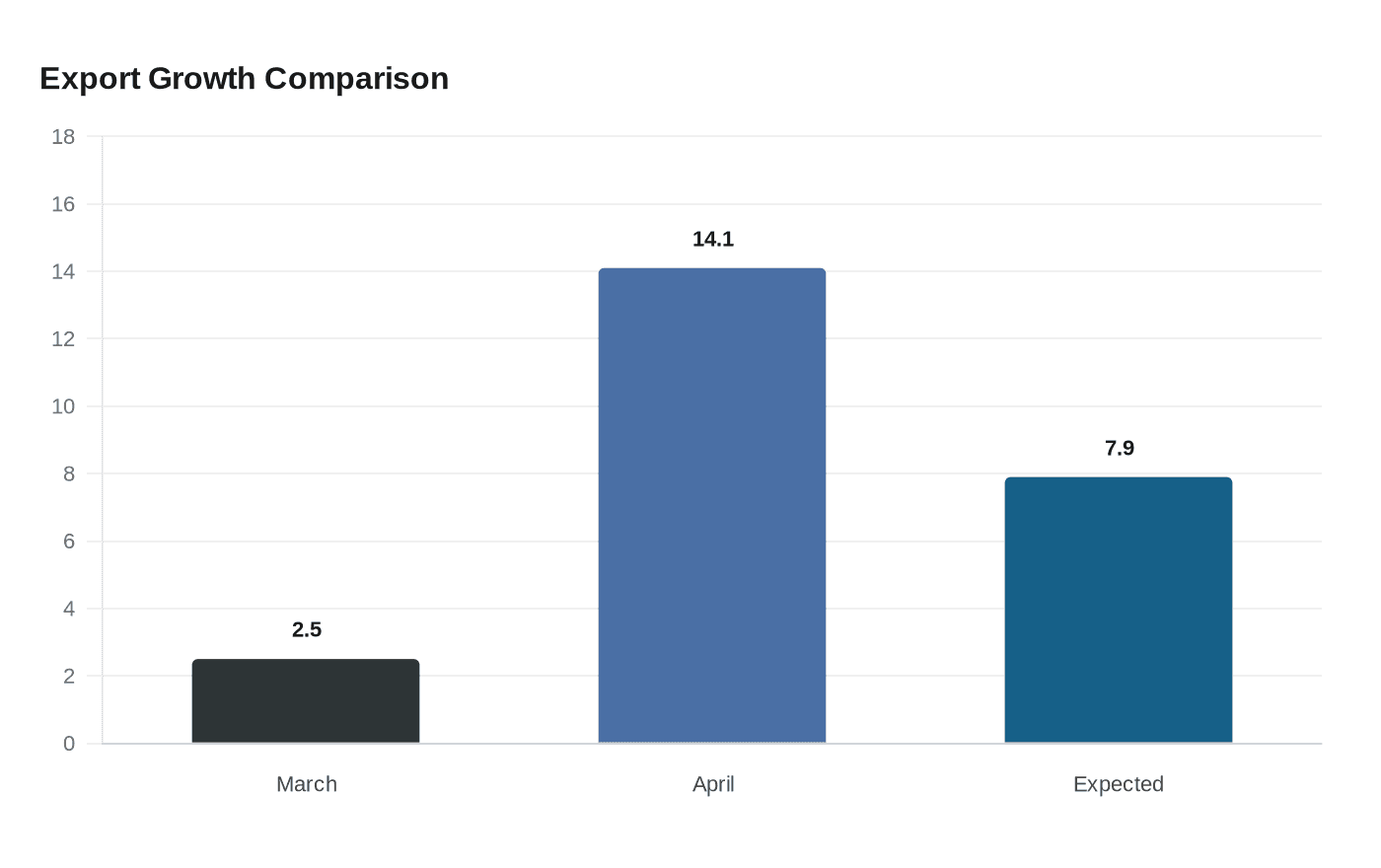
China’s export machine reaccelerated in April, but the latest jump looked less like a clean sign of strength than a pull-forward of demand. Customs data showed shipments rose 14.1% from a year earlier in dollar terms, far above March’s 2.5% gain and well ahead of the 7.9% economists had expected. Imports also surged 25.3%, and the trade surplus widened to $84.8 billion from $51.13 billion in March as factories rushed to fill AI-related orders and buyers stocked up on goods before fears of wider Middle East disruption pushed input costs higher.
The breadth of the move suggested more than a one-month statistical bounce. April factory data showed new export orders rising to their highest level in two years, while the strong import figures, following 27.8% growth in March, pointed to another round of inventory and commodity restocking. Input prices remained elevated in refined goods, petroleum, coal and chemicals, a combination that suggests some of the current surge is simply borrowing from future demand. If those orders were pulled forward to beat higher shipping and energy costs, the lift to China’s factories could fade later in the year.

That matters well beyond Beijing. China’s trade surplus with the United States reached $87.7 billion so far this year, even as exports to the U.S. fell 10.2% to $133.4 billion in the first four months of 2026 and imports from the U.S. dropped 10.9% to $45.8 billion. President Donald Trump is due to travel to Beijing next week for a leaders’ summit that could produce gains in farm trade and airplane parts, but it is unlikely to soften deeper strategic tensions, especially over Taiwan.
China entered the year on a firm footing, with first-quarter GDP up 5.0% from a year earlier to 33,419.3 billion yuan, according to official figures. But the economy still faces weak household demand and unemployment pressure, even as industrial activity keeps outpacing consumption. Xing Zhaopeng of ANZ said annual export growth could still run around 10% and argued there is room for the AI-driven manufacturing cycle to expand further. For U.S. supply chains and manufacturers, the immediate risk is a distortive one: front-loaded Chinese ordering can lift prices for components and commodities now, then leave a thinner demand backdrop later if the stockpiling rush ebbs.
Know something we missed? Have a correction or additional information?
Submit a Tip