GameStop Bids $56 Billion for eBay, Raising Questions About Financing
GameStop’s $56 billion eBay bid exposed a financing gap, a shaky stock-backed structure and a culture driven more by personality than governance.
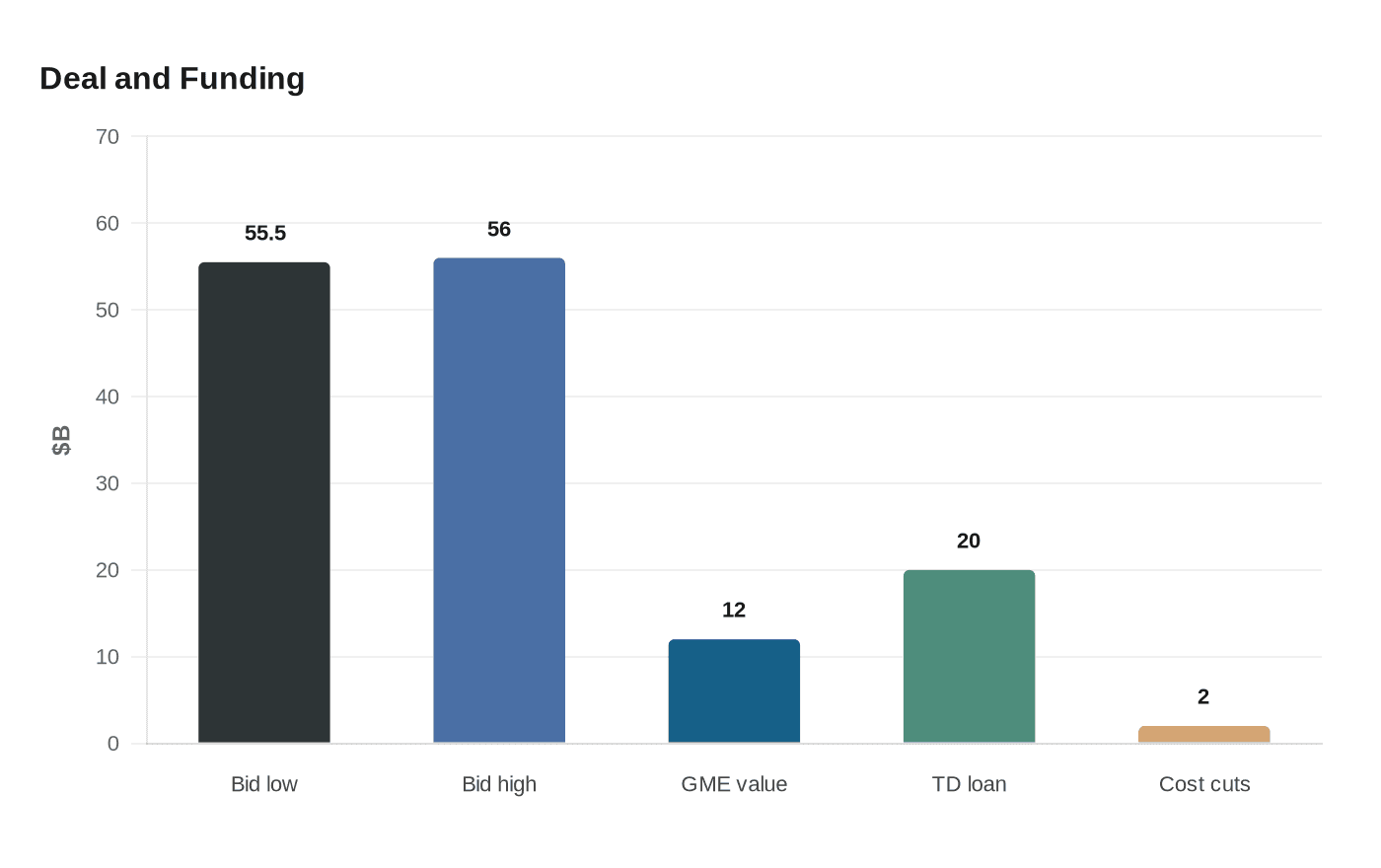
Ryan Cohen’s latest move put GameStop’s governance under a harsh spotlight: the company made a nonbinding offer to buy all of eBay’s common shares for about $55.5 billion to $56 billion, even though GameStop’s own market value was only about $12 billion. The proposed deal price was $125 a share, split evenly between cash and GameStop stock, and it came with a financing question that immediately dominated the story.
eBay said its board would review the proposal. The offer carried a 20% premium to eBay’s Friday close of $104.07 and a 46% premium to its Feb. 4 closing price, the day GameStop said it began building its stake. GameStop said it had amassed about a 5% position in eBay, mostly through derivatives and some common stock, a stake large enough to signal intent but nowhere near enough to solve the financing problem.

That problem was obvious. CNBC reported that GameStop had a $20 billion financing letter from TD Bank, but that still left a substantial gap in a transaction approaching six times GameStop’s market capitalization. Cohen said the company could issue stock to help fund the acquisition, adding another layer of uncertainty for GameStop shareholders who would be asked to absorb dilution to support a bid for a much larger company. The strategy, as GameStop described it, was to use its roughly 1,600 stores as a national network for authentication, intake, fulfillment and live commerce, while cutting about $2 billion within a year after a merger by reducing product development, administration and sales and marketing.
The presentation also underscored how much the bid depended on Cohen’s personal vision. He said he had not started talks with eBay management and argued there was only one way to approach the deal because eBay was public and its board and management had conflicting incentives. The CNBC interview was described as combative and awkward, with Cohen repeatedly steering viewers back to the company website for details. That tone, combined with the scale of the proposal, only deepened skepticism around a leader already associated with the meme-stock era.
Cohen then turned the pitch into a spectacle. He listed items on his eBay seller page, including a pair of socks and carpet he described as coming from a GameStop store, to dramatize the takeover effort. eBay suspended the account, citing risk to the community, then reinstated it. GameStop shares fell about 10% after the bid was disclosed, eBay rose about 5% to roughly $109, and Michael Burry reportedly sold his GameStop stake after the proposal surfaced. For shareholders, the episode raised a familiar question: whether a business built on hype can still satisfy the plain duties of capital, governance and credibility.
This article was produced by Prism’s automated news system from verified source data, official records, and press releases, then run through automated quality and moderation checks before publishing. The system is built and supervised by the people who set the standards it runs under. Read our full AI policy.
Did this article answer your question?

