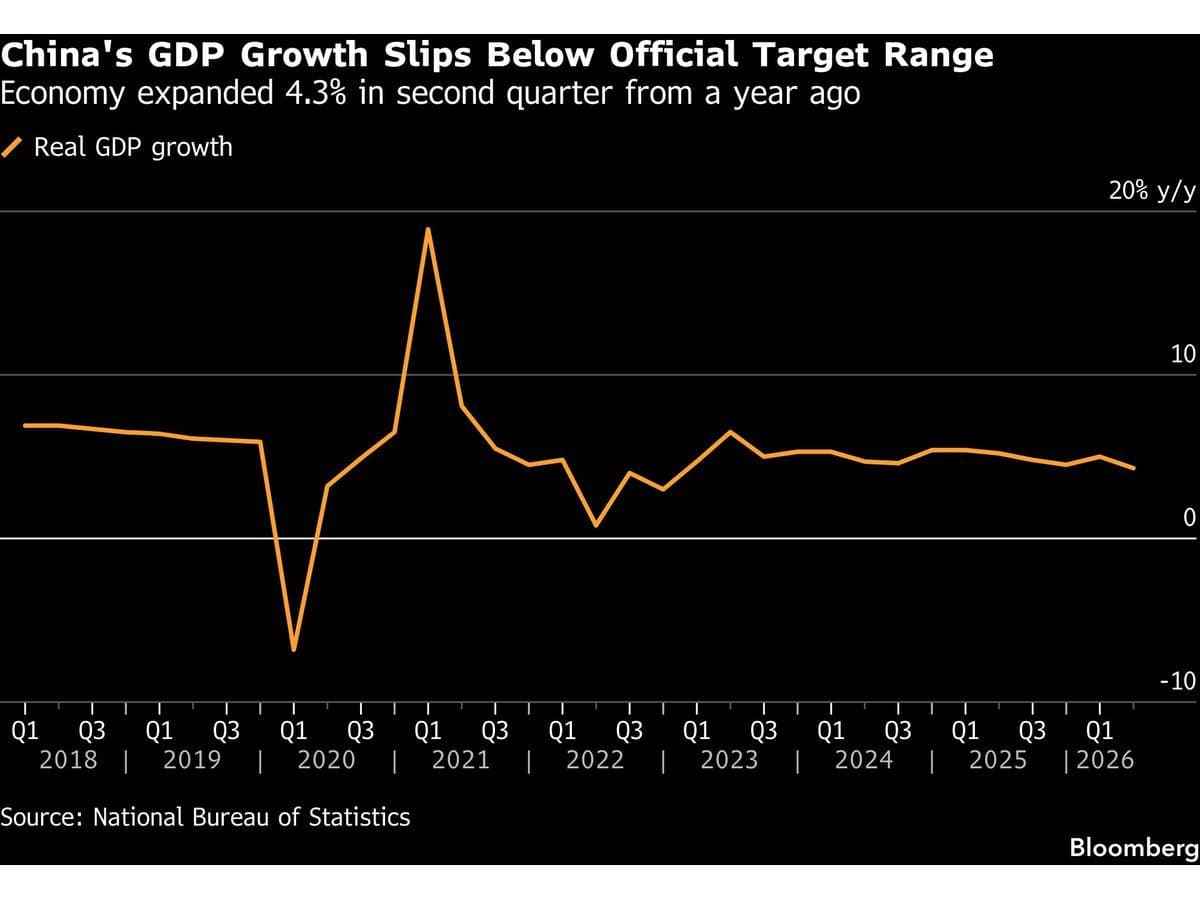
China growth slows to 4.3% as weak demand weighs on economy
China’s 4.3% second-quarter growth was its weakest in more than three years, as exports and factory output could not offset weak household demand and property stress.
China’s economy grew 4.3% in the second quarter, the weakest pace in more than three years, as weak domestic demand and higher oil prices tied to the Iran conflict outweighed stronger exports and factory output. The National Bureau of Statistics released the data on July 15, showing growth missed the roughly 4.5% expected by analysts and slowed from 5.0% in the first quarter.
The official numbers underline how much China is still leaning on supply-side strength to prop up growth. First-half GDP rose 4.7% year on year, while quarter-on-quarter growth in the second quarter was 0.9%. That leaves the economy running below Beijing’s 2026 target range of 4.5% to 5.0%, a goal Premier Li Qiang set in the government work report at the National People’s Congress on March 5. It was the lowest official growth target on record going back to 1991 and the first downgrade in three years.

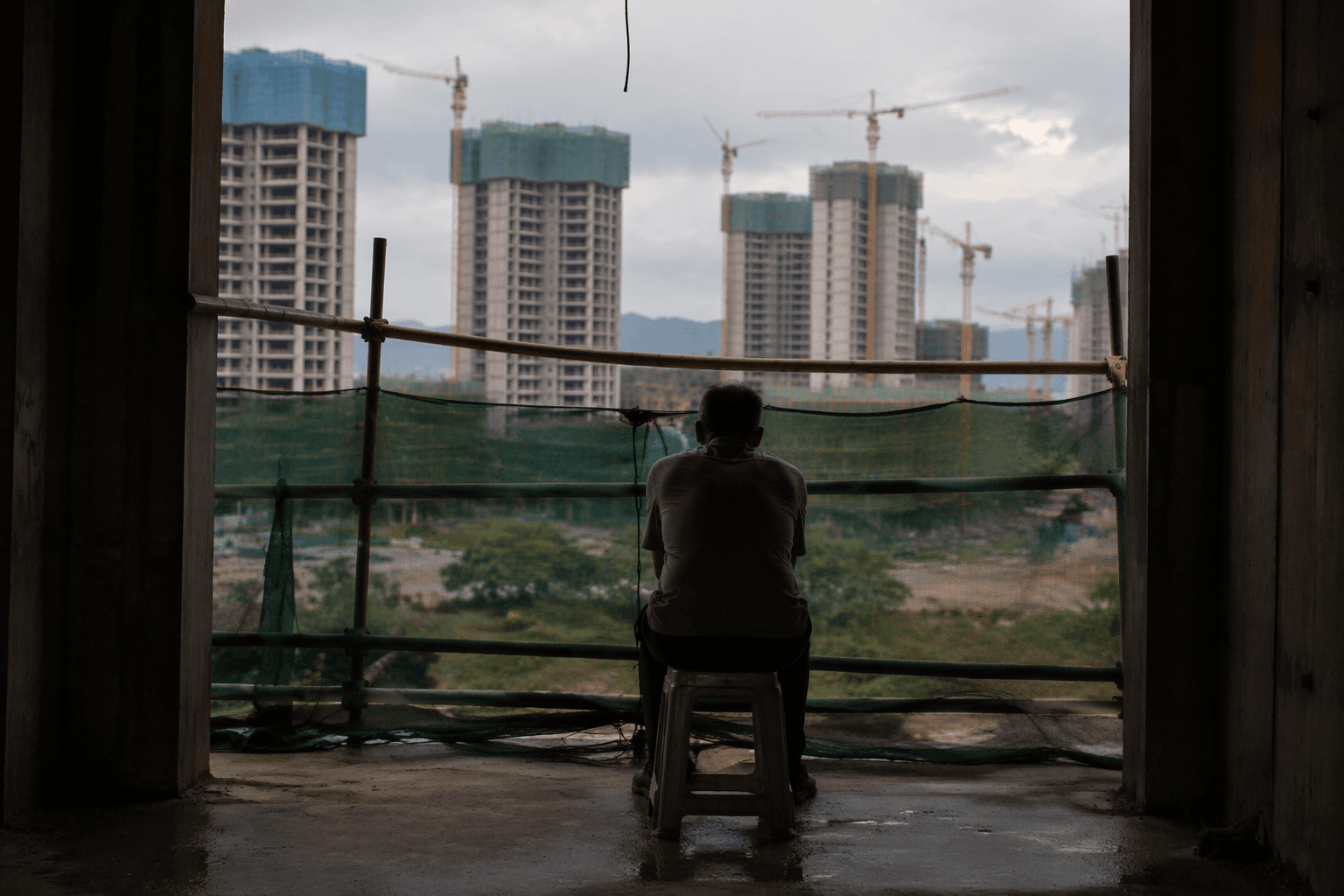
The sharper problem now is not a lack of output. It is that households are still spending cautiously and the property sector has not stabilized enough to generate a broad rebound. The National Bureau of Statistics said weak domestic demand remained a key issue. The World Bank said high-tech investment and exports helped offset weaker consumption in the second quarter, but that support was only partial. In its latest China Economic Update, the bank also pointed to buffers against global energy supply disruptions, a reference to the oil shock linked to the Iran war, as another factor that briefly cushioned the economy.
June data showed some improvement at the margin, but not enough to change the picture. Retail sales rose 1.0% from a year earlier after a 0.6% decline in May, industrial output accelerated to 5.3%, and urban surveyed unemployment held at 5.0%. Yet fixed-asset investment fell 5.7% in the first six months of the year, a sign that companies and local governments are still holding back on large spending plans even as factories keep producing.
Services sales grew 5.3% in June, faster than goods sales growth of 1.1%, suggesting some recovery in consumption but not the kind of broad-based demand Beijing needs. For global trade, that means China can still lift exports, but its domestic market is no longer strong enough to absorb more supply without help from policy. For U.S. businesses tied to Chinese demand, from industrial suppliers to consumer brands, the key risk is a slower, more selective Chinese recovery that keeps orders uneven and puts more pressure on Beijing to add fiscal support.
This article was produced by Prism’s automated news system from verified source data, official records, and press releases, then run through automated quality and moderation checks before publishing. The system is built and supervised by the people who set the standards it runs under. Read our full AI policy.
Did this article answer your question?