China’s economy grows at slowest pace since 2022, misses target
China’s economy grew 4.3% in the second quarter, its slowest pace since late 2022, as weak demand pushed it below Beijing’s target.
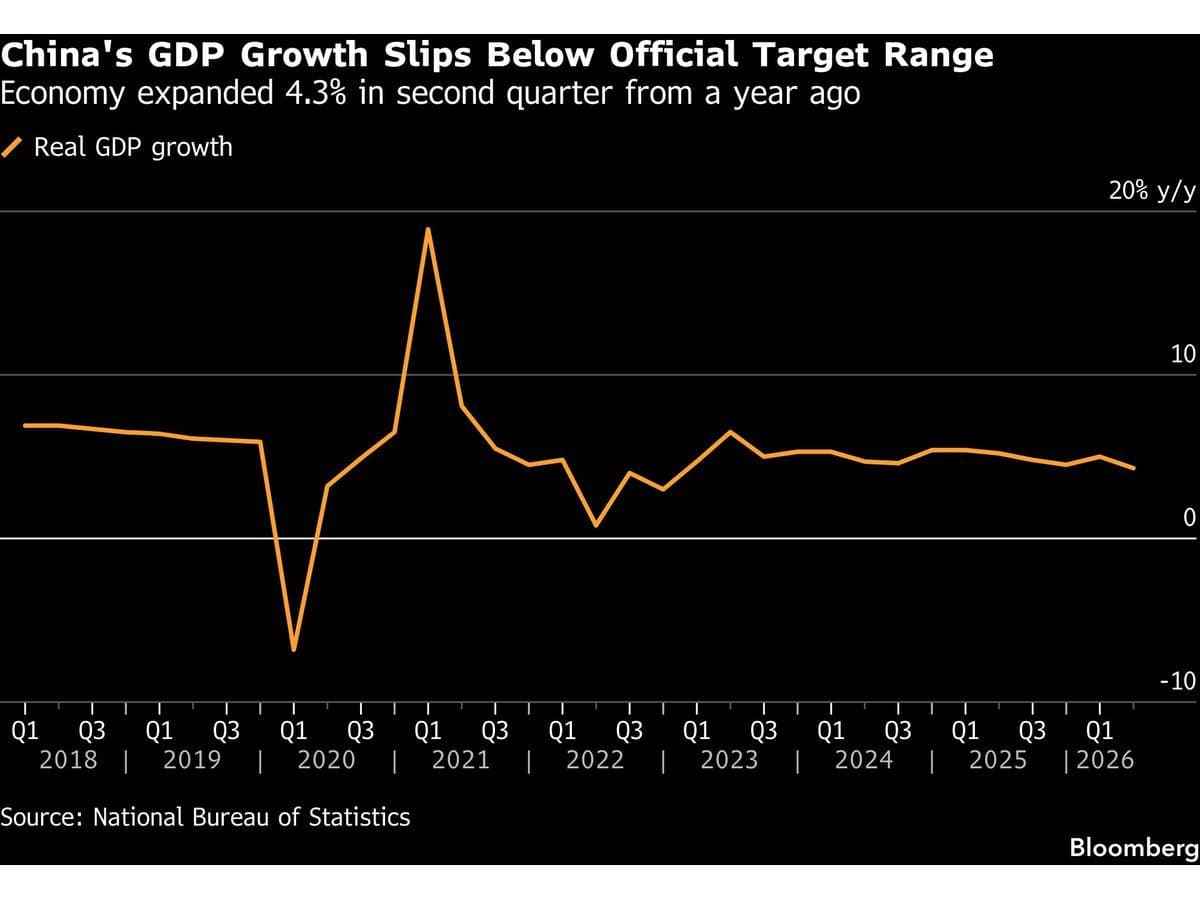
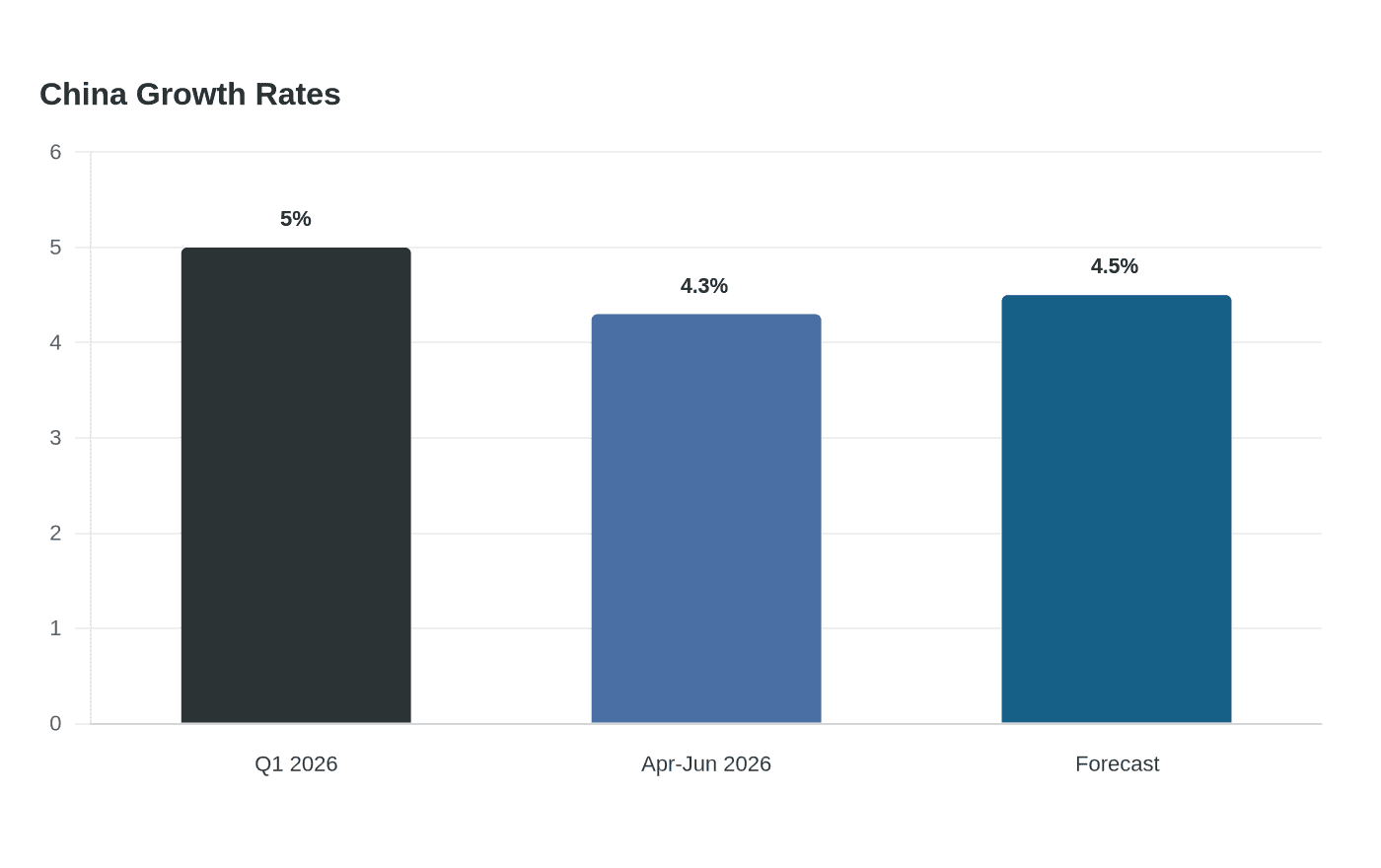
China’s economy grew 4.3% year over year in the April-June quarter, the weakest pace since the end of 2022 and below the 4.5% forecast. The National Bureau of Statistics said the slowdown came after 5.0% growth in the first quarter, leaving Beijing below its full-year target range of 4.5% to 5% for 2026 and marking the first time since Covid that the government has missed its growth goal.
The numbers point to a model under strain. Strong exports continued to prop up activity, but weak domestic demand, slumping investment and a prolonged property downturn dragged on growth. The gap between supply and demand is widening: factories and exporters have kept output moving, while households and builders have remained cautious, limiting the kind of broad-based rebound Beijing has sought.

The quarter also highlighted the limits of China’s old playbook. For years, stimulus, infrastructure spending and an export push have helped cushion downturns. Now that mix appears less effective, with trade tensions with the United States and the European Union adding pressure, while turmoil around Iran and higher oil prices disrupted global trade flows. The result is an economy that can still generate supply, but is struggling to turn that into sustained demand at home.
The World Bank said in a July 7 update that China remained resilient early in 2026, helped by high-tech investment and exports, but that weaker domestic demand was still a major constraint. That assessment helps explain why policymakers and market watchers are pressing for more support. If Beijing leans harder on stimulus again, the payoff may be smaller than in past cycles, especially with property still weak and investment losing momentum.
For global markets, the stakes are immediate. Slower Chinese growth can restrain demand for commodities tied to construction and manufacturing, while multinational companies that depend on a China rebound may have to reset expectations for sales, pricing power and inventory plans. The quarter’s 4.3% reading suggests the world’s second-largest economy is still growing, but on terms that are less dependable for the rest of the global economy than Beijing once hoped.
This article was produced by Prism’s automated news system from verified source data, official records, and press releases, then run through automated quality and moderation checks before publishing. The system is built and supervised by the people who set the standards it runs under. Read our full AI policy.
Did this article answer your question?