China marriage registrations fall 6.2%, deepening demographic strain
China logged 1.697 million marriages in the first quarter, about half of 2017 levels, as a shrinking pool of young adults and high living costs keep births under pressure.
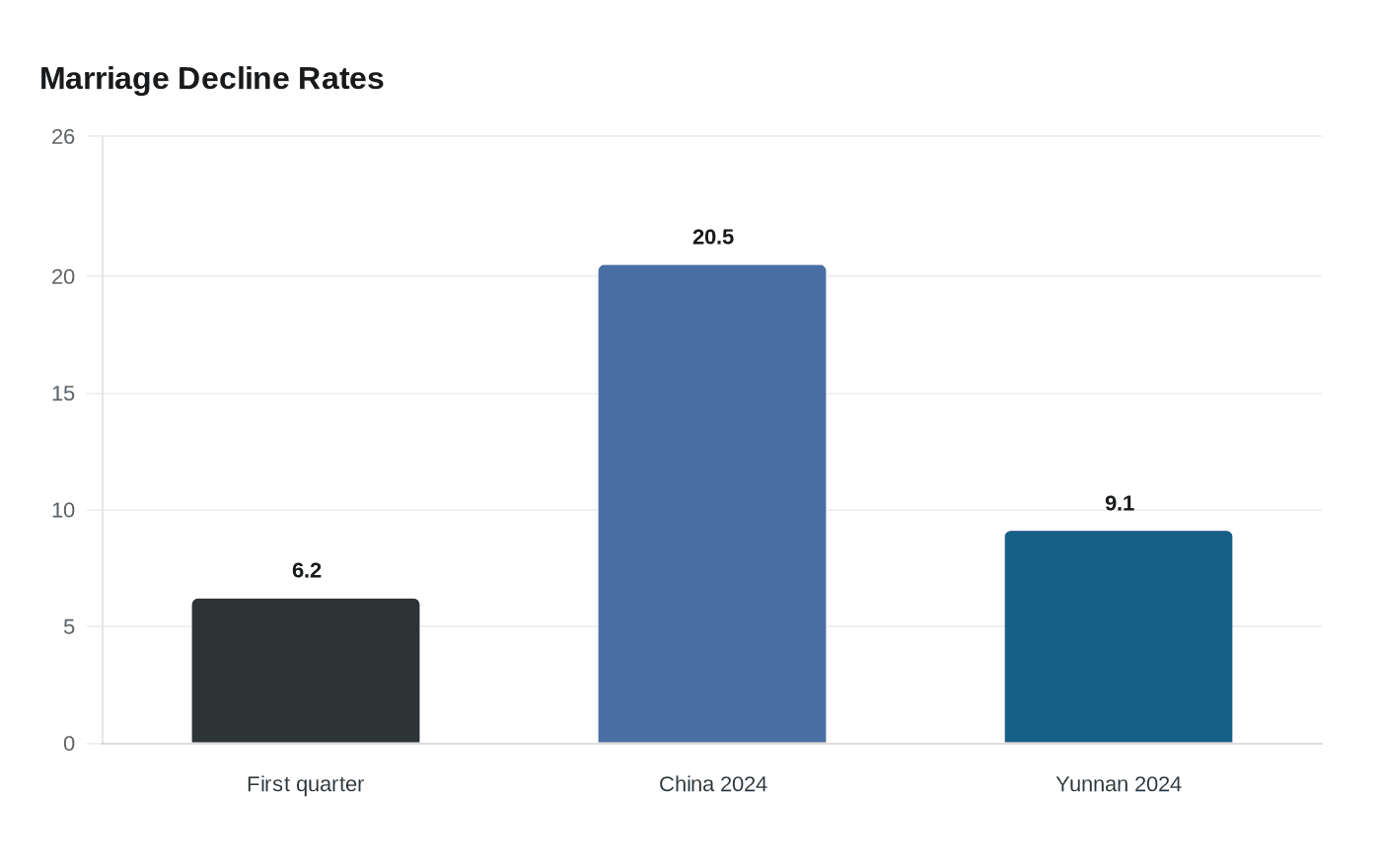
China’s marriage slump is deepening again, with 1.697 million marriage registrations in the first quarter, down 6.2% from a year earlier and roughly half the level seen in 2017. The drop matters far beyond wedding halls: in China, marriage still shapes the timing of childbearing, household formation and access to some administrative benefits, making weaker marriage numbers an early warning sign of more demographic pain ahead.
The latest figures extend a decline that has become one of the clearest gauges of China’s population stress. Marriage registrations fell for nine straight years from 2013 to 2022, briefly rebounded in 2023, then sank again in 2024 to 6.106 million, down 20.5% from 2023. The marriage rate slipped to 4.3 per 1,000 people, the lowest since 2020, and state media said the 2024 total was the lowest since 1980.

That weakness comes as China’s population fell for a fourth consecutive year in 2025 and the birth rate hit a record low. Beijing has tried to slow the slide with childcare subsidies, support for childcare services and efforts to cut childbirth-related medical costs, but the numbers show how hard it has been to push young adults toward marriage and parenthood. Fewer marriages usually mean fewer births, which in turn deepens pressure on a labor force already expected to shrink and on an aging society that will need more support from fewer workers.
Policy makers have also tried to remove bureaucratic friction. On May 10, 2025, revised marriage registration rules took effect, ending the old requirement that couples register in a spouse’s hukou location and eliminating the need to present hukou booklets. Couples now need only ID cards, and authorities can verify records through a national marriage information database. The change followed pilot programs in 21 provinces, including Beijing and Shanghai, as officials tried to make it easier for migrant couples to marry where they live and work.
But easier paperwork has not solved the bigger social and economic problem. The core marriageable age group, ages 20 to 39, shrank from about 435 million in 2013 to about 371 million in 2023. Nearly 30% of 30-year-olds were unmarried in 2023, up from 14.6% a decade earlier. Higher education, expensive housing, job insecurity and changing attitudes toward family life have all pushed marriage later, and many young adults now see marriage as something to consider only if they plan to have children.
Regional data point to the same trend. Six of seven provincial regions that released 2024 figures reported declines smaller than the national average, with Yunnan posting the mildest drop at 9.1%. Authorities have responded with extended marriage leave in at least 27 provincial-level regions and with a Supreme People’s Court interpretation that took effect in February 2024 to curb disputes over bride price. Even so, the broader pattern has not turned. China’s marriage data now looks less like a temporary dip than a structural warning that demographic strain is still getting worse.
This article was produced by Prism’s automated news system from verified source data, official records, and press releases, then run through automated quality and moderation checks before publishing. The system is built and supervised by the people who set the standards it runs under. Read our full AI policy.
Did this article answer your question?


