China Opens Hainan Free Trade Port, Creates Separate Customs Zone
China formally launched an expanded Hainan Free Trade Port on December 18, carving the island into a distinct customs zone and rolling out broad duty free, tax and market access measures. The move is being billed as an $113 billion free trade "experiment", with potential implications for foreign investment, regional supply chains and China’s bid to show readiness for higher trade standards.
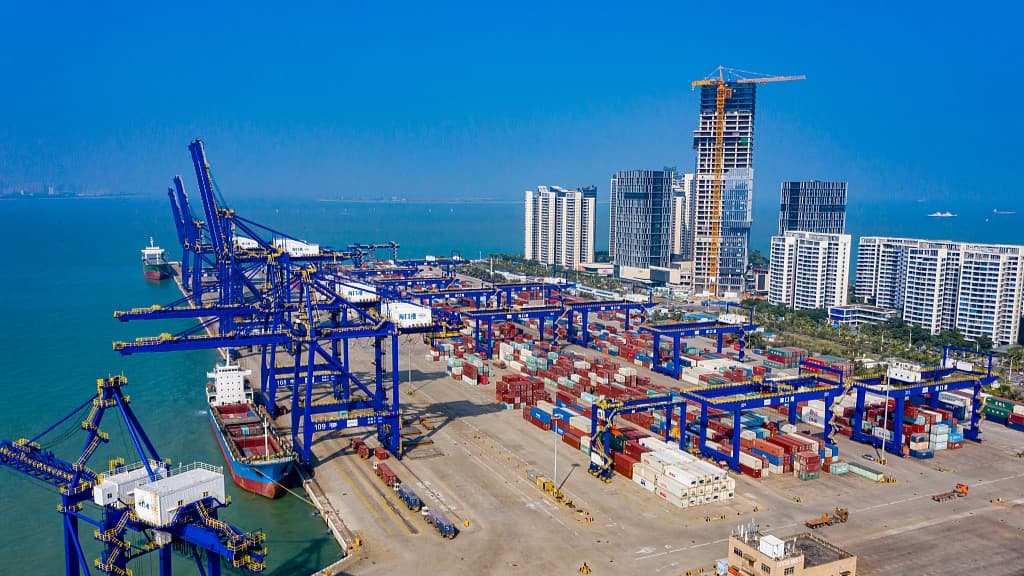
China formally opened an expanded Hainan Free Trade Port on December 18, placing the entire island province under a single set of customs operations and unveiling a suite of duty free, tax and market access measures intended to liberalize trade within the zone. Authorities and state media presented the initiative as a major step to stimulate investment, expand duty free shopping and smooth cross border flows of goods.
The new arrangements effectively "split off" Hainan from the mainland for customs processing, creating a contiguous island wide customs regime under which a significant share of imports will face no tariffs. Some reporting put that share at 74 percent of imported goods becoming tariff free, a figure officials have not yet reproduced in full legal schedules published publicly. State affiliated outlets described the package as designed to accelerate business activity and broaden market opening across services and consumer sectors.
Beijing frames the Hainan experiment as both economic stimulus for a tropical province and a strategic pilot for larger trade ambitions. The program has been called an $113 billion free trade "experiment", and commentators quickly compared the island’s scale to a small country, describing it as "Belgium sized" with an economy "comparable to a mid ranked country." Those comparisons are intended to underscore why reforms tested on Hainan could carry outsized significance for external partners and investors.
Among the measures signaled are expanded duty free allowances for shoppers, preferential tax arrangements and eased market entry in targeted sectors. Officials have presented the port as a demonstration of China’s capacity to implement high standard, open commercial rules in advance of potential accession to broader trade agreements. Beijing has indicated Hainan will be a testing ground for regulatory innovations that could be exported elsewhere in China if successful.

Yet external trade officials and negotiators remain skeptical about whether island level pilots can substitute for nationwide commitments required by major plurilateral agreements. Observers note that membership in the Comprehensive and Progressive Agreement for Trans Pacific Partnership requires tariff and regulatory openness across a whole economy, not confined experimental zones, leaving open the question of whether Hainan’s reforms will be sufficient to sway sceptical capitals.
Practical questions persist about timing and implementation. The central government has not yet published a detailed customs circular or full tariff schedule clarifying which goods will be included in the tariff free list and when the measures take effect. Analysts say clarity on governance, customs procedures and investor protections will be necessary for the experiment to translate into sustained capital inflows and changes to regional trade patterns.
For now Hainan’s launch signals Beijing’s willingness to use localized liberalization as a strategic tool, betting that a concentrated, island wide experiment can demonstrate competence in meeting higher trade standards while delivering visible economic gains at home. How quickly the initiative alters trade flows and whether it persuades foreign governments and investors will depend on the legal instruments and enforcement practices that follow.
This article was produced by Prism’s automated news system from verified source data, official records, and press releases, then run through automated quality and moderation checks before publishing. The system is built and supervised by the people who set the standards it runs under. Read our full AI policy.
Did this article answer your question?


