China Opens Two Trade Probes Into U.S. Practices Ahead of Summit
Beijing launched two trade probes into U.S. practices on March 27, targeting tech export controls and green energy barriers weeks before Trump's planned trip to China.
Two simultaneous investigations into U.S. trade practices, announced by China's Ministry of Commerce on Friday, landed with the weight of a diplomatic signal as much as a legal complaint: with Donald Trump planning to visit Beijing in mid-May, Beijing chose the moment to formalize its grievances rather than absorb them quietly.
One probe will examine U.S. policies that restrict Chinese goods from entering the United States and that limit U.S. exports of advanced technology products to China. The other is focused on barriers to Chinese green energy exports. China's Commerce Ministry said "preliminary evidence" indicated the U.S. implemented practices that "seriously undermine" global industries and supply chains, including restrictions on Chinese products and prohibitions on certain tech exports.
The ministry warned that such measures "may seriously harm the trade interests of Chinese enterprises, and some of these measures are suspected of violating WTO rules and other economic and trade treaties or agreements jointly concluded or acceded to by both China and the United States."
The two Chinese investigations, scheduled to conclude within six months but extendable further, are direct responses to two U.S. Section 301 investigations against China, which Beijing's ministry described as reciprocal. The U.S. Supreme Court struck down some of Trump's earlier tariffs, and he responded by launching Section 301 trade investigations, one of which examines allegations of excess industrial capacity and government subsidies that could give companies in China and elsewhere an unfair advantage over U.S. competitors, targeting 16 trading partners.
Chinese Commerce Minister Wang Wentao raised "serious concerns" with U.S. Trade Representative Jamieson Greer over the Section 301 probes in a meeting in Cameroon, challenging investigations into China's industrial overcapacity and alleged failure to ban forced-labor products. Despite the confrontational framing, Wang also said China was willing to strengthen economic and trade cooperation.
The timing is the message. A trade truce between China and the U.S. has held since Trump met Xi Jinping in October last year, and Trump said earlier this week that he will visit Beijing in mid-May as part of Washington's broader effort to reset relations in the Asia-Pacific region. Beijing's move preserves that truce technically while raising the cost of entering the summit empty-handed.
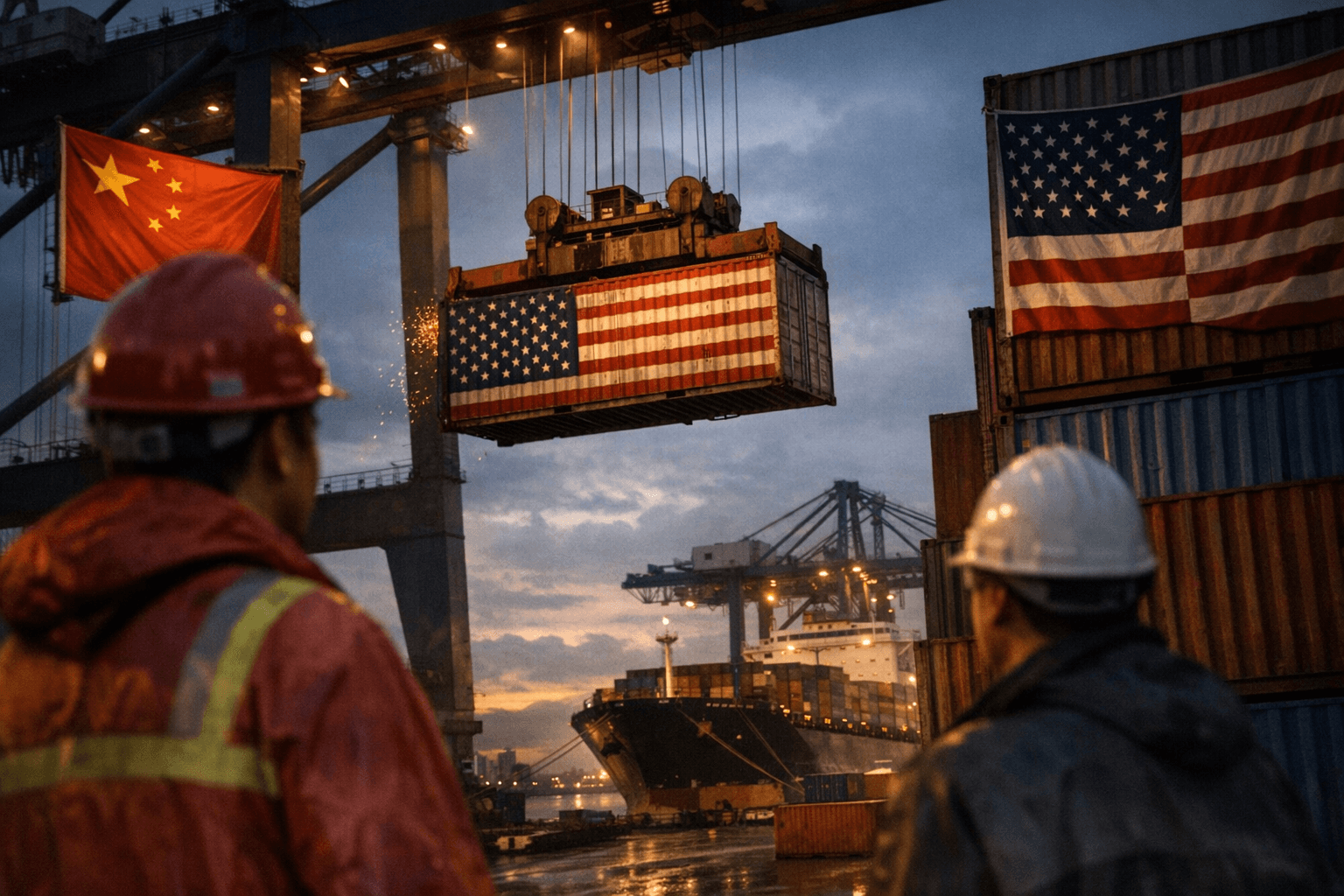
Beijing wants Washington to loosen technology controls in areas such as semiconductors and artificial intelligence, remove sanctions against over 1,000 Chinese firms, and reduce restrictions on Chinese direct investment. In return, China would like to purchase more U.S. soybeans, energy products, and Boeing aircraft. The two new probes give Chinese negotiators a formal legal instrument to cite when demanding movement on those technology controls.
China will likely seek clarity on the trajectory of U.S. technology export restrictions at the summit, with analysts noting that "Beijing will essentially be asking how high the fence will get and how big the yard will be."
For U.S. companies already navigating a volatile export-control environment, the probes carry immediate operational weight. The supply chain probe focuses on U.S. export controls on advanced technology, while the green products probe alleges that U.S. policies have unfairly hindered the export of Chinese solar and battery technologies critical to the global energy transition. Sectors dependent on Chinese solar components or rare-earth-intensive manufacturing now face the prospect of retaliatory measures once the investigations conclude, up to nine months from now if extended.
China accounts for roughly 69% of global rare-earth mine production and 92% of processing, according to PwC's 2025 mining review, a structural dependency that gives Beijing asymmetric leverage regardless of what either probe ultimately recommends.
In a CSIS China Power Project survey of 79 former officials and China experts, only 3% said both sides were likely to keep all their commitments in 2026, with just over half expecting both to make partial efforts but fall short. That skepticism now has a harder test: whether Trump's mid-May trip to Beijing can produce durable concessions, or whether it simply pauses a legal process that China has deliberately set in motion.
Know something we missed? Have a correction or additional information?
Submit a Tip