China removes nine PLA officials, tightening control ahead of Two Sessions
China removed nine senior People's Liberation Army officials today, a personnel purge that raises uncertainty over defense procurement and state-run enterprises ahead of the Two Sessions.
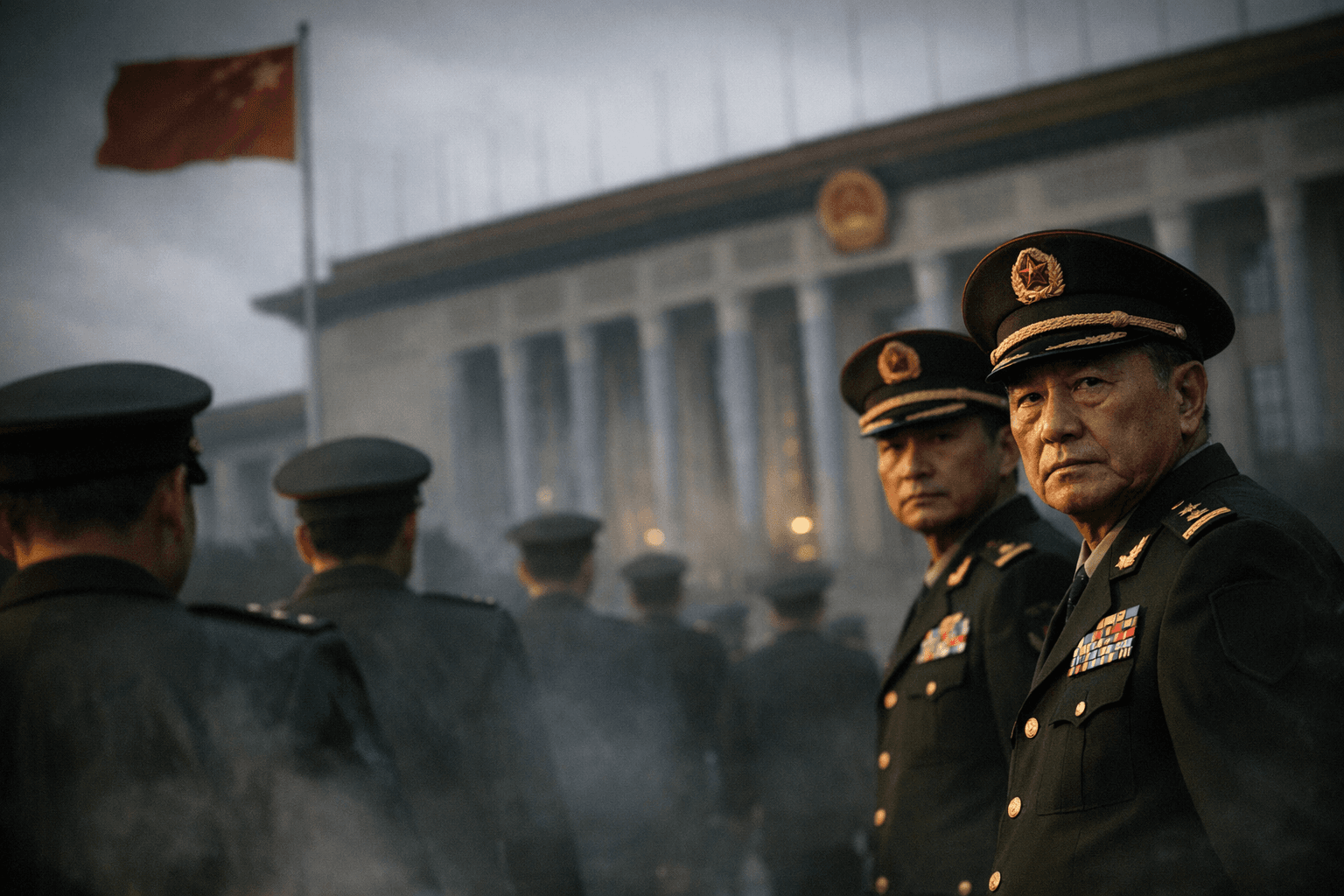
China's People's Liberation Army removed nine senior military officials from their posts today, a move that tightens personnel control in the armed forces and injects uncertainty into defense procurement and state-owned enterprise leadership as the country convenes its key Two Sessions political meeting.
Officials released no reason for the dismissals. The timing, immediately before the National People's Congress and Chinese People’s Political Consultative Conference meetings that set policy priorities and the national budget, amplified concern among investors and analysts about the direction of Beijing's military and industrial appointments. The Two Sessions traditionally finalize broad targets for growth, fiscal policy and strategic spending, and changes at the top of the military can influence procurement calendars and the governance of defense-linked firms.
The removals affect an institution that has been central to China's economic and geopolitical posture. China maintains the world's second-largest defense budget and has sustained multi-year increases in defense outlays as it modernizes the PLA and accelerates domestic supply chains for advanced weaponry and semiconductor-linked systems. Sudden leadership changes in the PLA therefore carry implications for predictable ordering patterns and the project timelines of major state-owned enterprises that supply the military.
Market responses were measured but visible. Investors cited increased short-term risk for state-owned defense suppliers, and some market participants said the uncertainty could slow planned contract awards until new leaders assume control and clarify priorities. Foreign portfolio managers tracking China exposure noted the personnel moves as another factor complicating allocation decisions for the rest of the year, joining concerns about slower growth, regulatory unpredictability and geopolitical tensions.
Politically, the purge underscores the central leadership's continued leverage over the armed forces. The PLA answers to the Central Military Commission, which is chaired by President Xi Jinping, and personnel decisions in the military are an instrument of political consolidation as well as operational control. Analysts see periodic reshuffles as a way to remove rival networks, enforce discipline or accelerate doctrinal change, all of which have downstream economic effects when they alter procurement, joint ventures, or the leadership of military-affiliated conglomerates.
For domestic stakeholders the immediate impact is practical. Defense manufacturers, many organized as state-owned enterprises with listed units in Shanghai and Hong Kong, may face delays in contract approvals and leadership transitions. For suppliers tied to international supply chains, any slowdown in Chinese procurement can ripple into production schedules globally, particularly in advanced electronics and precision manufacturing sectors.
Longer term, the episode highlights a pattern in which security policy and economic management are deeply intertwined in Beijing. As the Two Sessions set the official economic agenda for 2026, the new military appointments and the administration’s public framing of defense needs will matter for budget allocations, industrial policy and investor confidence. Until official explanations surface, market participants and policy watchers will treat the personnel moves as a material near-term risk to clarity around defense spending and state enterprise governance during a key policy-setting period.
This article was produced by Prism’s automated news system from verified source data, official records, and press releases, then run through automated quality and moderation checks before publishing. The system is built and supervised by the people who set the standards it runs under. Read our full AI policy.
Did this article answer your question?


