China sanctions 10 US military firms after Pentagon blacklist move
China broadened its retaliation against U.S. defense-linked firms, blacklisting 10 companies from dual-use imports and barring government purchases from 46 more.

Beijing widened its economic fight with Washington by putting 10 American military-related companies on an export-control list and blocking Chinese dual-use shipments to them. The move also cut government buyers off from 46 more U.S. firms, underscoring how quickly trade policy is becoming an instrument of strategic rivalry.
China’s Commerce Ministry said the 10 firms could no longer receive exports of “dual-use” items from Chinese suppliers, a category that covers goods with both civilian and military applications. The named companies included Aveox, Red Cat Holdings, Teal Drones, IMSAR, Jaia Robotics, Ball Aerospace & Technologies, Oshkosh Defense, L3Harris Maritime Services, MP Materials and USA Rare Earth. China also said companies and individuals in third countries were barred from transferring those items from China to the sanctioned firms, though Chinese exporters can apply for approval if the goods are deemed “genuinely necessary.”
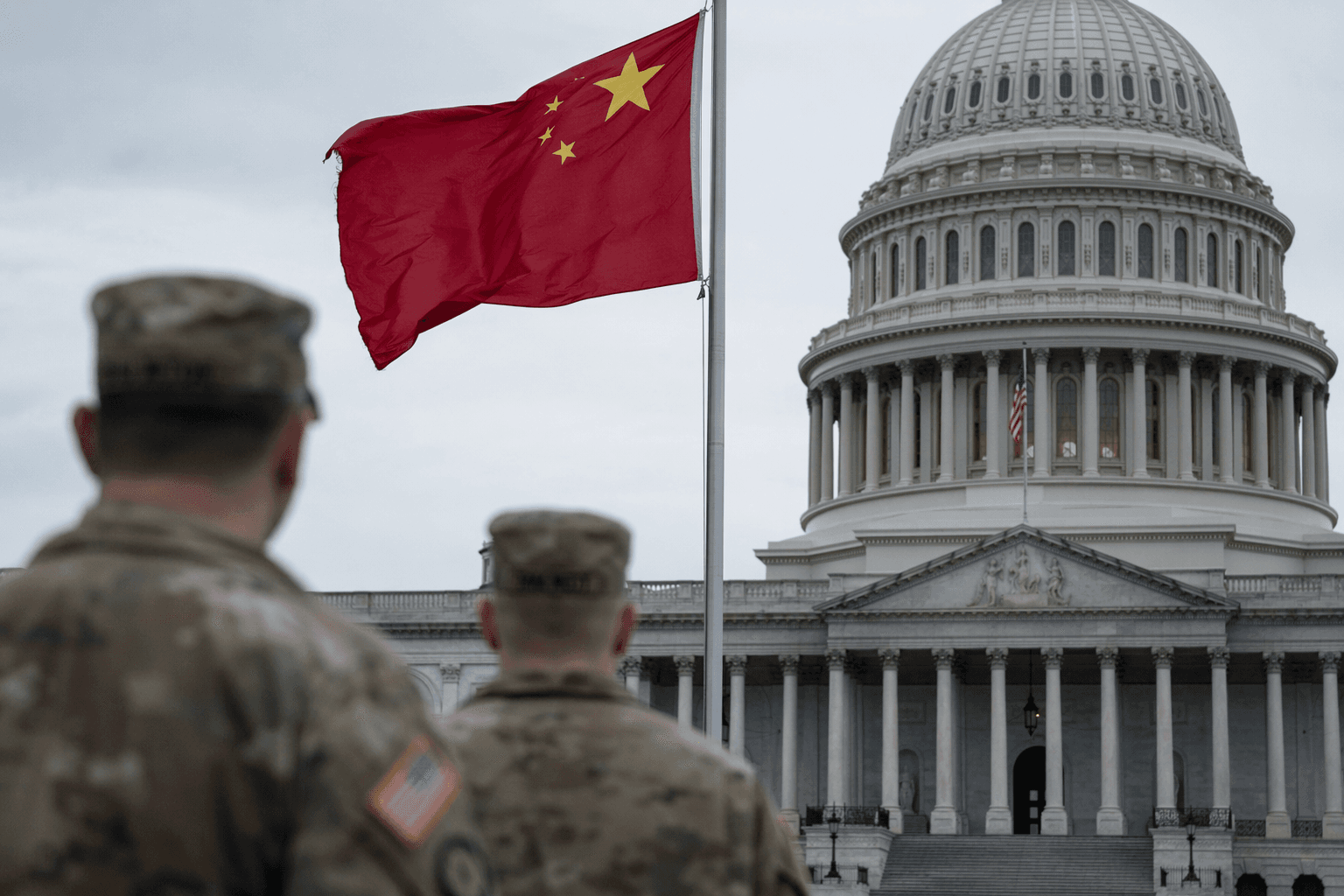
The retaliation reached beyond the supply chain. China’s Finance Ministry separately barred government entities from buying products from 46 American companies, including multiple units of Lockheed Martin, Raytheon and General Dynamics. Beijing did not spell out each procurement restriction, but said the broader response was tied to what it called the U.S. government’s “wrongful expansion of its so-called List of Chinese Military Companies” and framed it as a measure to safeguard national security.
The clash follows a Pentagon decision earlier this month to add Alibaba, Baidu and BYD to its 1260H list, a designation that does not impose immediate sanctions but does bar the Defense Department from awarding direct contracts to listed firms starting June 30, 2026. Indirect procurement restrictions are due to follow in 2027. Baidu said the suggestion that it had any military role was “totally baseless.”
China said the U.S. action contradicted the understanding reached by Xi Jinping and Donald Trump during Trump’s May 2026 visit to Beijing. Analysts said the Chinese countermeasures may be largely symbolic because many of the targeted U.S. companies have little direct business exposure in China, but the decision still adds pressure on rare-earth producers, aerospace contractors and defense suppliers that sit close to sensitive supply chains. Beijing had already added 28 U.S. companies to its export-control list in January 2025, signaling that this latest move is part of a widening cycle of reciprocal restrictions, not a one-off escalation.
This article was produced by Prism’s automated news system from verified source data, official records, and press releases, then run through automated quality and moderation checks before publishing. The system is built and supervised by the people who set the standards it runs under. Read our full AI policy.
Know something we missed? Have a correction or additional information?
Submit a Tip