China, Spain seek closer ties as Xi warns world order is fraying
Xi Jinping and Pedro Sánchez met in Beijing as Spain signed 19 deals with China and launched a new diplomatic mechanism. The talks exposed Europe’s split between pragmatism and caution.
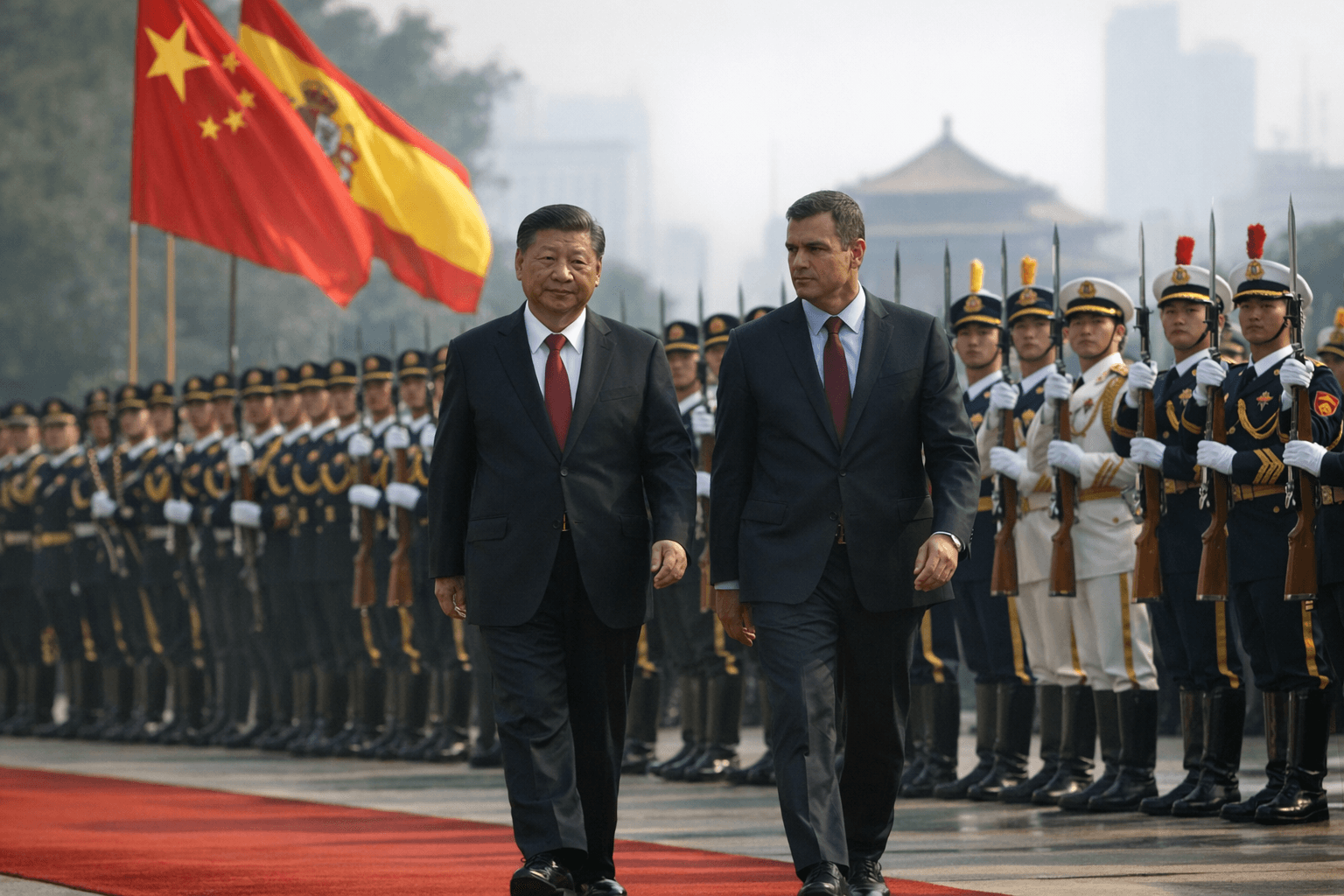
Xi Jinping used Pedro Sánchez’s visit to Beijing to argue that the international order is fraying, while Spain pressed ahead with a warmer China policy that now includes 19 bilateral agreements and a new diplomatic channel between the two governments.
The two leaders met April 14 at the Great Hall of the People and pledged to deepen cooperation. Xi said the world was becoming chaotic and urged China and Spain to strengthen communication, trust and support for multilateralism, while Sánchez said international law was too often being undermined and that closer China-EU ties were needed to promote peace and prosperity.
Sánchez’s trip was his fourth to China in four years, a frequency that underscored how central the relationship has become in Madrid’s foreign policy. Spain and China also launched a Strategic Diplomatic Dialogue Mechanism chaired by their foreign ministers, a framework that will cover bilateral, regional and global issues and help carry out the 2025-2028 Action Plan linked to the 20th anniversary of the two countries’ Comprehensive Strategic Partnership, marked in 2025.
The economic logic behind the outreach is hard to miss. Spanish reporting has put Spain’s trade deficit with China at roughly €40 billion, a gap that Sánchez has tried to narrow by drawing in more Chinese investment with technology, expertise and longer-term value for the Spanish economy. During the trip, he announced 19 bilateral agreements, with some accounts describing about a dozen as economic deals and others splitting them into five agribusiness agreements and four trade deals, alongside pacts in science, technology, culture and biodiversity.
China, for its part, signaled that it wants Spain as a more reliable European counterpart at a time when broader ties with Brussels remain tense. Xi said the two sides should cooperate more closely in trade, new energy and the smart economy, while expanding exchanges in culture, education, scientific research and sports. He also called on both countries to reject a return to the “law of the jungle” and to uphold a U.N.-centered international system.
The visit also carried a geopolitical message beyond commerce. Sánchez urged China to play a bigger role in Middle East peace efforts and described Beijing as a key player in international stability. Xi said a comprehensive and lasting ceasefire should be pursued through political and diplomatic means. That alignment let both governments project themselves as defenders of stability at a time when conflict, sanctions and trade strain are roiling markets and diplomacy.
The politics are sharper in Washington. Xi singled out Sánchez as a key interlocutor between Beijing and Brussels, and U.S. Treasury Secretary Scott Bessent has already criticized Spain’s China outreach as “cutting your own throat.” Spain insists it can deepen ties with Beijing while defending European interests, but the trip made clear that Europe’s China debate is no longer just about trade. It is now a test of how far the continent can keep one foot in Washington’s camp and the other in a more multipolar world.
This article was produced by Prism’s automated news system from verified source data, official records, and press releases, then run through automated quality and moderation checks before publishing. The system is built and supervised by the people who set the standards it runs under. Read our full AI policy.
Did this article answer your question?


