China Tightens Supply-Chain Security Rules, Raising Risks for Multinationals
Beijing says the rules protect supply chains, but they also let officials punish companies that move production abroad. Multinationals now face pressure from Washington and Beijing.
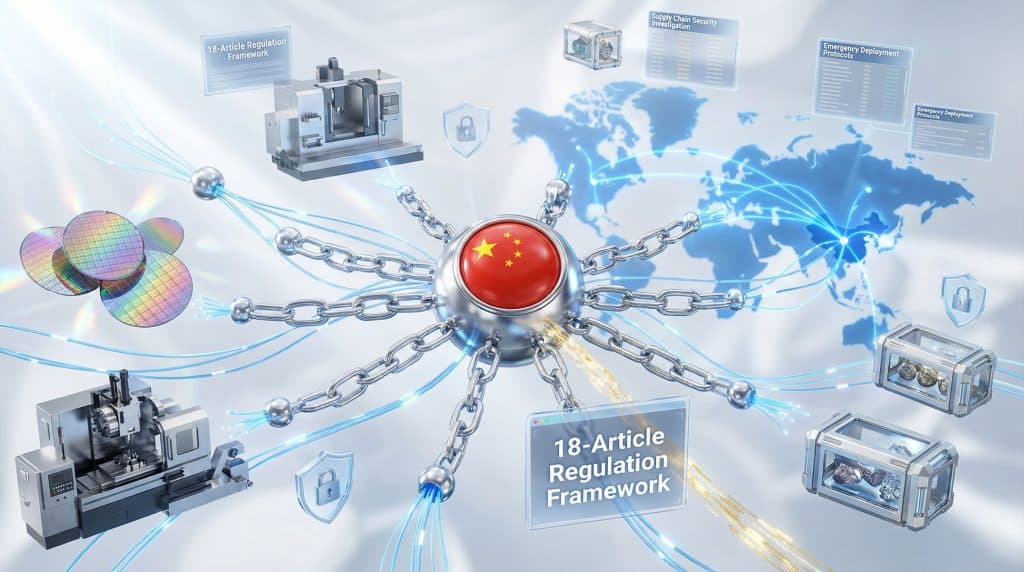
China’s latest supply-chain rules promise stability, but they also give Beijing new leverage over companies that try to diversify away from the country. The State Council issued the 18-article regulations on April 7 and made them effective immediately, framing them as a national-security measure to prevent risks, strengthen resilience, and safeguard economic and social stability.
That framing sits alongside a far sharper enforcement tool. The rules authorize investigations and countermeasures against foreign countries, regions, international organizations, organizations, or individuals deemed to undermine China’s industrial and supply-chain security. Officials can respond to foreign actions such as discriminatory bans or restrictions with special charges, entry bans, and export restrictions. State-media coverage said regulators can also question employees, examine corporate records, and, in some cases, bar companies or individuals from leaving China if they are suspected of shifting supply chains elsewhere under foreign pressure.
The timing matters. Beijing has been stepping up its response to what it sees as Western decoupling and protectionism, while foreign firms are already navigating export controls, data rules, and a widening use of security-based regulation. The U.S. Department of State said in its 2025 Investment Climate Statement that foreign investment in China fell 27.1 percent in 2024 to $114.8 billion, the sharpest drop since 2008. The department also said U.S. and other foreign companies reported growing anxiety over China’s restrictive business environment, regulatory uncertainty, and the government’s use of legal and regulatory tools as diplomatic leverage. The U.S. International Trade Administration has likewise pointed to persistent regulatory uncertainty, geopolitical risk, and concern over export controls and sanctions.
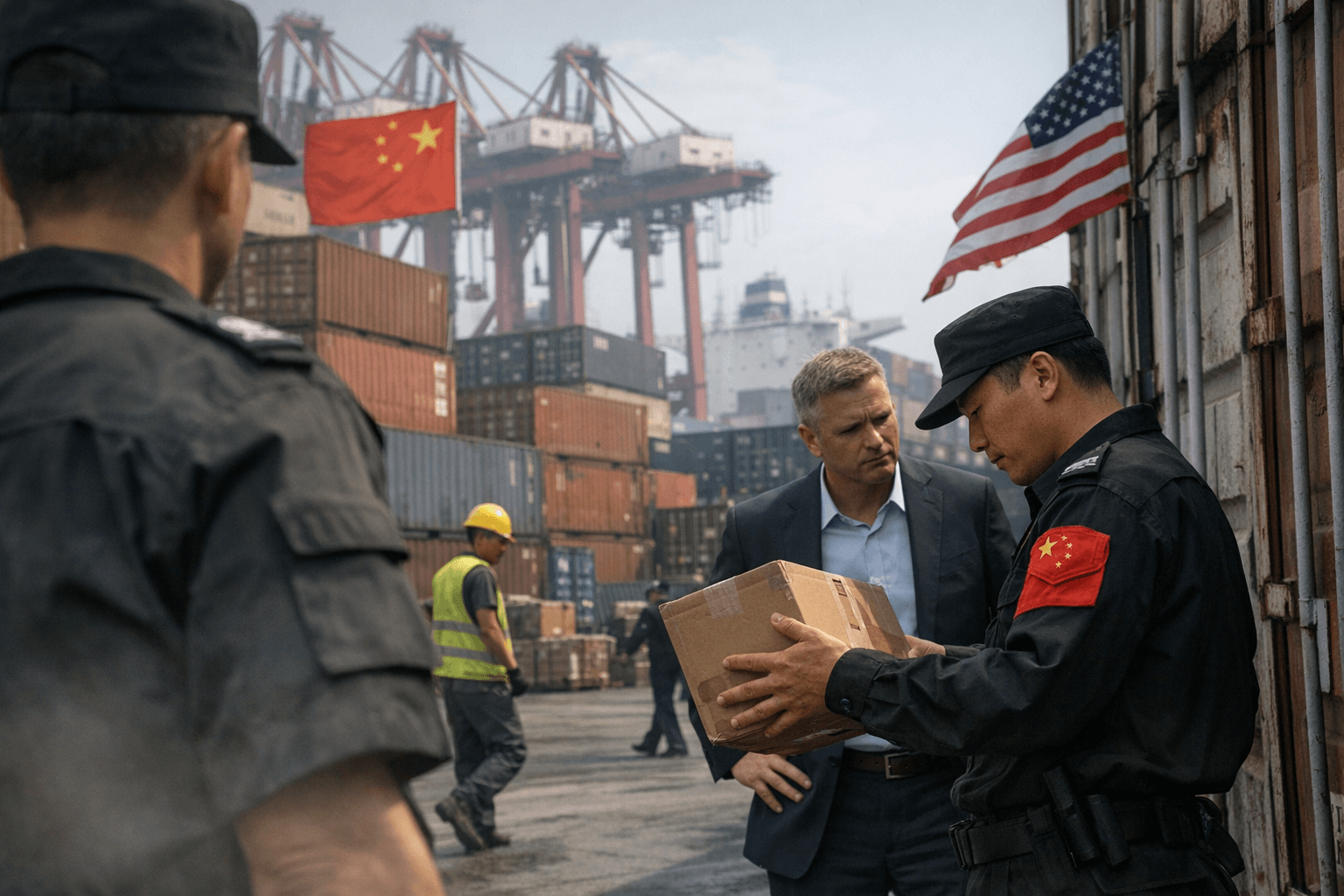
Foreign business groups reacted with alarm. The European Union Chamber of Commerce in China said the possibility of employee exit bans is especially troubling because of the lack of a clear and transparent legal process. Analysts warned the new framework could make it harder for multinational companies to divest from joint ventures in China or shift orders to overseas suppliers, deepening the conflict between compliance at home and exposure inside China. That tension is especially acute for European firms that must also meet supply-chain due diligence rules under European Union law.
The regulations build on earlier Chinese efforts to prevent Western companies from sidestepping goods linked to Xinjiang and on a broader expansion of foreign-related rule-of-law and national-security tools. For multinationals, the message is blunt: China still wants the capital and technology, but it is also raising the cost of trying to reduce dependence on China.
This article was produced by Prism’s automated news system from verified source data, official records, and press releases, then run through automated quality and moderation checks before publishing. The system is built and supervised by the people who set the standards it runs under. Read our full AI policy.
Did this article answer your question?