China youth unemployment rises to 16.9%, reversing months of decline
China’s youth jobless rate jumped to 16.9%, ending six months of declines and flashing a warning for spending, hiring and social stability.

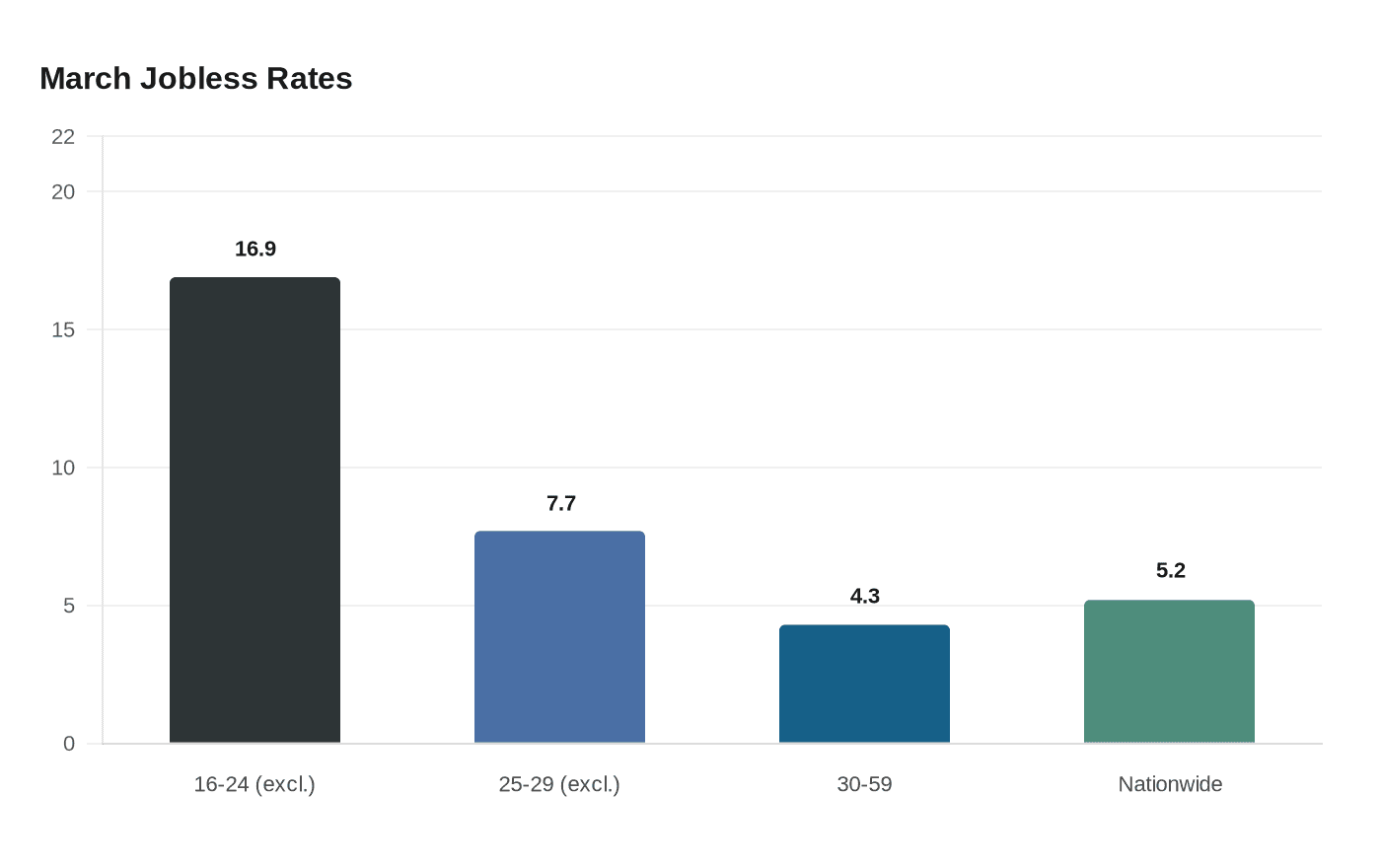
China’s labor market sent a sharper warning in March as unemployment among urban 16-to-24-year-olds, excluding students, rose to 16.9% from 16.1% in February. The increase was more than a one-month wobble: it ended a six-month run of declines that had been underway since September 2025, underscoring how fragile the outlook remains for new entrants to the workforce.
The strain was not limited to the youngest workers. The jobless rate for 25-to-29-year-olds excluding students climbed to 7.7% from 7.2%, the highest reading in the current series, while unemployment for the 30-to-59 age group edged up to 4.3% from 4.2%. That pattern suggests China does not face a broad labor-market collapse, but it does show that hiring pressure is concentrating on younger job seekers, especially in entry-level roles where competition is fiercest.
That matters well beyond the job market itself. Youth unemployment is closely watched in China because it is a test of whether growth is reaching the workers most likely to drive future consumption, family formation and household formation. If recent graduates struggle to land work, they are more likely to delay big purchases, cut back spending and remain cautious about taking financial risks, a drag on the consumer side of an economy already trying to rebalance away from property and heavy industry.
The March reading also landed just ahead of a large graduation season, with 12.7 million graduates expected to enter the job market in summer 2026. That pipeline raises the stakes for Beijing, which has repeatedly emphasized job creation as a core policy goal. With the nationwide surveyed urban unemployment rate at 5.2% in March, the problem is clearly more severe for younger workers than for the labor market as a whole.
The broader backdrop helps explain the sensitivity. China stopped publishing the 16-to-24 youth jobless rate in 2023 after it reached a record 21.3% in June of that year, then resumed the series under a revised method that excludes students. Under that framework, the rate reached 18.9% in August 2025 before easing earlier this year. Even now, the data show a labor market that can look stable on the surface while still failing to absorb graduates and young workers at the pace needed to support durable consumer demand.
For policymakers, that argues for more targeted support, from training and hiring incentives to measures that encourage private-sector job creation. For multinational companies and global investors, it is a reminder that China’s growth story still contains significant labor-market friction, especially where the next generation of workers is trying to break in.
This article was produced by Prism’s automated news system from verified source data, official records, and press releases, then run through automated quality and moderation checks before publishing. The system is built and supervised by the people who set the standards it runs under. Read our full AI policy.
Did this article answer your question?

