Taiwan business leaders urge Beijing, Taipei to keep politics from trade
Taiwan’s hotel, food and transport executives are pressing for stable cross-strait openings, but Beijing’s 10 measures still sit inside a hard political bargain.
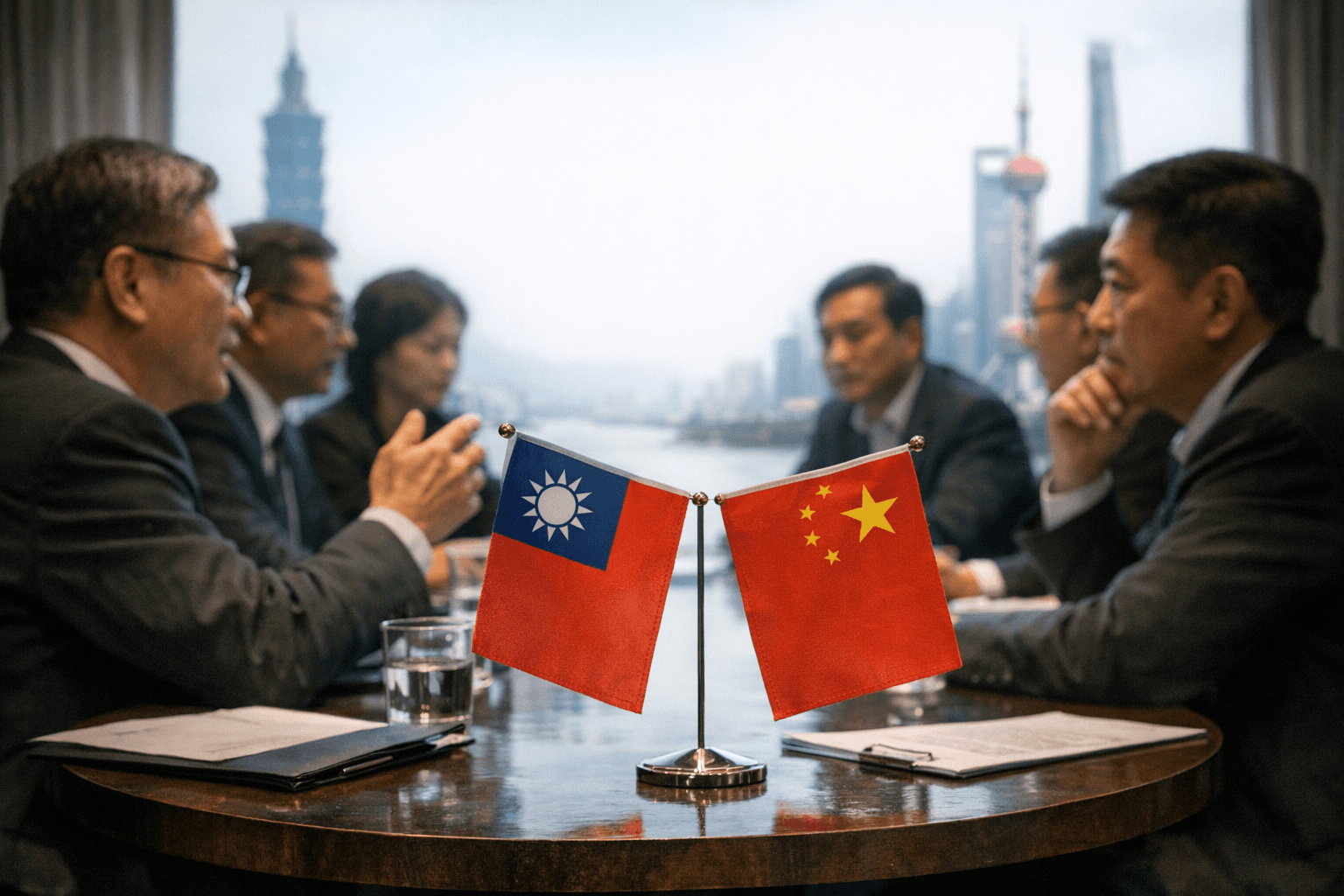
Taiwan’s business leaders are trying to keep a narrow lane open between cross-strait politics and everyday commerce, even as Beijing’s latest trade and tourism gestures arrive with a clear political price tag. The island’s chamber leaders say the test is not whether trade can resume, but whether it can do so without being pulled back into a cycle of sudden openings, sudden reversals and pressure over Taiwan’s future.
Paul Hsu, chairman of the Taiwan General Chamber of Commerce, said both Beijing and Taipei should keep politics out of any effort to restore normal trade and travel ties. Speaking alongside representatives from the tourism, food and transportation sectors in Taipei, Hsu said businesses need predictability because supply chains, travel bookings and import rules all suffer when policy shifts abruptly. He said Taiwan should respond proactively to China’s offers, but that the process should be systematic and stable rather than subject to stop-start politics. Hsu also said China should treat cities and counties equally, especially in Taiwan’s south, where political loyalties differ from the capital.
China announced 10 Taiwan-focused measures on April 12, including resuming individual travel by residents of Shanghai and Fujian to Taiwan and pushing for the “full normalization” of direct cross-strait passenger flights. The steps came two days after Kuomintang chair Cheng Li-wun met Chinese President Xi Jinping in Beijing, giving the package an immediate domestic political overlay in Taiwan. Taiwan’s Mainland Affairs Council called the moves a “political deal” between the Chinese Communist Party and the KMT, and warned that similar measures had been launched before and then suspended for political reasons, leaving businesses exposed to uncertainty.
Hsu said the chamber had received phone calls ahead of Monday’s event, but none of its members had been pressured by China. Still, the business community’s caution was plain. Beijing continues to tie any opening to opposition to Taiwan independence, refuses official dialogue with President Lai Ching-te and has paired economic pressure with military drills and rhetorical attacks over recent years.
The most eager sectors for a thaw are also the most vulnerable to politics. Stephanie Chang, vice president of the Hotel Association of the Republic of China, said reopening to Chinese tourists could lift hotel occupancy by at least 15 percentage points from about 50 percent. She said roughly 3 million Chinese visitors used to arrive each year when cross-strait tourism was at its peak.
Transport Minister Chen Shih-kai urged Beijing not to politicize tourism, noting that China’s latest limits still restricted cross-strait flights to Shanghai and Fujian. Chen said Taiwan operated 10 routes to China, with weekly capacity of about 420 flights, but actual cross-strait flights were about 310 a week. He said Taiwan was offering cruise subsidies of up to US$15,000 for vessels docking at least 12 hours, and up to US$7,500 for shorter stays, while the Tourism Administration works toward a 2030 tourism output target of NT$1 trillion, or US$31.6 billion.
Taiwan welcomed 7,857,686 inbound visitors in 2024, a reminder that the island’s tourism economy now depends on far more than China alone. Even so, business leaders are still betting that commerce can be insulated from cross-strait confrontation. The harder question is whether Beijing and Taipei will let that separation hold.
This article was produced by Prism’s automated news system from verified source data, official records, and press releases, then run through automated quality and moderation checks before publishing. The system is built and supervised by the people who set the standards it runs under. Read our full AI policy.
Did this article answer your question?

