UK unemployment falls unexpectedly to 4.9% as inactivity rises
Unemployment fell to 4.9%, but payrolls slipped and inactivity rose, casting doubt on how strong the jobs market really is.
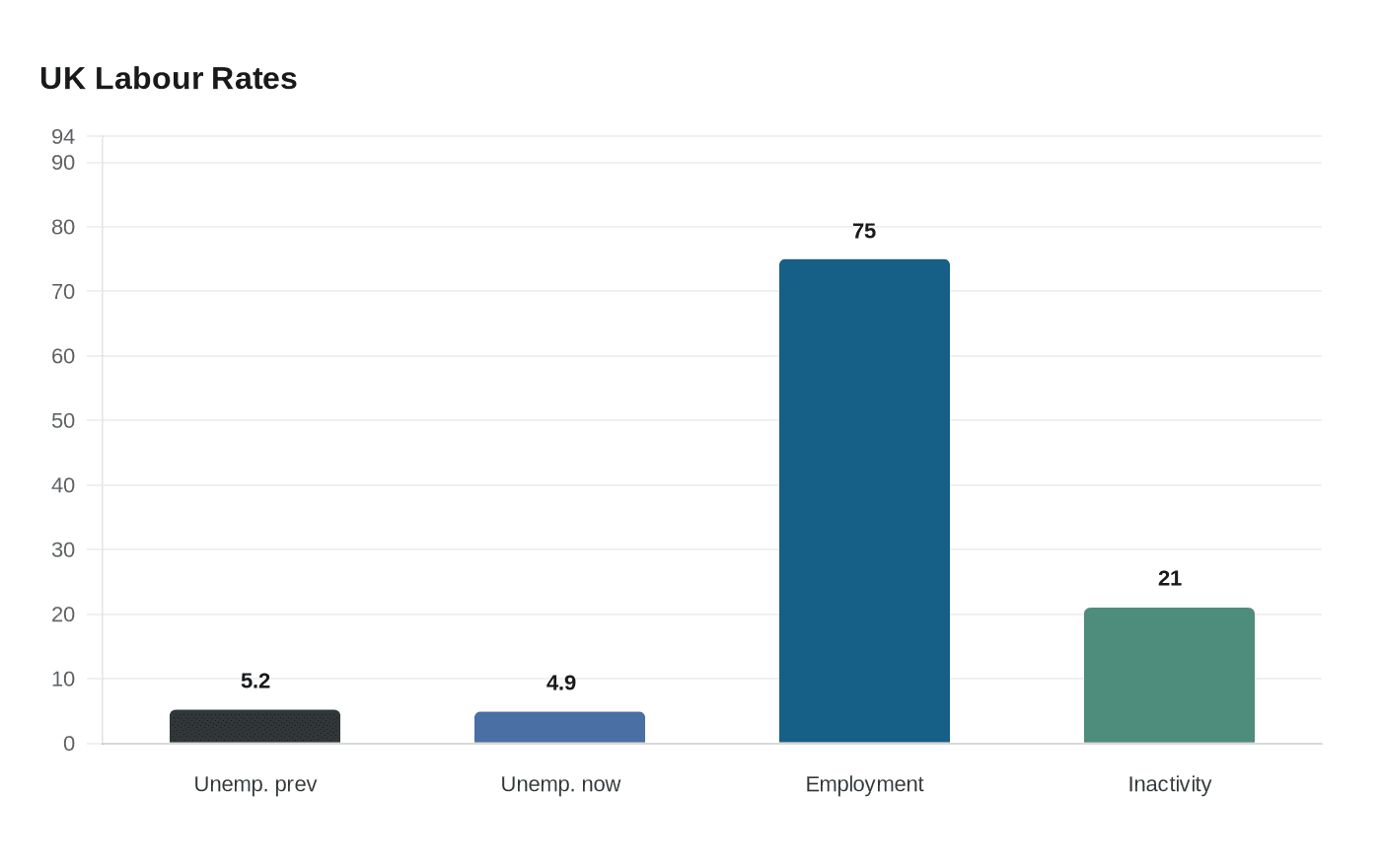
Unemployment fell when most economists expected it to stay put, but the details pointed to a labour market that was still losing momentum rather than clearly strengthening. The UK jobless rate dropped to 4.9% in the three months to February 2026, down from 5.2% in the previous rolling period, even as the employment rate eased to 75.0% and economic inactivity climbed to 21.0%.
The Office for National Statistics said the figures were based on Labour Force Survey interviews taken from December 2025 to February 2026, and it warned that the release remained official statistics in development because of ongoing response-rate and volatility problems. That caution matters because the headline fall in unemployment did not come with a matching improvement in jobs creation.

Payrolled employment fell by 74,000 between February 2025 and February 2026, and the early estimate for March 2026 showed payrolls at 30.3 million, down 65,000 on the year. Liz McKeown, the ONS director of economic statistics, said, “The number of workers on payroll remained broadly flat,” underscoring the weakness in hiring behind the headline labour figures.
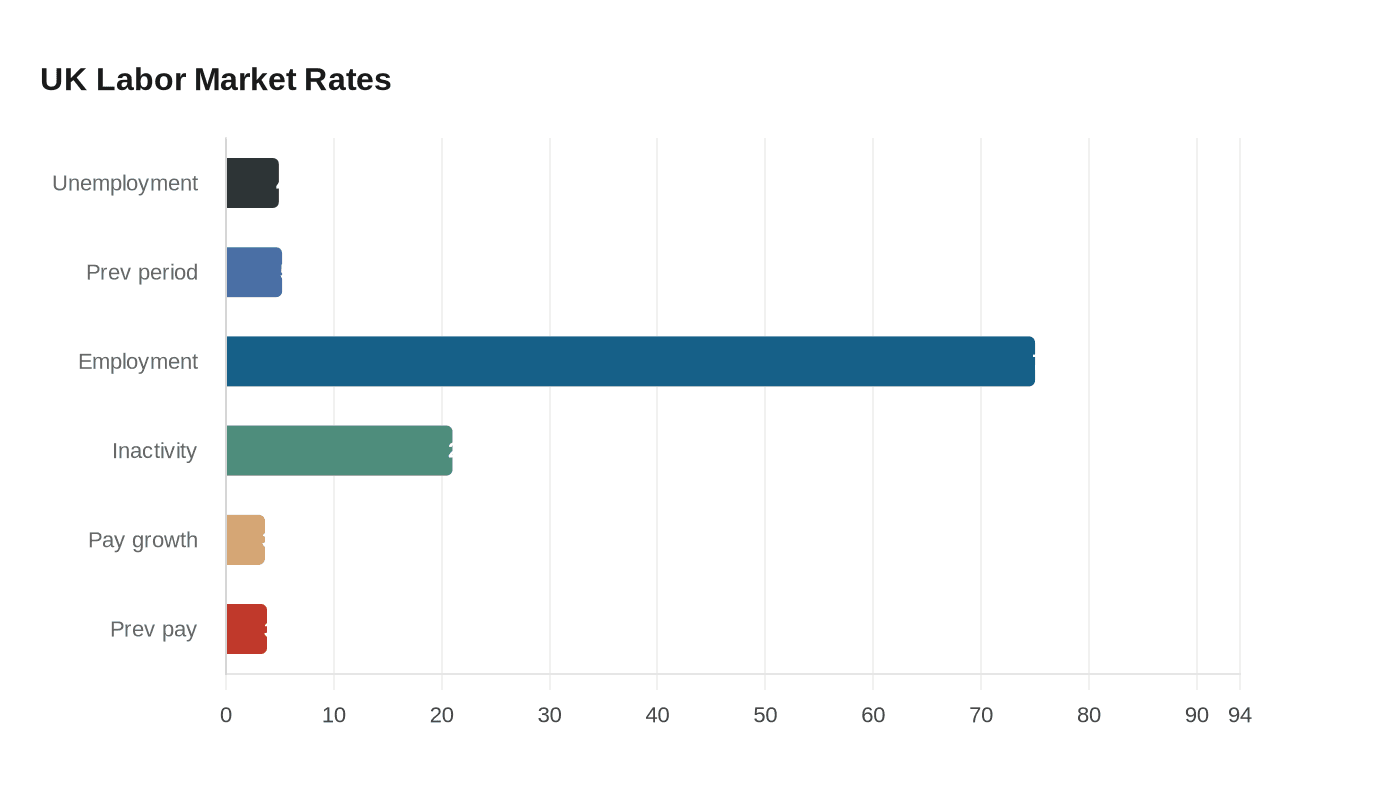
Much of the drop in unemployment reflected people leaving the labour force. Reuters reported that economic inactivity rose by 169,000 over the quarter, and that more than three-quarters of the shift among 16- to 64-year-olds came from rising numbers of students not looking for work while studying. That means the improvement in the jobless rate owed as much to weaker participation as to stronger demand for workers.
The vacancies picture also pointed to a softer market. The ONS said vacancies fell to their lowest level in almost five years, although the number of vacancies per unemployed person was broadly unchanged because unemployment also declined. For households looking for a firmer jobs market, that combination is a mixed signal at best: fewer vacancies, fewer payroll jobs and more people outside the labour force.
Wage growth also cooled. Regular pay excluding bonuses rose 3.6% in the three months to February, down from 3.8% previously and just above the 3.5% forecast in a Reuters poll. That will keep the Bank of England focused on pay pressure as it weighs the risk that services inflation stays sticky, even as hiring slows.
The next labour-market release is due on 19 May 2026. For now, the latest figures suggest the UK labour market is loosening unevenly: unemployment is lower, but not because employers are suddenly hiring with confidence.
This article was produced by Prism’s automated news system from verified source data, official records, and press releases, then run through automated quality and moderation checks before publishing. The system is built and supervised by the people who set the standards it runs under. Read our full AI policy.
Did this article answer your question?